by jphilo | Jun 18, 2012 | Out and About
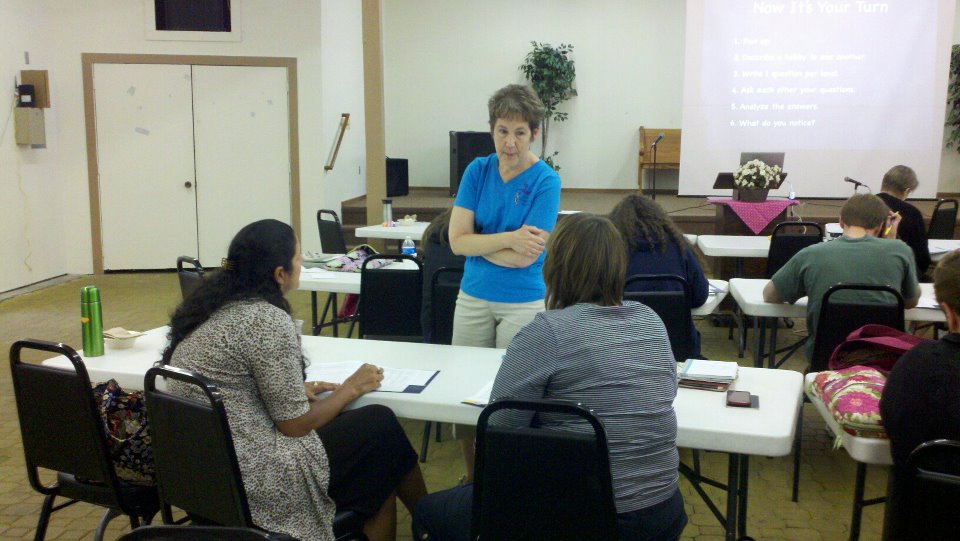
Today’s post was supposed to be a summary of the Cedar Falls Writers’ Conference – the conference I arrived at a day late, once Hiram was out of the hospital and safely ensconced at home – last week.
I planned to talk about the importance-of-editing-and-proofreading discussion encouraged partly by the How to Be Your Editor’s BFF workshop I presented Thursday and partly by an advertisement one of the conference attendees found. The ad touted a pizza joint by describing one of their menu offerings as “topped with barbequed white children.” (Either the ad meant to say “chicken” instead of “children” or some Iowa pizza joint is giving Fanny Flagg’s Fried Green Tomatoes at the Whistle Stop Cafe some serious competition in the “it’s all in the barbeque” category.)
But my plan to pass along that humorous anecdote, and many others, was thwarted by two unforeseen events.
- Camp Dorothy went into action Saturday afternoon through Sunday evening due to an unexpected weekend trip by my brother and his family.
- A pregnant friend (with 3 other children and a husband on a business trip until Wednesday) was diagnosed with mild pre-eclampsia and is on modified bedrest.
Therefore, my weekend was busy running Camp Dorothy, with no Wheel of Fortune due to the U.S. Open Golf Tournament, which put someone’s nose out of joint. Today I’m taking my friend’s three kids to the pool (the ultimate sacrifice on a hot, sunny day) and delivering supper to them.
So there’s just not time to tell you about the aspiring writers at the conference.
Or about several people who’ve been published since the last conference.
Or about how pleasant it is to teach people who know how to share,
who don’t need reminders to keep their hands and feet to themselves,
and who always say please and thank you.
There’s no time because Camp Dorothy put me a little behind on the weekend’s work. And today, instead of dedicating the entire day to writing, I’m busy digging out my swim suit, beach towel, and sunglasses. And the sunscreen. My yes, the sunscreen for me and the three little ones, too. Lots of sunscreen. Cause there’s no way I’ll deliver three barbequed white children to my friend’s house for supper.
That just wouldn’t be write right.
by jphilo | May 28, 2012 | Family
Camp Dorothy opened for business on Sunday which means Mom and I are painting the town red. We’re having so much fun, what with hot Uno games, Judge Judy and Wheel of Fortune, drives around town, reading library books, and decorating family graves, time is short for blogging. So today’s post is something I wrote after a Memorial Day several years ago, when Mom still lived in her own home. Every time I read it, it makes me smile.
You Have To Stop Somewhere
Hats pulled down and coats buttoned up, gloves hard at work my mother, sister and I shivered all the way to from where we live in Boone to my father’s hometown of Nevada.
“More like March than May 12,” Mom commented as we pulled into the grand, old cemetery, its lush grass surrounded by stone walls. The huge shade trees creaked and swayed.
“It’s a blessing that Gladys and Ginny aren’t here,” Mom added. “This wind would have blown them away.”
My sister and I knew it was true, but we missed our ancient great-aunts. Gladys and Ginny, ages 102 and 96 respectively died last year within months of one another. For decades, the responsibility of decorating the family graves had rested on their thin, stooping shoulders and they bore the weight well. My mother often drove to Nevada on a warm May day, tucking the tiny great-aunts in her car amidst the boxes of artificial flowers.
“We’ll decorate and then go to Dairy Queen for a treat,” my mother, Dorothy, promised.
“Let’s go to Mama and Papa’s graves first.” Love saturated Gladys’s high, cracking voice. “Mama made the best bread.”
“The very best. She was such a good mama,” Ginny agreed, the memory of her parents dead now for eighty years, fresh upon her face.
Mom eased them out of the car. “Next, let’s do Grandma and Grandpa’s,” Ginny suggested.
“Grandpa was in the Civil War, Dorothy, did you know that?” Gladys asked my mother.
“He was such a nice man. He always had time for us,” Ginny added. “Oh, Gladys, don’t forget Aunt Lettie. She died so young, such a tragedy.”
As kids we heard of Lettie’s early end whenever we held sharp objects. “She was running with scissors and stabbed herself in the eye. Then she developed an eye infection and died.” I always walked when carrying scissors.
Slowly they moved from grave to grave. All three decorated their husbands’ graves. Then, Gladys paused at her infant son’s headstone, and Ginny where her soldier son, one of the first killed in the Korean War, lay beneath his veteran’s marker. They stopped to visit my grandparents and mourn again the early loss of their sister, my Grandmother Fern, after her long battle with colon cancer. They tucked flowers around the headstones of brothers Guy and Lee and Lee’s wife Stena. At one final stop, they left a bouquet for their oldest brother, Willie, who left farming because of a nervous condition. “He was so nervous he couldn’t keep the rows straight when he plowed,” Ginny explained.
“So he became a barber instead,” Gladys added. “We’re ready for Dairy Queen now.” They hobbled toward the car.
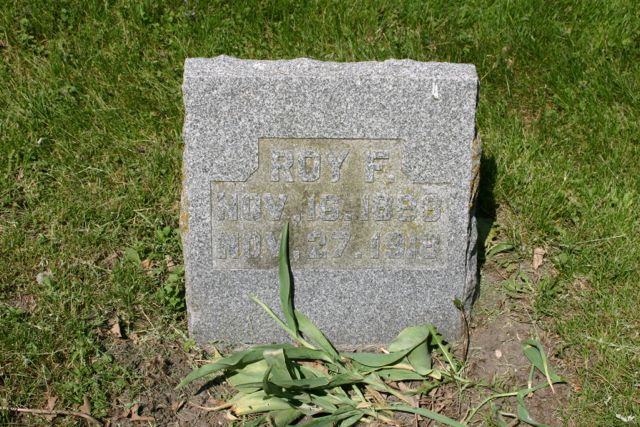
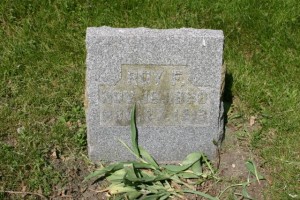
“What about Roy?” Mom pointed to the resting place of their other brother Roy. He died in the swine flu epidemic of 1918 before he could take over the farm after Papa passed on and left the sainted Mama with young daughters to raise. Roy’s death forced the aunts, orphaned teenagers, off the farm and into the homes of relatives.
“Hmmph.” Ginny sniffed.
“You’ve got to stop somewhere,” Gladys announced, and the sisters continued their feeble march to the car.
“Will we decorate Roy’s grave?” I asked my sister as we headed toward the family plot.
“Of course we will. It’s time to let go of old grudges, don’t ya think?”
We stopped in front of his grave and helped our mother out of the car into the wind and cold of our May morning. We planted silk flowers in front of his headstone, maybe a few extra to wipe out any former neglect. “We forgive you, Roy,” my sister said.
We decorated every family grave we could find and lingered at Gladys and Ginny’s. Clear as a bell, I heard a high, cracking voice, “Jolene, you have to stop somewhere.” Tears filled my eyes, and I smiled with joy and sadness. “Not yet, Aunt Gladys, not quite yet.” I replied as the cold May wind settled the comfortable weight of their family memories upon our shoulders. “See you again, next year,” I whispered and walked slowly to the car