
The Caregiver’s Treasure
This morning, in the chilly half dark, I passed the houses along the route that leads to my favorite path. The acrid odor of burning electrical wires grew strong when I neared a ramshackle, uninhabited house that is the neighborhood eyesore. Yellow fire scene tape, barely visible in the dim light, stretched along the chain link fence surrounding the property, and I resolved to retrace my steps and get a better look near the end of my walk.
The clear light of day revealed the extent of the damage. The roof of the small, ranch house had caved in. Two sides of the house were burned away. The interior walls had collapsed. The house’s contents were unrecognizable, melted lumps of goo.
Yesterday, when I walked by, the house had been standing–in need of paint, sporting several broken windows, the yard shaggy and neglected–but it was still there.
This morning it is gone.
Dead.
Finished.
I am once again aware of how quickly and completely life can change.
I stared at the house and thought of when I first learned that lesson: the day my father died. For 38 years, my mother, my siblings and I watched multiple sclerosis rob Dad of the ability to walk, to write, to read, to control his bodily functions, to think clearly, to speak, and to feed himself.
The changes were small and incremental, sometimes barely discernible. They came so slowly and so gradually that for years it felt like nothing would ever change. Dad was trapped in a body that continually betrayed him. We were in limbo, waiting for the end we all knew was coming. But when he began to struggle to swallow, we knew the end was near.
On Sunday, Dad was fine when I took my 7-year-old daughter to read a story to him.
On Monday night, we received a call that Dad was running a fever.
On Tuesday, he died before noon.
One day Dad was there–his body compromised, his mind weakened, his spirit calm–but he was there.
The next day, he was dead.
His life was finished.
He was gone.
I experienced, for the first time, how quickly and completely life can change.
I stared at the burned out shell of the house. When the officials complete their inspection of the fire scene, there will be little for the demolition crew to do but cart away the rubble and smooth the ground. The house will be gone forever.
But, I realized, the same can not be said about Dad. My father is still here. He is part of who I am. Because of him, my perception of what constitutes a good life is quite different from the world’s view of a life well-lived.
For caregivers, a good life isn’t measured in major accomplishments–
Races won.
Money earned.
National acclaim.
Education achieved.
For caregivers, a life well-lived is measured in the small things–
A delayed milestone reached.
A tender moment shared.
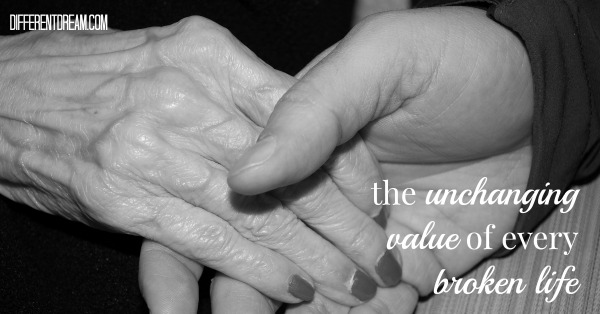
The squeeze of a hand.
A fleeting smile of recognition.
These are the things Jesus teaches his people to treasure.
These are the things that matter.
This is the jewel caregivers carry with them when their loved one lives and when their loved one dies–
the unchanging value of every broken life.
Do you like what you see at DifferentDream.com? You can receive more great content by subscribing to the quarterly Different Dream newsletter and signing up for the daily RSS feed delivered to your email inbox. You can sign up for the first in the pop up box and the second at the bottom of this page.

By jphilo
Jolene Philo is a published author, speaker, wife, and mother of a son with special needs.



Subscribe for Updates from Jolene
Related Posts

Summer Camps for Kids with Special Needs
I remember when my dad began attended his first Easter Seals summer camp for adults with disabilities. He was in his mid-thirties. I was about nine, just old enough to remember Dad's grin when we dropped him off. With the assistance of his personal counselor, Dad went...
Where to Learn about PTSD in Kids
When most people think of post-traumatic stress disorder (PTSD), they think of returning war veterans. If they think of PTSD in kids at all, it is associated with children in war zones or kids who are victims of sexual or physical abuse. But new research shows that...
Who Cares for the Caregiver?
On the surface, caregiving for an infant or child appears to be quite different from caring for an adult. But as someone who grew up with a father who required nursing care and as the mother of a newborn with major medical needs, I can tell you the two experiences had...
0 Comments