by jphilo | Jun 9, 2010 | Different Dream, In Children, PTSD
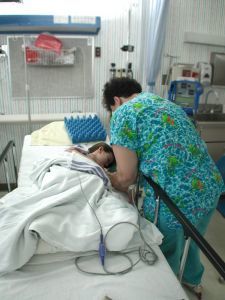
The first post in this series explored how invasive medical procedures can cause PTSD in children. The post listed four factors that increase the likelihood of PTSD developing. The factors are:
- Timing
- Anesthesia
- Age of patient
- Previous Trauma History
As promised in Part 1 of the series, this post will address the general principle behind the occurrence of PTSD and how it can be successfully treated.
General PTSD Principle
Linda Gantt, who spoke at the 2010 Linking PTSD and Medical Trauma national conference, said the risks of developing PTSD increase according to this general principle: The more unexpected the procedure, the younger the patient, the more numerous the previous traumas, and the more urgent the need for the procedure, the greater the possibility that there will be psychological effects.
No Wonder Our Son Had PTSD
When Dr. Gantt’s explained the four factors and the general principle behind them, the burden of guilt I carried about our son’s PTSD no longer weighed upon me. Our son’s medical treatment was completely unexpected, within 24 hours of his birth, and immediately necessary for him to live. With three of the four factors involved in his trauma, no wonder he developed PTSD. And since medically induced PTSD wasn’t even on the radar screen when he had surgery in 1982, no wonder it went undetected for so long.Prevent
How to Prevent PTSD
In 2010, the vast majority of kids can avoid developing medically induced PTSD. Depending on the age of the child and the circumnstances, it can be prevented by:
- having the hospital’s child life specialist help prepare your verbal child for scheduled medical procedures or surgeries.
- having the the child life specialist remediate trauma caused by an emergency medical procedure or surgery in a verbal child.
- having someone rub a pre-verbal child’s arm and talk quietly to him during procedures or surgeries.
- having soft music or a tape recording of the parent’s voice playing during procedures or surgeries.
How to Treat PTSD
Of course, not all PTSD can be prevented. But children can be successfully and easily treated for it. One great treatment resource is Peter Levine and Maggie Kline’s books, Trauma Through a Child’s Eyes: Awakening the Ordinary Miracle of Healing and Trauma-Proofing Your Kids: A Parents’ Guide for Instilling Confidence, Joy and Resilience.
If your child needs professional therapy, I highly recommend the Intensive Trauma Therapy Institute in Morgantown, West Virginia. You can learn more about their clinic at their website www.traumatherapy.com. If you know of other successful treatment centers, please leave a comment. I want every child with PTSD to receive treatment as quickly as possible!
Do you like what you see at DifferentDream.com? You can receive more great content by subscribing to the quarterly Different Dream newsletter and signing up for the daily RSS feed delivered to your email inbox. You can sign up for the first in the pop up box and the second at the bottom of this page.

by jphilo | Jun 7, 2010 | Different Dream, In Children, PTSD

When our son was born in 1982 and flown 750 miles away for life-saving surgery, we asked the medical professionals if the surgery and recovery would somehow affect him later on. “No,” we were told repeatedly, “he’s too young to remember. Besides newborns don’t feel pain.”
Even though the opposite has been proven true since our son’s surgery, the news hasn’t reached segments of the greater medical community. In fact, a mom whose newborn was in a major hospital’s neonatal intensive care (NICU) in December of 2009 was told the same thing we were. “She won’t remember. She’s too young.”
A recent national conference hosted by the Intensive Trauma Therapy Institute in Morgantown, West Virginia focused on the topic. One of the therapists from the institute, Linda Gantt, said the likelihood of PTSD developing after invasive medical procedures during childhood depends upon several contributing factors.
Factor #1: Timing
PTSD is less likely to occur if a medical procedure is scheduled and there’s adequate time to prepare the child beforehand. PTSD is much more likely to occur in emergency situations. Also, if the child’s preparation is age-appropriate, PTSD is less likely to occur.
Factor #2: Anesthesia
The kind of anesthetic used is a major factor. General, local or topical anesthetic should be selected based on the procedure and age of the patient. A patient’s inability to go under increases the likelihood of PTSD developing, as does “coming light” or “partial awakening” during the procedure.
Factor #3: Age of Patient
The younger the patient, the greater the risk of PTSD developing.
- The risk is greatest when kids are non-verbal, birth to age 3. Even when they become verbal, they are unable to access their non-verbal memories using words.
- Children who are verbal, but still in the concrete thinking stage (ages 4 – 10) are also at risk because their reasoning skills are very literal. They can’t yet think abstractly.
- Children from the ages of 12-18 are least likely to develop PTSD if their abstract thinking skills are in place.
Factor #4: Previous Trauma History
Children who have experienced previous significant trauma (sexual abuse, physical abuse, life-threatening situations) are more likely to develop PTSD after medical treatment.
The next post in this series will explore the general principle behind the occurrence of PTSD and how it can be successfully treated.
Do you like what you see at DifferentDream.com? You can receive more great content by subscribing to the quarterly Different Dream newsletter and signing up for the daily RSS feed delivered to your email inbox. You can sign up for the first in the pop up box and the second at the bottom of this page.
by jphilo | May 7, 2010 | Different Dream, Prevention/Treatment, PTSD
For 26 years, my son lived with PTSD caused by early medical surgeries and invasive procedures. Since was successfully treated at the Intensive Trauma Therapy Institute in December of 2008, I’ve been researching the topic. There’s good news and bad news concerning the topic.
Bad News, Good News about How to Trauma Proof Your Child
When our son was born in 1982, we asked doctors and nurses about how the separation from family, surgery, post-op pain, and countless medical procedures would affect him. Over and over, we were told, “He’s so young, he won’t remember.” Research has proven those words to be untrue, but here’s the bad news. Parents of newborns are still being told their children won’t remember early medical treatment. Medical professionals who say that are wrong. What they should be saying is the good news.
Enter, Peter A. Levine and Maggie Kline
The good news is that much medical trauma can be prevented and the rest can be treated early, and in most cases, easily. Two good resources for parents are Trauma-Proofing Your Kids and Trauma Through a Child’s Eyes, both by Peter A. Levine and Maggie Kline. They not only help parents view trauma from a child’s point of view, but also provide ideas about how to prevent trauma and remediation exercises to do with kids when trauma occurs. The second book provides a wealth of information about avoiding trauma at birth, at school, during natural disasters and during medical procedures. They also advise parents about when trauma is serious enough to require professional treatment.
However, neither book deals with the cutting edge theory and treatment coming out of the Intensive Trauma Therapy Institute. If your child is dealing with long-standing trauma issues, visit their website for more information. The healing they do in one week can be miraculous.
If you know of other good trauma therapy resources, please tell us about them.
Do you like what you see at DifferentDream.com? You can receive more great content by subscribing to the quarterly Different Dream newsletter and signing up for the daily RSS feed delivered to your email inbox. You can sign up for the first in the pop up box and the second at the bottom of this page.
by jphilo | Apr 30, 2010 | Books and Resources, Different Dream, PTSD
When most people think of post-traumatic stress disorder (PTSD), they think of returning war veterans. If they think of PTSD in kids at all, it is associated with children in war zones or kids who are victims of sexual or physical abuse. But new research shows that the crippling mental health effects of PTSD can also be caused by medical procedures, divorce, adoption, and natural disasters.
National Institute of Mental Health
The National Institute of Mental Health’s website provides a wealth of information about PTSD in kids. You could spend an afternoon at the site and not get through everything it offers. Many of the brochures and articles can be downloaded from the website or ordered by phone.
National Child Traumatic Stress Network Brochure
One of the most informative and readable publications is the brochure put out by the National Child Traumatic Stress Network (NCTSN). It can be downloaded at the website. Because finding it at the site takes quite a bit of time, you can also download it here:
NCTSN Brochure
If your child has endured medical trauma, you should download the brochure and visit the website for more information. While they don’t address medical trauma specifically, what you learn there could be a first step in restoring your child’s emotional and mental health.
Do you like what you see at DifferentDream.com? You can receive more great content by subscribing to the quarterly Different Dream newsletter and signing up for the daily RSS feed delivered to your email inbox. You can sign up for the first in the pop up box and the second at the bottom of this page.
by jphilo | Mar 17, 2010 | Books and Resources, Different Dream, PTSD
If you’re the foster or adoptive parent of a child with special needs, thank you for opening your home to the most vulnerable and needy members of our society. Many of those children endured severe trauma before arriving in your safe and loving homes. And you, though not the cause of the trauma, deal with its effects every day.
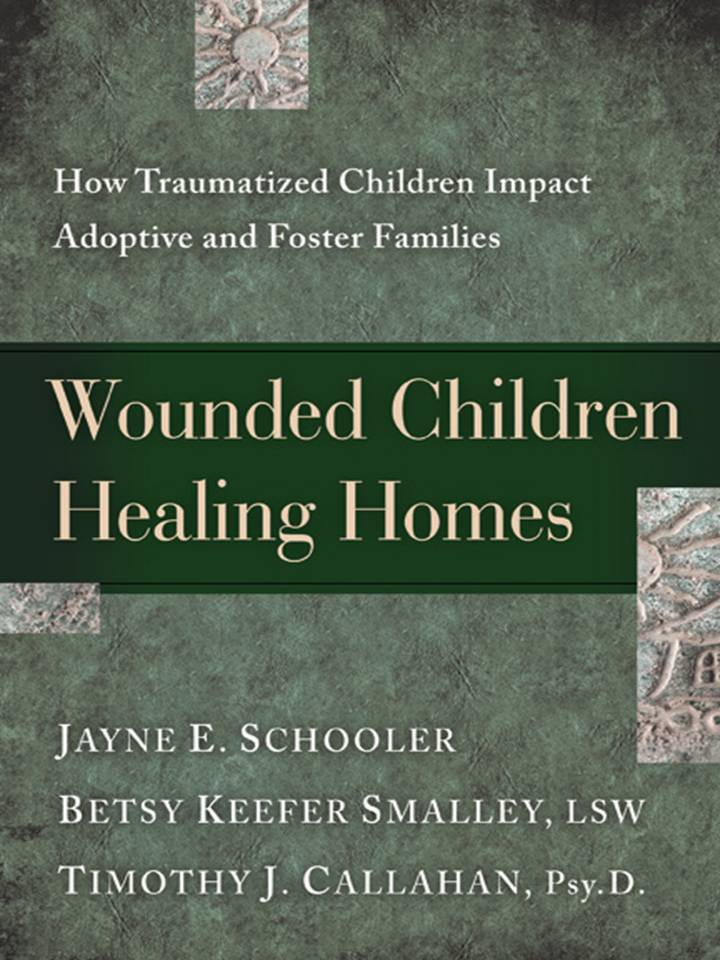
Wounded Children, Healing Homes
You need much more than thanks and applause as you parent your kids. Your children need professional therapy and counseling in order to heal. You need practical support, encouragement and access to professional help to survive. You will learn about all those things in Wounded Children, Healing Homes: How Traumatized Children Impact Adoptive and Foster Families, released by Nav Press in January of 2010.
The book is co-authored by Jayne E. Schooler; Betsy Keefer Smalley, LSW; and Timothy J. Callahan, PSYD, with other chapters contributed by Elizabeth A. Tracy, Debra L. Shrier, and Grace Harris.
Help for Parents, Families and School
The book is divided into five parts. The first section is an introduction and the remaining parts are:
- Understanding Trauma and Its Impact on the Family
- Inside the Crisis of Adoption Breakdown
- The Child, the Family, and School
- Strategies for Successfully Parenting Traumatized Children
The final section is followed by two appendices. The first is titled Assessing Attachment-Readiness and Capabilities in Prospective Adoptive Parents. The second is Building a Support System and Finding Resources.
A Road Map, Not a Cure
The information in the book is more of a road map than cure for families living with deeply traumatized children. It gives parents strategies for creating safe, loving environments where children will gradually heal. It is realistic about the challenges involved, the effects on the family, the strain such children place on a marriage. But it also gives hope, provides resources, and acknowledges the reality of failure in some cases.
If you are an adoptive or foster parent caring for a deeply traumatized child, you should read this book. It not only provides information and strategies, but also explains why traumatized kids act like they do and how parents typically respond to them. What reassurance these words can be to parents dealing with difficult behaviors day after day.
After you read Wounded Children, Healing Homes, come back and leave a comment about what you read.
Do you like what you see at DifferentDream.com? You can receive more great content by subscribing to the quarterly Different Dream newsletter and signing up for the daily RSS feed delivered to your email inbox. You can sign up for the first in the pop up box and the second at the bottom of this page.

by jphilo | Mar 12, 2010 | Different Dream, In Children, PTSD

A recent radio interview with Dr. John Rich caught my ear the other day. He was explaining why he wrote the book, Wrong Place, Wrong Time. After watching young black men stream through Boston City Hospital’s ER with gunshot and knife wounds, he started listening to their stories.
Wrong Place, Wrong Time
He learned that many of the young men were just in the wrong place at the wrong time–maybe at a bus stop or a party and ended up in the line of fire when violence broke out. And it didn’t take much for violence to break out in the highly charged atmosphere where many of the young men lived.
Rich says he ” came to realize that many of the men who had been injured also suffered emotional wounds, similar to those of combat veterans. Symptoms like nightmares and flashbacks contributed to a feeling of jumpiness and unease — and often put these young men at risk for even more violence. When you are hyper-vigilant or jumpy, or always on guard, you can go from 0 to 60 in a very short time. So a young person who is on the bus, somebody steps on his foot and suddenly somebody gets stabbed or shot.”
Post-Traumatic Stress Disorder
My ears perked up at that description. Dr. Rich was describing Post-Traumatic Stress Disorder (PTSD), the condition our son developed after undergoing seven surgeries and hundreds of procedures before he was five years old. His hyper-vigilance and unstable behaviors escalated throughout adolescence. A little over a year ago, he went through a week of intense, one-on-one treatment at the Intensive Trauma Therapy Institute and is now emotionally healthy and stable.
Trauma in the ER
Because of our son’s experience, I found a paragraph in the excerpt of Rich’s book about what the young, black men experienced when in the ER fascinating. He first described ER protocol. “The treatment of trauma is arguably the most highly standardized and choreographed treatment in medicine. There is little room for variation or creativity in the process. As a result, every trauma patient gets the same assessment, the same tests.”
Then, after describing the terrifying ER procedures endured by one young man, he wrote, “Several impressions struck me as I walked out of the emergency department to my car. The first was that in the rush to save this young man’s life, very few words were spoken to him, and he said very few words in return. “I’m cold” were the only intelligible words that I could remember hearing the patient speak.”
What About Little Kids?
After hearing the report, all I could thing was that my son had experiences like that as a baby and toddler. If it’s scary for big, tough guys who already had PTSD from living in a violent world, no doubt repeated trips to the hospital caused and then exacerbated my son’s condition.
If you have a child who endures frequent, invasive medical treatment be aware of the signs of PTSD. Ask to speak to the child life specialist at the hospital about how to avoid and treat it. If you suspect your child has PTSD, visit Intensive Trauma Therapy website for more information about treatment options. Our child was twenty-six before he went through the treatment that changed his life. He wants your child to receive healing much sooner.
To listen to the entire radio interview or read the transcript, the complete story is available at www.npr.org.
Do you like what you see at DifferentDream.com? You can receive more great content by subscribing to the quarterly Different Dream newsletter and signing up for the daily RSS feed delivered to your email inbox. You can sign up for the first in the pop up box and the second at the bottom of this page.