by jphilo | Apr 2, 2014 | Different Dream, In Children, PTSD
4 Ways to Prevent Post-Traumatic Stress Disorder in Children
Post-traumatic stress disorder (PTSD) in children. That’s a concept many adults want to deny. We don’t want to live in a world where children, much less infants, develop PTSD. The bad news is that they can. But there’s also good news: resources and techniques exist to keep childhood trauma from developing into full-blown PTSD. In a final post of my Friendship Circle series about PTSD in children, some preventative measures were highlighted.
Four Ways to Prevent PTSD in Children
Several therapies are highly effective in preventing the development of PTSD after childhood trauma. Four of the best known are listed below:
- Debrief after a traumatic event.
- Administer trauma prevention first aid.
- Involve a child life specialist.
- Keep pre-verbal and non-verbal children grounded.
To learn the details of each of these preventative measures and to find links to resources, read the Friendship Circle post 4 Ways to Prevent Post-Traumatic Stress Disorder in Children.
A New PTSD Resource Coming Soon!
In case you missed February’s exciting announcement, here it again. In December, I signed a contract with Familius for a book about PTSD in children. The manuscript is due November 30 of this year with a tentative release date of Spring, 2015.
What are Your Burning PTSD in Children Questions?
I’d love to know what questions about PTSD in children are buzzing around in your mind. What do you need to know to help your child? Leave your questions in the comment box. Thanks!
Do you like what you see at DifferentDream.com? You can receive more great content by subscribing to the quarterly Different Dream newsletter and signing up for the daily RSS feed delivered to your email inbox. You can sign up for the first in the pop-up box and the second at the bottom of this page.
Jolene Philo is the author of the Different Dream series for parents of kids with special needs. She speaks at parenting and special needs conferences around the country. She’s also the creator and host of the Different Dream website. Sharing Love Abundantly With Special Needs Families: The 5 Love Languages® for Parents Raising Children with Disabilities, which she co-authored with Dr. Gary Chapman, was released in August of 2019 and is available at local bookstores, their bookstore website, and at Amazon. The first book in her cozy mystery series, See Jane Run!, features people with disabilities and will be released in June of 2022.
Subscribe for Updates from Jolene

by jphilo | Oct 2, 2012 | Different Dream, In Children, PTSD
Post-Traumatic Stress Disorder: Why I Advocate for Kids with PTSD
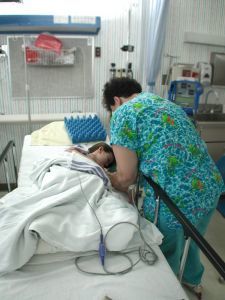
Post-traumatic stress disorder (PTSD) in children. The phrase makes me want to put my hands over my face, like the child in the picture, and pretend kids don’t get PTSD.
Why I Advocate for Kids with PTSD
But I can’t, because kids, including my son and my son-in-law, suffered from this very treatable mental illness when they were children. That’s why I jumped at the chance to write an occasional guest blogger series about PTSD in kids for the folks at Friendship Circle of Michigan. The first post in the series tells about our son’s struggle with PTSD. His post-traumatic stress disorder was precipitated by life-saving major surgery shortly after his birth and many more surgeries and invasive medical procedures and tests he endured until age five.
Confessions of a Post-Traumatic Stress Disorder Advocate
To read the whole story, scoot on over to the post entitled Confessions of a Post-Traumatic Stress Disorder Advocate at the Friendship Circle of Michigan blog. You’ll not only read the story of our son’s struggle with PTSD and his highly successful treatment, but also find out why I’ve become a passionate advocate on the topic. So passionate that an entire chapter of Different Dream Parenting is dedicated to informing parents about PTSD causes, symptoms, and treatments. So passionate, my agent is sending out my book proposal on the topic to publishing houses around the country.
What Do You Want to Know About PTSD?
Over the next several months, I’ll inform DifferentDream.com readers each time a new post in the series is published at Friendship Circle’s blog. And I’ll let you know when a publisher offers a contract, and I start writing the book. In the meantime, please leave a comment about what you want the book to cover. What questions do you have about PTSD in children? What resources do you want to learn about? What resources do you recommend? I would love to hear from other people passionate about PTSD in children!
Do you like what you see at DifferentDream.com? You can receive more great content by subscribing to the quarterly Different Dream newsletter and signing up for the daily RSS feed delivered to your email inbox. You can sign up for the first in the pop-up box and the second at the bottom of this page.
Subscribe for Updates from Jolene
by jphilo | Jun 9, 2010 | Different Dream, In Children, PTSD
The first post in this series explored how invasive medical procedures can cause PTSD in children. The post listed four factors that increase the likelihood of PTSD developing. The factors are:
- Timing
- Anesthesia
- Age of patient
- Previous Trauma History
As promised in Part 1 of the series, this post will address the general principle behind the occurrence of PTSD and how it can be successfully treated.
General PTSD Principle
Linda Gantt, who spoke at the 2010 Linking PTSD and Medical Trauma national conference, said the risks of developing PTSD increase according to this general principle: The more unexpected the procedure, the younger the patient, the more numerous the previous traumas, and the more urgent the need for the procedure, the greater the possibility that there will be psychological effects.
No Wonder Our Son Had PTSD
When Dr. Gantt’s explained the four factors and the general principle behind them, the burden of guilt I carried about our son’s PTSD no longer weighed upon me. Our son’s medical treatment was completely unexpected, within 24 hours of his birth, and immediately necessary for him to live. With three of the four factors involved in his trauma, no wonder he developed PTSD. And since medically induced PTSD wasn’t even on the radar screen when he had surgery in 1982, no wonder it went undetected for so long.Prevent
How to Prevent PTSD
In 2010, the vast majority of kids can avoid developing medically induced PTSD. Depending on the age of the child and the circumnstances, it can be prevented by:
- having the hospital’s child life specialist help prepare your verbal child for scheduled medical procedures or surgeries.
- having the the child life specialist remediate trauma caused by an emergency medical procedure or surgery in a verbal child.
- having someone rub a pre-verbal child’s arm and talk quietly to him during procedures or surgeries.
- having soft music or a tape recording of the parent’s voice playing during procedures or surgeries.
How to Treat PTSD
Of course, not all PTSD can be prevented. But children can be successfully and easily treated for it. One great treatment resource is Peter Levine and Maggie Kline’s books, Trauma Through a Child’s Eyes: Awakening the Ordinary Miracle of Healing and Trauma-Proofing Your Kids: A Parents’ Guide for Instilling Confidence, Joy and Resilience.
If your child needs professional therapy, I highly recommend the Intensive Trauma Therapy Institute in Morgantown, West Virginia. You can learn more about their clinic at their website www.traumatherapy.com. If you know of other successful treatment centers, please leave a comment. I want every child with PTSD to receive treatment as quickly as possible!
Do you like what you see at DifferentDream.com? You can receive more great content by subscribing to the quarterly Different Dream newsletter and signing up for the daily RSS feed delivered to your email inbox. You can sign up for the first in the pop up box and the second at the bottom of this page.

by jphilo | Jun 7, 2010 | Different Dream, In Children, PTSD

When our son was born in 1982 and flown 750 miles away for life-saving surgery, we asked the medical professionals if the surgery and recovery would somehow affect him later on. “No,” we were told repeatedly, “he’s too young to remember. Besides newborns don’t feel pain.”
Even though the opposite has been proven true since our son’s surgery, the news hasn’t reached segments of the greater medical community. In fact, a mom whose newborn was in a major hospital’s neonatal intensive care (NICU) in December of 2009 was told the same thing we were. “She won’t remember. She’s too young.”
A recent national conference hosted by the Intensive Trauma Therapy Institute in Morgantown, West Virginia focused on the topic. One of the therapists from the institute, Linda Gantt, said the likelihood of PTSD developing after invasive medical procedures during childhood depends upon several contributing factors.
Factor #1: Timing
PTSD is less likely to occur if a medical procedure is scheduled and there’s adequate time to prepare the child beforehand. PTSD is much more likely to occur in emergency situations. Also, if the child’s preparation is age-appropriate, PTSD is less likely to occur.
Factor #2: Anesthesia
The kind of anesthetic used is a major factor. General, local or topical anesthetic should be selected based on the procedure and age of the patient. A patient’s inability to go under increases the likelihood of PTSD developing, as does “coming light” or “partial awakening” during the procedure.
Factor #3: Age of Patient
The younger the patient, the greater the risk of PTSD developing.
- The risk is greatest when kids are non-verbal, birth to age 3. Even when they become verbal, they are unable to access their non-verbal memories using words.
- Children who are verbal, but still in the concrete thinking stage (ages 4 – 10) are also at risk because their reasoning skills are very literal. They can’t yet think abstractly.
- Children from the ages of 12-18 are least likely to develop PTSD if their abstract thinking skills are in place.
Factor #4: Previous Trauma History
Children who have experienced previous significant trauma (sexual abuse, physical abuse, life-threatening situations) are more likely to develop PTSD after medical treatment.
The next post in this series will explore the general principle behind the occurrence of PTSD and how it can be successfully treated.
Do you like what you see at DifferentDream.com? You can receive more great content by subscribing to the quarterly Different Dream newsletter and signing up for the daily RSS feed delivered to your email inbox. You can sign up for the first in the pop up box and the second at the bottom of this page.

by jphilo | Mar 12, 2010 | Different Dream, In Children, PTSD

A recent radio interview with Dr. John Rich caught my ear the other day. He was explaining why he wrote the book, Wrong Place, Wrong Time. After watching young black men stream through Boston City Hospital’s ER with gunshot and knife wounds, he started listening to their stories.
Wrong Place, Wrong Time
He learned that many of the young men were just in the wrong place at the wrong time–maybe at a bus stop or a party and ended up in the line of fire when violence broke out. And it didn’t take much for violence to break out in the highly charged atmosphere where many of the young men lived.
Rich says he ” came to realize that many of the men who had been injured also suffered emotional wounds, similar to those of combat veterans. Symptoms like nightmares and flashbacks contributed to a feeling of jumpiness and unease — and often put these young men at risk for even more violence. When you are hyper-vigilant or jumpy, or always on guard, you can go from 0 to 60 in a very short time. So a young person who is on the bus, somebody steps on his foot and suddenly somebody gets stabbed or shot.”
Post-Traumatic Stress Disorder
My ears perked up at that description. Dr. Rich was describing Post-Traumatic Stress Disorder (PTSD), the condition our son developed after undergoing seven surgeries and hundreds of procedures before he was five years old. His hyper-vigilance and unstable behaviors escalated throughout adolescence. A little over a year ago, he went through a week of intense, one-on-one treatment at the Intensive Trauma Therapy Institute and is now emotionally healthy and stable.
Trauma in the ER
Because of our son’s experience, I found a paragraph in the excerpt of Rich’s book about what the young, black men experienced when in the ER fascinating. He first described ER protocol. “The treatment of trauma is arguably the most highly standardized and choreographed treatment in medicine. There is little room for variation or creativity in the process. As a result, every trauma patient gets the same assessment, the same tests.”
Then, after describing the terrifying ER procedures endured by one young man, he wrote, “Several impressions struck me as I walked out of the emergency department to my car. The first was that in the rush to save this young man’s life, very few words were spoken to him, and he said very few words in return. “I’m cold” were the only intelligible words that I could remember hearing the patient speak.”
What About Little Kids?
After hearing the report, all I could thing was that my son had experiences like that as a baby and toddler. If it’s scary for big, tough guys who already had PTSD from living in a violent world, no doubt repeated trips to the hospital caused and then exacerbated my son’s condition.
If you have a child who endures frequent, invasive medical treatment be aware of the signs of PTSD. Ask to speak to the child life specialist at the hospital about how to avoid and treat it. If you suspect your child has PTSD, visit Intensive Trauma Therapy website for more information about treatment options. Our child was twenty-six before he went through the treatment that changed his life. He wants your child to receive healing much sooner.
To listen to the entire radio interview or read the transcript, the complete story is available at www.npr.org.
Do you like what you see at DifferentDream.com? You can receive more great content by subscribing to the quarterly Different Dream newsletter and signing up for the daily RSS feed delivered to your email inbox. You can sign up for the first in the pop up box and the second at the bottom of this page.


 Different Dream