Cerebral Palsy: A Message for You

Cerebral Palsy: A Message for You

Cerebral Palsy: A Message for You

Cerebral palsy (CP) is part of life for many Different Dream readers and their families. One of those readers. Today’s guest blogger, Lindsey Pasieka, is raising awareness about the condition as part of her advocacy efforts on behalf of her brother.

Cerebral Palsy: A Message for You

For those of you who may have missed it, October 6th was World Cerebral Palsy Day. World CP Day is a day to spread awareness about the #1 childhood motor function issue in the world. Cerebral palsy affects nearly 1 in 300 children.

People make a lot of assumptions about kids with CP. They assume that people with CP can’t think or learn. That they can’t grow up, or won’t grow up, because of their disease. And that even if they do reach adulthood, they will never be independent.

Over the past few months, I’ve been able to connect with a huge community of CP families online and it’s clear that those assumptions are often wrong. So here are a few things you might have never known about cerebral palsy.

CP doesn’t always imply intellectual impairment.

While some people with CP do have mental delays or deficiencies, there is a huge number of folks with normal cognition. Actually, many people with CP are intellectually gifted– I’ve connected with college grads, business owners, and even doctors who have a form of CP.

Cerebral palsy isn’t all the same.

There are 4 large groupings to distinguish the different types of CP: spastic, athetoid, ataxic and mixed. Each of those groups contains a myriad of symptoms and severities. Some people with CP may have multiple issues -added complications on top of their motor function deficits. The range is truly astounding, as is the range of capabilities. Yes, there are CP patients that are wheelchair bound and have almost no motor function control. There are also CP patients who wear high heels, drive cars or go jogging.

Lots of people with cerebral palsy live happy, independent lives.

That’s right. They don’t all stay with their parents forever or end up in long-term care facilities. Some may use assistive technology, which has come such a long way in recent years. Others won’t need it and are able to use medications or physical therapy to manage motor function issues. With some people, you might not realize that they even have CP.

But for some people, cerebral palsy is devastating.

I’ve spent a lot of time around World CP Day talking about the amazing accomplishments of people with CP. But those stereotypes, those assumptions you make, they are also someone’s reality.

Someone prays that their child lives past 10.
Someone sits by a hospital bed and refuses to go home.
Someone knows their kid won’t walk, or talk, or graduate.

When you meet someone with CP, the best thing you can do is enter the conversation with no assumptions. Let that person or their family tell you their story their way.  Be supportive, and respectful. Pray by their side if they need it. Cheer them on as they accomplish things they never expected. And never let your preconceptions get in the way of connecting with another person. Thank you, and Happy (belated) World CP Day.

Do you like what you see at DifferentDream.com? You can receive more great content by subscribing to the monthly Different Dream newsletter and signing up for the daily RSS feed delivered to your email.
 

By

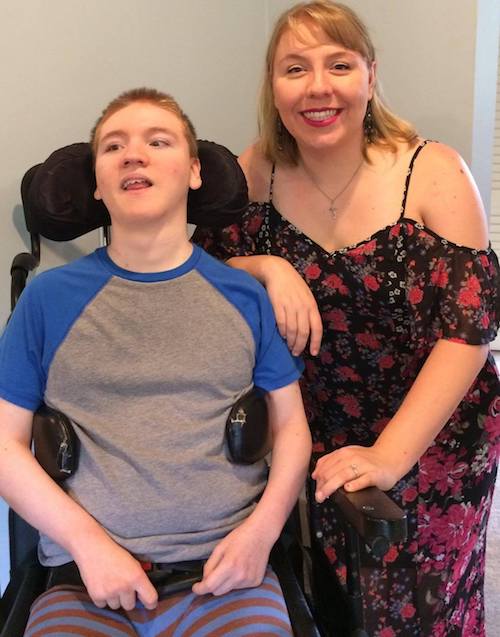
Lindsey Pasieka is a writer and consumer advocate working with ConsumerSafety.org. When not working, she enjoys spending time with family and volunteering for animal rescue. She writes for Different Dream on behalf of her brother, who has cerebral palsy.

Author Jolene Philo

To get posts delivered to your inbox, enter your email address:

Delivered by FeedBurner

Archives

Categories

Related Posts

A Grandmother’s Prayers for a Grandchild with Special Needs

A Grandmother’s Prayers for a Grandchild with Special Needs

A Grandmother’s Prayers for a Grandchild with Special Needs

Different Dream welcomes new guest blogger, Liz Schultz, today. She’s here with the story of the power of a grandmother’s relationship with and her prayers for a grandchild with special needs. What an example for all of us!

A Grandmother’s Prayers for a Grandchild with Special Needs

“Wait, Grandma! Stop the movie! Stop it right there!”

Helen fumbled for the remote and punched the pause button. “What is it, Austin?”

“I want Jesus in my heart,” Austin answered, responding to the gospel message in the Veggie Tales movie now frozen on the screen. Helen prayed with him, “Jesus, come into my heart. I want you to live in me.”

“I don’t know if it sunk into his mind,” Helen explains when she remembers that day and considers the effects of prayer on her grandson’s growing faith, “but I know that seed of faith got into his heart, and my greatest prayer is that what is sown in Austin’s heart will manifest in his life.”

Helen prays that what she teaches about God will grow in Austin’s understanding and be displayed in his behavior. She knows the summer vacations and Christmas breaks that Austin spends with her are times to share her faith and cover him with prayers for his protection and future.

“When Austin is here, it’s seed time,” Helen says. “The greatest thing I can do for him is to sow that seed in his heart and pray for the fruition.”

One effect of Austin’s pervasive development disorder is that he struggles to understand and control his emotions. Helen is teaching Austin to pray to God for his assistance.

“When he becomes angry or aggressive, I say, ‘Let’s ask Jesus to help you,’” Helen says. “’ Let’s ask Jesus to help you when you’re mad. Let’s ask him to help your heart be happy,’ and Austin will reply, ‘Okay, Grandma, I’ll ask Jesus to help.’ When he shares or is polite, I tell him that makes Jesus happy, and Austin understands.”

They often pray together asking Jesus to help Austin make good choices.

“I pray that Austin will make a difference,” Helen explains, describing her hopes for her grandson to live a fruitful and productive future. “I pray that he lives to the full potential God created in him.”

“He is so full of love,” Helen continues. “He’s very aware of and sensitive to other people’s feelings. I pray that he always cares about others, and gives to others. I want him to seek to meet the needs of others, and know that he makes a difference in their lives.”

While Helen prays for Austin’s growing faith, she encourages parents who are struggling with a child’s disability to pray to God and trust in him.

“God knows and loves every child conceived on this earth. Jeremiah 29:11 says that God has a purpose and a plan. Those plans are for good and not evil, for a future and a hope. Never, never give up hope. When I feel weighed down by worries and what-if’s, I remember that God is bigger than my fear.”

“Hey, Grandma, what’s up?” Austin beams as he climbs the front steps, arriving for another visit at Helen’s house.

“There’s my Austin!” Helen greets him, welcoming another opportunity to pray with him and share her faith.

Your Prayers for a Grandchild with Special Needs?

Are you a praying grandparent? Feel free to share about your prayers for a grandchild with special needs in the comment box.


Do you like what you see at DifferentDream.com? You can receive more great content by subscribing to the quarterly Different Dream newsletter and signing up for the daily RSS feed delivered to your email inbox. You can sign up for the first in the pop up box and the second at the bottom of this page.

By

Liz Schultz draws on her experience as a single mother to write encouragement to other single parents. She contributes guest posts at desmoines.citymomsblog.com. Liz also volunteers with a ministry serving teen parents in the Des Moines area, and is completing a book about how her single mom experience led her to faith in God. In her spare time, Liz deconstructs pajama pants to create warm and comforting quilts. Her daughter married last year, so Liz and her husband are now eagerly awaiting the arrival of grandchildren.

Author Jolene Philo

To get posts delivered to your inbox, enter your email address:

Delivered by FeedBurner

Archives

Categories

Related Posts

Accepting Help and Letting Go: The Dilemma of a Special Needs Parent

Accepting Help and Letting Go: The Dilemma of a Special Needs Parent

Accepting Help and Letting Go: The Dilemma of a Special Needs Parent

Accepting help and letting go are hard pills for parents of kids with special needs to swallow. As her daughter nears her 20th birthday, guest blogger Karen Jackson reflects upon what she’s learned about accepting help and letting go. Her struggle is a universal one, so expect to see yourself in what Karen has to say.

Accepting Help and Letting Go

Accepting Help

Accepting help. It has never been my strong suit. I am pretty sure that I know the best way to care for my daughter and what works well for her. Yet, it is not only a blessing to have caregiving help for Samantha. It is also good for her to have others in her life to push her towards independence and provide new ideas and experiences.

Parents of children with special needs are fiercely strong advocates, used to doing whatever it takes for kids. We are often hyper-vigilant, and we function on less sleep that most. We balance family, work, therapy, numerous medical appointments, and medications. We have been doing this for years and years and years!

So when someone offers to help in any form–whether it be a short respite, or long term in home care–we are simultaneously ecstatic and cautious. How could anyone know our children or care for them like we do? How do we step away to get a short break or more permanent support?

Six years ago, we received notification that we would soon be getting waiver services from the state. I stood in the shower, contemplating what it would mean to our family to have consistent help in our home. I cried, relieved that after 13 years of caring for a child with severe disability, the state finally recognized we needed help.

Waiver services changed my life. But along with that help, so needed and much appreciated, came the realization that I would need to give up some control, let go of constant vigilance, and accept the support of others. It was not, then or now, an easy process.

Even now, I make mistakes and can be overly protective. Sometimes, I forget that Samantha’s current in-home caregiver is very capable. Or that Samantha is almost 20 years old and needs time with friends, experiences that do not include her mother.

Letting Go

Letting go. All parents, regardless of a child’s abilities, need to let go as their children move towards independence. For the parent of a child with special needs, especially of kids who are non-verbal or need specialized care, this challenge is particularly difficult. Both parents and caregivers need to demonstrate patience.

Recently, a professional caregiver mentioned a parent who was resistant to letting her child go on outings, be alone with the caregiver, or let the child out of her sight. Consequently, the child would not respond to the new caregiver in any way, always deferring to the parent. The caregiver wanted to know, “What do I do?”.

My advice to the caregiver was to start small. To begin by taking short, specific outings with an end time in mind. To communicate about details and understand that the parent had to know these details for many years. To take photos of your outing, if possible and send them by phone, reassuring the parent that all is well.

My advice for parents is to start small, also. To spend some time outside the home without your child. To take a walk. To get coffee with a friend. To give the caregiver time to bond and learn about how to best care for your child.

This summer, my husband and I will be married 25 years-a significant anniversary, especially considering the challenges we have faced. We are planning a trip in the fall to  go away for a full week to celebrate. This will be the first time I have been away from Samantha for more than a few days. I am nervous but also realize that we have the supports in place to make it happen. Samantha is old enough to handle having me away for a week, whether or not I am ready.

Building up to a long trip away has taken me a very long time. A short time ago, I was the parent who was afraid to let her daughter out of her sight for a minute, sure I was the only person who knew what was best for her.

Accepting help and letting go. It is a tough lesson for many parents of children with special needs. So be patient and show grace. Give others the chance to be a blessing to you and your child, trusting that in the end God is looking out for us all.

Do you like what you see at DifferentDream.com? You can receive more great content by subscribing to the quarterly Different Dream newsletter and signing up for the daily RSS feed delivered to your email inbox. You can sign up for the first in the pop up box and the second at the bottom of this page.

By

Karen Jackson is the Executive Director of Faith Inclusion Network (FIN) of Hampton Roads where she lives with her husband and three children in Norfolk, VA. She is also the author of Loving Samantha. You can connect with Karen at the Faith Inclusion Network page.

Author Jolene Philo

To get posts delivered to your inbox, enter your email address:

Delivered by FeedBurner

Archives

Categories

Related Posts

How to Raise a Health Care Self-Advocate

How to Raise a Health Care Self-Advocate

How to Raise a Health Care Self-Advocate

Once upon a time, my husband and I were our son’s sole health care advocates. For the first 4 years of his life, we faced numerous life and death decisions concerning surgeries, medical tests, and treatment. After those dramatic early years his health stabilized, and our decisions about his health care were more run-of-the-mill.

When he was 15, medical tests showed another major surgery was needed. When our son, who had grown into a strong-willed, intelligent adolescent heard the news, he made clear to us and the surgeons that he expected to be part of the decision-making process. At first my husband and I were taken back by his demand. And then we did the math.

In 3 short years, our son would turn 18, at which time he would be in charge of his own health. Therefore, we made everything regarding his upcoming surgery–the pre-op tests, doctor consultations, even life and death decisions–into a self-advocacy training exercise. Here’s what we learned about raising a health care self-advocate during that experience and as our son entered adulthood.

  1. Write down your child’s medical history. You may remember what treatments (for physical, mental, and emotional ailments) your child received, but your child won’t. Our son has no explicit memories of the tests, treatments, and 7 surgeries he went through before he was 5. So when he was a young adult, I wrote a narrative that included the hospitals where the surgeries took place, the doctors and surgeons who treated him, and anything else I could remember. That medical history equips him to be a health care self-advocate.

To read the rest of this post, visit Key Ministry’s Special Needs Parenting blog.

Do you like what you see at DifferentDream.com? You can receive more great content by subscribing to the quarterly Different Dream newsletter and signing up for the daily RSS feed delivered to your email inbox. You can sign up for the first in the pop up box and the second at the bottom of this page.

By

Jolene Philo is a published author, speaker, wife, and mother of a son with special needs.

Author Jolene Philo

To get posts delivered to your inbox, enter your email address:

Delivered by FeedBurner

Archives

Categories

Related Posts

IEP Tips from Parents for Parents

IEP Tips from Parents for Parents

IEP Tips from Parents for Parents

A few weeks ago, I attended the Engage Conference sponsored by 99 Balloons. One of the workshop sessions was a panel discussion called Navigating the IEP. The panel consisted of 2 parents of kids with IEPs and 1 educator who often attends IEP meetings and annual reviews. The moderator, Matt Mooney, asked the members of the panel to share their best 2 pieces of advice for parents involved in the IEP process. Their answers were wise enough to merit passing along to parents getting ready for their children’s initial IEP meeting or annual review.

Joe’s IEP Tips

Joe first advised parents to be patient and willing to compromise on non-essentials. Parents are their kids’ biggest advocates and want a lot for them. But some requests aren’t reasonable or essential. For his son, that meant not pressing for inclusion in every subject area while insisting his son’s one on one paraprofessional move with him from grade to grade. Second, Joe reminded parents that whatever is in the IEP must be followed. So it’s important that what’s essential for your child is written in the IEP. Parents should then firmly, but without rancor, insist the IEP be followed.

Ashley’s IEP Tips

Ashley’s first piece of advice was to know what you want for your child. You know your child better than the educational experts do. You are also part of the IEP team and have the knowledge to customize the plan to meet your child’s unique needs. Several of the goals presented at her daughter’s initial IEP meetings were not appropriate for her child. So Ashley asked for time to read through the IEP, study the goals, and return at a later date with more appropriate goals. Her second recommendation was that parents try to cultivate a team atmosphere with the experts at the IEP meeting. Most likely parents will deal with the same team of experts for many years, and they really do care about their students. It’s in the child’s best interest to maintain good relationships with them.

Mindy’s IEP Tips

Mindy, who is an educator often present at IEP meetings, counsels parents to be well-informed so they understand what’s being discussed at the initial IEP or annual review meetings. The more informed the parents are, the more likely the school is to meet their children’s needs. She also reminds parents that communication can be hard at IEP meetings. If they can rein in their emotions, it makes a big difference.

Your Best IEP Tips

Okay, now it’s your turn. Leave a comment about your best IEP tips or your reaction to what Joe, Ashley, and Mindy shared. Thanks!

Do you like what you see at DifferentDream.com? You can receive more great content by subscribing to the quarterly Different Dream newsletter and signing up for the daily RSS feed delivered to your email inbox. You can sign up for the first in the pop up box and the second at the bottom of this page.

By

Jolene Philo is the author of the Different Dream series for parents of kids with special needs. She speaks at parenting and special needs conferences around the country. She’s also the creator and host of the Different Dream website. Sharing Love Abundantly With Special Needs Families: The 5 Love Languages® for Parents Raising Children with Disabilities, which she co-authored with Dr. Gary Chapman, was released in August of 2019 and is available at local bookstores, their bookstore website, and at Amazon.

Author Jolene Philo

To get posts delivered to your inbox, enter your email address:

Delivered by FeedBurner

Archives

Categories

Related Posts

5 Ways EA TEF Treatment Has Changed & 5 Ways It’s the Same

5 Ways EA TEF Treatment Has Changed & 5 Ways It’s the Same

5 Ways EA TEF Treatment Has Changed & 5 Ways It’s the Same

My son was diagnosed with EA TEF a few hours after his birth. I’d never heard of the condition before May 23, 1982. In the years since then, I’ve thought about it every single day. In the past 3 decades, I’ve watched advancements that have made EA TEF treatment more humane and more successful. Here are some of the most exciting:

#5 Change: EA TEF Online

The internet made it possible for the EA TEF community to connect online in groups like Facebook’s Bridging the Gap and www.eatef.org. Parents can also learn about surgeons and treatment methods at children’s hospitals around the country and the world.

#4 Change: Anesthesia

Until 1986, newborns undergoing EA TEF repair surgery received no pain medication. Thankfully, that protocol changed a few years after our son’s surgery. You can read the whole story at Can You Imagine Infant Surgery Without Anesthesia.

#3 Change: Feeding Clinics

Feeding clinics are a godsend for kids whose EA TEF treatment results in oral aversion and feeding issues. They are a godsend for parents and caretakers, also, as parents who can’t get their EA TEF child to open their mouths for any reason.

#2 Change: The Foker Process

The Foker Processs is a breakthrough treatment that makes a huge difference for long gap babies. It actually closes the gap by growing the esophagus. Amazing, amazing stuff…and it makes sense!

#1 Change: G-Tubes

Our son’s feeding tube was a Foley balloon catheter. It was huge, cumbersome, ugly, and did the job. Modern G-tubes are small, tidy things with a tiny tummy button and cool syringes for administering feedings. If your child has a modern day G-tube, be very grateful.

While many aspects of EA TEF treatment have changed, many remains the same. Such as:

#5 Unchanged Thing: Complications

Kids with EA TEF are still prone to respiratory infections because of tracheomalacia. They also can develop esophageal strictures at point of repair and many have GERD.

#4 Unchanged Thing: Barky Cough

Parents of kids with EA TEF all over the world nod their heads when they read this one. We also recognize the barky cough (it truly does sound like a seal barking) that causes other parents to hustle their kids out of range of the germs they believe are the cause of the nasty cough.

#3 Unchanged Thing: Gifted Pediatric Surgeons

Gifted, highly trained surgeons save our children’s lives. Parents of kids with EA TEF are grateful to them every day we spend with our kids.

#2 Unchanged Thing: Worried Parents

Though the doctors and nurses continually remind parents that EA TEF repairs have a high success rate, parents like us can’t help but worry. Especially when complications arise. And they do.

#1 Unchanged Thing: Different Dreams

When parents hear their children have EA TEF, their dreams for their kids change. They dream of visiting their newborns in NICU instead of in the freshly decorated nursery at home. They dream of the day their babies will eat by mouth instead of a G-tube. They dream of more effective medications to neutralize GERD.

The unchanging truth is that our parenting dreams change, but our fierce love for them does not.
How Have You Seen EA Treatment Change and Stay the Same?

Leave a comment about the ways you’ve seen EA Treatment change while staying the same. I’d love to hear what you have to say.

By

Jolene Philo is the author of the Different Dream series for parents of kids with special needs. She speaks at parenting and special needs conferences around the country. She’s also the creator and host of the Different Dream website. Sharing Love Abundantly With Special Needs Families: The 5 Love Languages® for Parents Raising Children with Disabilities, which she co-authored with Dr. Gary Chapman, was released in August of 2019 and is available at local bookstores, their bookstore website, and at Amazon.

Author Jolene Philo

To get posts delivered to your inbox, enter your email address:

Delivered by FeedBurner

Archives

Categories

Related Posts