Changing Attitudes about Disability: A Road Map

Changing Attitudes about Disability: A Road Map

Changing Attitudes about Disability: A Road Map

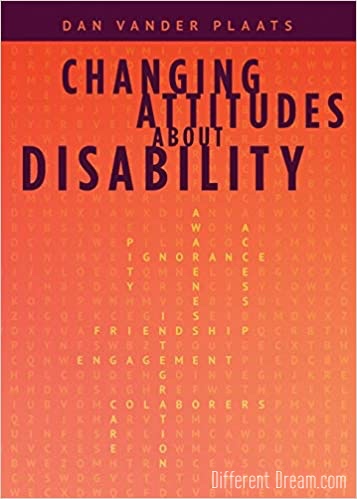
Changing Attitudes about Disability is a new book by today’s guest blogger Dan Vander Plaats. Read on to discover how a short conversation with a waitress motivated Dan to write the book and changed his own attitudes, too.

She didn’t mean to do it. In fact, she hadn’t done anything a million other people hadn’t already done. I had seen it happen so many times that I don’t know why his time it made any difference.

But it did.

She treated me like I was disabled.

Which I was. I was born with damage to a nerve cluster at the base of my brain, causing some slight under-development physically, but more significantly affecting my speech. It’s a pretty obvious speech disability.

I was visiting a restaurant in a midwest city with a few co-workers and two adults who participated in the day program at Elim, where I have worked for 23 years as a fundraiser. The server had done everything right. She came up, introduced herself, and then asked us all our names.

When she heard our program participants speak, with slight slurs and some speech impediments of their own, her head cocked to the side and her voice went up a little in register. It must have seemed to her like this would be the nice way to treat people with disabilities. It even seemed nice to me. Then she turned to me, and I said my name, and she treated me the same way. What had seemed nice now seemed simply condescending. I blushed and tried to laugh it off, but I was angry.

I stewed on it for a couple hours before realizing that the problem wasn’t just that she was condescending, no. There was a bigger problem. The problem was that I hadn’t taken issue with her attitude until it was directed at me. Simply put, I thought I was worthy of different treatment from my friends from Elim.

The problem was my attitude. I thought that people with disabilities should be treated the way they are – that it was simply normal and okay. I also thought that I didn’t fit with that group, because I saw myself as “normal.” 

This, brothers and sisters, is the problem. When God formed us, He did not do it differently when it came to people with disabilities. We are all made in His image, fearfully and wonderfully made (Psalm 139). I Corinthians 12:22 says we that those parts of the body that seem weaker are in fact indispensable. Ephesians 2:10 says we are all masterpieces with work to do. The problem is that we don’t listen to this; we too often deceive ourselves into believing that there is an us and a them, and “them” have disabilities.

That night, after leaving the restaurant, I wrote the first draft of The 5 Stages, a tool that has been translated many times and is helping churches and Christians around the world assess their attitudes about people with disabilities.
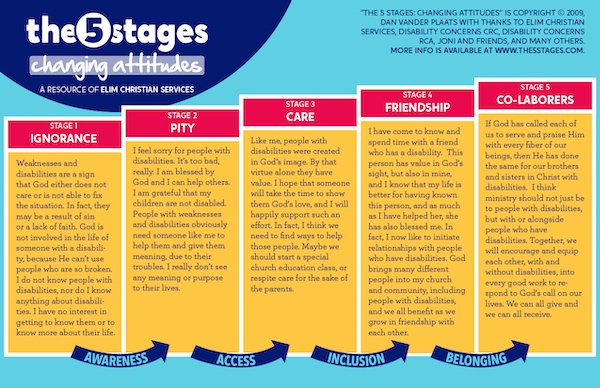
Recently, Dordt Press released a booklet called Changing Attitudes About Disabilities where you can learn more about these attitudes.

If you happen to visit a steakhouse in Sioux Falls, South Dakota, maybe you could hand a copy to the server who inspired the book, and this blog post.

Do you like what you see at DifferentDream.com? You can receive more great content by subscribing to the monthly Different Dream newsletter and signing up for the daily RSS feed delivered to your email inbox. You can sign up for the first in the pop up box and the second at the bottom of this page.
By

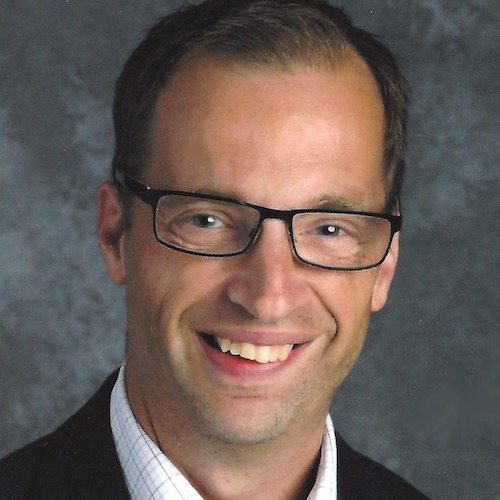
Dan Vander Plaats is the Director of Advancement at Elim, a global, Christian disability ministry based in Crestwood, Illinois. Dan serves on the advisory committee for a bi-denominational Disability Concerns. In 2009, he developed The 5 Stages: Changing Attitudes to help churches and individuals assess and change their attitudes toward people with disabilities, and he’s the author of Changing Attitudes about Disability. He is married to Denise (Hiemstra), and is father to Ben and Emma.

Author Jolene Philo

To get posts delivered to your inbox, enter your email address:

Delivered by FeedBurner

Archives

Categories

Related Posts

My Child Is Different, but We Have More in Common Than You Think

My Child Is Different, but We Have More in Common Than You Think

My Child Is Different, but We Have More in Common Than You Think

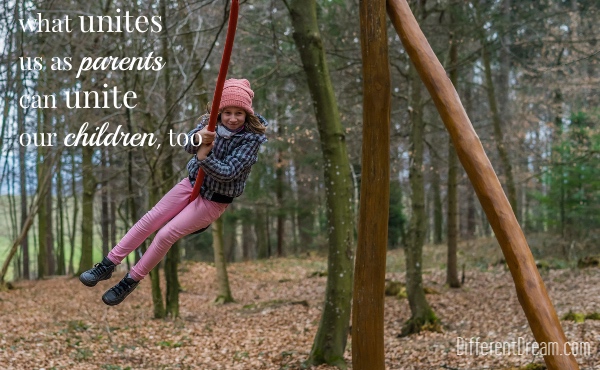
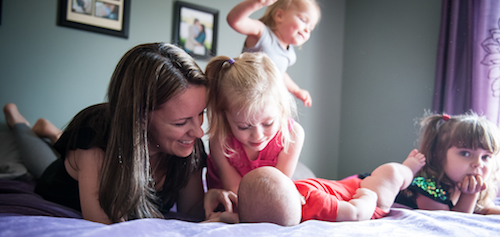
My child is different, says guest blogger Amy Felix, and yet. And yet, Amy knows that parents of typical kids and parents of kids with special needs have much in common. That commonality, she also believes, is what will help us raise a new generation of compassionate and kind adults.

When she was younger, you thought it was cute. The way she jumped up and down excitedly and repeated everything I said. Her big, green eyes and sweet, round angel face were the first things you’d notice when she entered the room. Her meltdowns were, in your mind, toddler tantrums and you gave me that “I’ve been there, too” smile to relieve the tension you could tell I was feeling. We were the same back then. You and I were just parents, and we understood each other without having to say a word.

Then she got older.

My little girl isn’t so little anymore and, suddenly, there’s a great divide. Now my child is different. You still give me that polite parent-to-parent smile when we enter the room, but when she gets excited or upset–we’re no longer the same, you and me.

Now you’re staring.

As she flaps her hands and talks loudly when she’s feeling joy, or paces back and forth with her hands over her ears when she’s upset. Her differences are becoming more and more obvious to you. You look from her to me, sizing me up. When you realize I’ve noticed it, you look away and avoid me. We no longer have an understanding, and it hurts.

We are strangers to one another.

I know that you have no way of knowing that my child has autism. Not all disabilities are visible. Just as I have no way of knowing anything about your child or your life. So, let’s take a step back for a moment, beyond just us. Beyond this situation we’re finding ourselves in.

Our children are here, at this birthday party or that playground, together.

They are taking it all in and, despite what so many articles may say, bullying is not just something that naturally develops as a part of childhood. Bullying starts with us. You and me. Moms and dads. Staring at one another in the presence of our children who, though they are busy eating cake or playing catch, are also busy watching. Those little sponges are absorbing every moment of uncomfortable silence between us. They haven’t treated each other differently yet. Our children haven’t begun to place each other on a scale of differing values.

But they will because my child is different.

Unless we change this judgmental way of interacting. Unless you look at my situation, unless I look at yours, and try to see the positive; try to embrace the differences as special and not strange. Unless we can be more like our children, our children will all-too-soon be more like us–the us that stands divided. The us that doesn’t take the time to try and understand. The us that we’d rather not acknowledge. The window of time is closing in which we still stand a chance to raise a generation of compassionate, open-minded people. So, from one parent to another, this is my plea.

My child is different. So is yours.

They all are, and that’s what makes them breathtakingly beautiful. Please, let’s not take that truth from them and twist it into the lie that they all need to fit into the same mold. If you see my child doing something that you don’t understand, ask me about it! I’d love to explain what makes her unique and I’d love to hear about what makes your child special, too.

As a parent, I’m different.

I have to be, because my children are not your children. Each of these little people have different personalities and need different things from us as moms and dads. Can we please leave the judgmental stares and awkward silence at the door and just support each other? We may be on very different parenting journeys, but we have one thing in common.

We love our children.

There’s nothing we wouldn’t do for them. When we’re faced with differences that feel too great and we don’t know how to relate to one another, let’s just start there. Chances are, we have more in common than you think.

Do you like what you see at DifferentDream.com? You can receive more great content by subscribing to the monthly Different Dream newsletter and signing up for the daily RSS feed delivered to your email inbox. You can sign up for both at the bottom of this page.

By

My name is Amy Felix. I’ve been married for 10 years to a guy who’s totally out of my league. I’m a homeschooling mom to 4 kids, ranging in age from 9 to 2 years. That’s really enough work on it’s own but, because I love it, I’m a photographer as well. And, in my spare time, I write. My faith is the driving force behind my special needs blog: Appointed To Hope. I’m a firm believer in being real, transparent, and using the gifts of this journey as a way to relate to others in their joy as well as their sorrow. To read more about my adventures in special needs parenting, visit my website at www.appointedtohope.com.

Author Jolene Philo

To get posts delivered to your inbox, enter your email address:

Delivered by FeedBurner

Archives

Categories

Related Posts

Heartfelt Gratitude for Special Needs Blessings

Heartfelt Gratitude for Special Needs Blessings

Heartfelt Gratitude for Special Needs Blessings

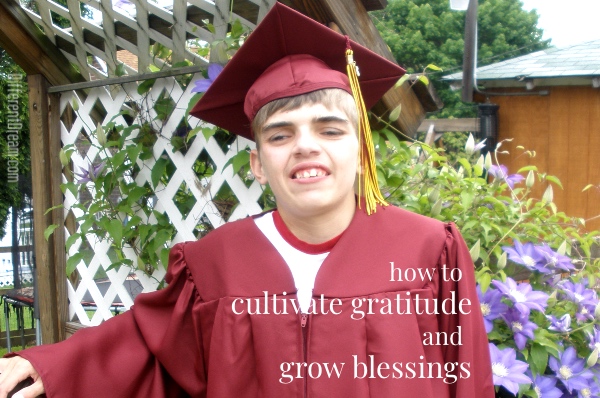
Heartfelt gratitude for special needs blessings may seem like a contradiction of terms for parents grappling with a new diagnosis or the loss of a child. Guest blogger Paul Gallagher describes how he and his wife Valerie cultivated gratitude through the life of their first child, Joshua, and how they use that gratitude to bless others. My wife Valerie and I were expecting our first child in England, her native country, where I was serving in the United States Air Force (USAF). The nursery was ready, the due date was approaching. We were so excited! Two weeks before that date, our USAF doctor noticed something that resulted in us being referred to Guys Hospital in London. After a sonogram, the doctor told us our son had a hypoplastic left heart and would not live more than a few hours after birth. We were devastated. Fortunately, the air force quickly whisked us to the United States where doctors were willing to intervene. We arrived after an 11 hour flight in a military cargo aircraft with Valerie on a stretcher. Josh was born at an army hospital and later transferred to Texas Children’s Hospital to await a heart transplant. At 3 months of age, Josh had the transplant.

Heartfelt gratitude for special needs blessings can take a long time to cultivate. Paul Gallagher describes how he and his wife learned about gratitude and how they want to bless others.

Organ transplantation isn’t a cure. It is trading an unmanageable problem for a manageable one. As a young couple we learned complex immunosuppressive medicine regimes, placed nasal-gastric feeding tubes, and experienced the worries of having a child with a compromised immune system. Later we learned that Joshua was also autistic. We’ve spent countless days living in ICUs and hospital rooms. On numerous occasions we’ve been pulled into a room and told Josh was not going to make it. We watched him endure procedures, ouchies, yucky meds, and pain. We cared for him in our home until he was almost 18. He passed away in January of 2011.

Heartfelt gratitude for special needs blessings can take a long time to cultivate. Paul Gallagher describes how he and his wife learned about gratitude and how they want to bless others. Josh has a younger brother and sister who also walked this path with us. To be sure, Josh’s good days far outnumbered the bad, but life could be unpredictable and very hard. What did we learn through these experiences?
  1. A different understanding of blessings. Blessings are often brought to us through the hardest circumstances. In the hardest times, there is something to be thankful for–if we look for it. We can only experience the blessing of God’s comfort when we are broken-hearted.
  2. We can avoid victimhood and self-pity focusing on what we can do. The quickest way to loose hope is focusing on circumstances we can’t change. But whatever our circumstances, there is always some way to be a blessing to others–if we look for it. Even in impossible situations, we can do something.
  3. We must accept life on its terms and trust the Lord. If we compare, we step away from blessings because comparing my circumstances with others or with the way I think they should be will make it difficult to be thankful. We can’t bless bless others when we aren’t thankful.
We are thankful because we know God loves Josh even more than we do. We are thankful that when Josh entered God’s presence, all the pain he ever felt was not even a memory.  Between now and our joyful reunion, we try to bless others through Josh Tree, a non-profit we recently started. Josh Tree allows us to share our heartfelt gratitude for special needs blessings and keep Josh’s memory alive by helping families with children who have life-changing illness. The long term vision of the organization is to provide those families with resources to stay resilient in the face of incredible challenge as well as helping with their more immediate needs. We invite you to visit the website to learn more about how Joshua taught us to cultivate gratitude for special needs blessings in his life and ours. Do you like what you see at DifferentDream.com? You can receive more great content by subscribing to the monthly Different Dream newsletter and signing up for the daily RSS fee
Heartfelt gratitude for special needs blessings can take a long time to cultivate. Paul Gallagher describes how he and his wife learned about gratitude and how they want to bless others.

By

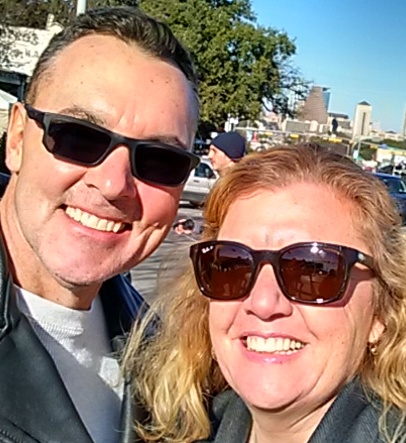
Paul Gallagher is a retired United States Air Force (USAF) Chief Master Sergeant with 29 years of service. He and his lovely wife Valerie are now empty nesters and living in New Braunfels, Texas where he works as a business consultant. They enjoy friends and family, along with hiking and camping.

Author Jolene Philo

To get posts delivered to your inbox, enter your email address:

Delivered by FeedBurner

Archives

Categories

Related Posts

A Normal Life with EA

A Normal Life with EA

A Normal Life with EA

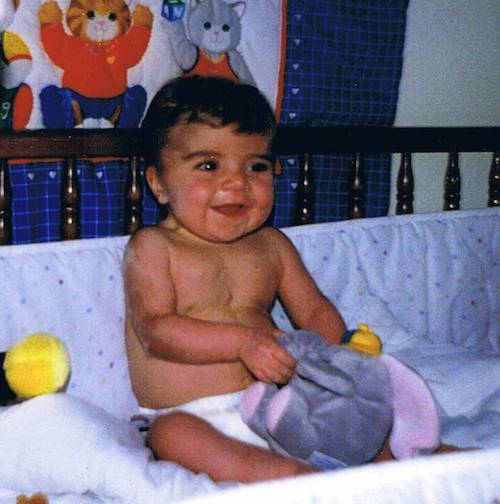
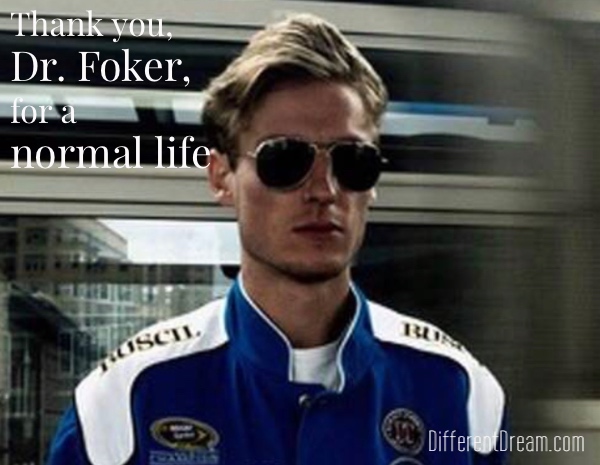
A normal life with EA is possible according to Logan Ebert’s firsthand account of how his long gap, pure esophageal atresia (EA) was repaired. I’m delighted to welcome Logan as today’s guest blogger, EA/TEF survivor, and thriving 23-year-old young man.

The first two years of my life were anything but normal. The traditional struggles and charms of early parenthood were overshadowed by complex medical procedures, life-altering decisions, and countless nights sleeping in hotels, the intensive care unit, and anywhere but home. After a long series of surgeries and the unknown, I would eventually live with what was thought to be the impossible: a normal life with EA.

A couple of months before I was born, my parents were told I most likely had EA and possibly VACTREL.  I was born with long gap, pure EA and heart defects. The options for long gap EA were to use the colon as an esophagus, a spiral myotomy, or pull the stomach up into the chest (gastric pull-up). These were the popular fixes at the time, and could be performed by a handful of surgeons. This is still the case almost 25 years later, even though these remedies come with numerous complications and cause future problems that prevent the patient from living a normal life.

My parents, desperate and two years before Google was invented, found a snippet in a medical journal at the University of Denver medical library that had just been written by Dr. John Foker. He was a surgeon at the University of Minnesota who had just developed an innovative and experimental approach to treating my birth defect through tension-forced growth, essentially growing my esophagus out of the tissue that was already there. Miraculously, Dr. Foker had only begun to use this method on patients with longer gaps just weeks before I was born, making me Dr. Foker’s second patient at only 2 months of age. I was a true guinea pig when it comes to treating EA in this way.

The drama of my early childhood is something I’ve only ever experienced through stories. Despite routine checkups and a few cool scars, very little has physically separated me from my peers–apart from being extremely handsome, and humble. As I finish up my dinner of two freshly grilled brats, a side of orzo, and a salad, I can reflect on my ability to explore and enjoy the expanse of the culinary world. I eat anything from red meats to popcorn, to spicy curry and pad thai. I haven’t missed out in the slightest. In the summer, I routinely go on high-alpine hikes, and in the winter I’m on the ski slopes almost every weekend. I scuba dive, have finished a triathlon, and para-sailed–all with what were once considered compromised lungs. 

Dr. Foker has since retired, but not before establishing a world-class EA/TEF program at Boston Children’s Hospital. Unfortunately, there are children every day who are born with EA, and parents that are presented with the options that were available at the time of my birth. I am eternally blessed that my family sought out Dr. Foker, took a bold chance on an experimental procedure, and helped me live a normal life with EA, the life I want.

My hope is that my story will give parents and children of the EA community a reason to believe in the miraculous, that there is a promise of living a normal life with EA. Further, I hope to advocate for the tremendous work that has been done by the team at Boston Children’s to carry on Dr. Foker’s legacy

My parents, Fred and Mara Lee Ebert, would be happy to answer any questions you may have. They can be reached at MaraLeeSonoma@icloud.com.

Do you like what you see at DifferentDream.com? You can receive more great content by subscribing to the monthly Different Dream newsletter and signing up for the daily RSS feed delivered to your email inbox. You can sign up at the bottom of this page.

By

Logan Ebert is 23 and lives in Denver, Colorado. A recent graduate of the University of Denver, Logan enjoys snowboarding, hiking, camping, biking, and any outdoor sport. Born with long-gap esophageal atresia, Logan was the second recipient of what is now known as the Foker Method, which he attributes largely to his ability to live a normal and active life.

Author Jolene Philo

To get posts delivered to your inbox, enter your email address:

Delivered by FeedBurner

Archives

Categories

Related Posts

What Disability Means to My Warrior Son, Part 2

What Disability Means to My Warrior Son, Part 2

What Disability Means to My Warrior Son, Part 2

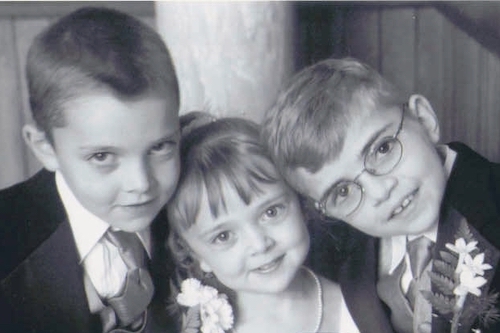
What disability means for our children with special needs is a reality we can help our kids accept. In part one of this two part series, guest blogger Trish Shaeffer described her son’s disability and what it means for him. In today’s post, she explains he is more like than different from children without disabilities.

In the first part of this series, I explained what disability means for my son Alex. His primary disability is cerebral palsy (CP), which affects him in many other ways. Issues that go along with his cerebral palsy include epilepsy, constipation, and vision issues. Even sleep disturbances caused by pain, seizures, and inability to reposition himself while he sleeps. In some case this causes pressure sores. He has balance issues and falls a lot, even when sitting on the floor on his knees. Swallowing becomes harder at times which can lead to choking on water or juice, risk of pneumonia, and other lung issues. Inability to move his extremities at times means Alex also has circulation problems and trouble staying warm in the winter.

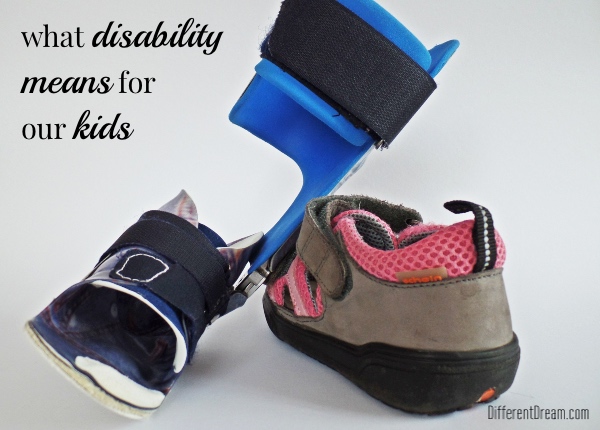
These secondary issues mean extra layers and pressure socks, as we put on his DAFO braces that help keep his feet flat and help with standing. We give him full creative run for all his equipment designs and color choices. Even down to his eye glasses. These give Alex a sense of importance, uniqueness, and independence. For example, his bath chair allows him to sit up off the bathtub floor so we can clean him properly. We continue to adapt our home and his transportation to help him become more independent in his self-care and mobility. A stair lift means he is able to get up and down stairs alone.This opens doors so he can explore his world.

CP also means a lot of therapists, doctors’ appointments, tests, and surgeries. Alex has had 10 surgeries in a decade. He has many therapists and loves them deeply, calling them his friends. He has tests every month but he never cries even when he gets his blood drawn, because they’re the norm for him. He also enjoys getting out in his community.

Alex is a big people person. I have seen him smile at someone sad, and they suddenly smile back. People tell me he brightens their day because he cares and is kind and compassionate. He has blossomed into one awesome person.

What disability means for Alex and for other kids is that it’s just a label. Every child with a disability has a personality and a name. They have likes and dislikes. They feel emotion. Talk in their own way. Want to be seen as people, not as labels, wheelchairs, or walkers. They want us to look beyond the wheelchair. Look beyond the disability. Look beyond limitations or labels. You might be surprised by who you see. Alex teaches this every day. He inspires and educates. He loves to share his story with everyone. To bring change. Reduce judgement and fear over a diagnoses.

CP means challenges for the rest of Alex’s life. But it won’t stop him from being happy and full of life. Don’t feel sorry for Alex. Feel happy next time you see him. Know that he is one happy kid and wants to share his smile with the world.

Part 1


Do you like what you see at DifferentDream.com? You can receive more great content by subscribing to the monthly Different Dream newsletter and signing up for the daily RSS feed delivered to your email inbox. You can sign up for the first in the pop up box and the second at the bottom of this page.

By

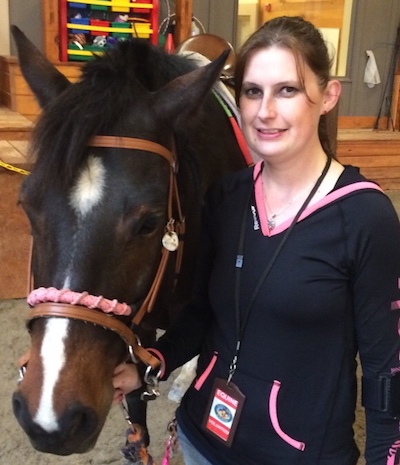
Trish Shaeffer is the mom of 3 active boys with special needs. She’s a peer supporter for Parent to Parent and volunteers with the United Cerebral Palsy Network, Special Olympics, and the United Way. She’s also an equine volunteer at Leg Up Farm. She’s married to her best friend and biggest supporter, Chris Schaeffer.

Author Jolene Philo

To get posts delivered to your inbox, enter your email address:

Delivered by FeedBurner

Archives

Categories

Related Posts

What Disability Means for My Warrior Son, Part 1

What Disability Means for My Warrior Son, Part 1

What Disability Means for My Warrior Son, Part 1

What disability means for our children with special needs is something our kids wrestle with as they grow. As parents, we must anticipate what our children will face and prepare to support them. In the first post in her two part series, guest blogger Trish Schaeffer describes her son’s disability and what it means. In the second post in the series, she tells how he is more like than different from children without disabilities.

When people see my son Alex, they always has the same questions. What is wrong with him? What does he have? I don’t mind if someone asks me questions about my son, and I’m happy to advocate or offer an explanation. I answer them with “He has cerebral palsy.” Or for small children “His legs don’t work right.”

Alex had a massive stroke in utero and was born two months prematurely, along with his twin brother. The stroke caused a grade 2 and grade 3 brain bleed resulting in brain damage at birth. This is why he has cerebral palsy (CP). Despite low odds, Alex survived with his twin and has grown into a happy kid. He is is vocal and curious about the world and people around him. He has overcome so many of the odds given at birth. He continues to grow, learn, and accomplish goals.

Alex has spastic quad cerebral palsy. This means all of his limbs are affected and become rigid and stiff. He has more use of his arms and hands than of his legs. He also has pain daily, muscle spasms, and joint dislocation issues. Recently, he received a Baclofen Pump which delivers a dose of medication directly to his spine via catheter to help his muscle tone and pain management. He’s had this small pump in his abdomen for a little over 3 years. Along with the pump, Alex has had tendon-lengthening surgery to reduce his pain. It has also helped him bend and gain function in his legs.

 People often recognize the term CP, but many don’t understand what it means for my son now and in the future. What disability means for my son is this:

He will always have issues with mobility. He will always use a wheelchair or walker. Disability affects the simplest things such as eating or dressing. He will always be in pain from muscle spasms and weather changes. It means he may have good days and bad days from a physical and mental perspective. Some days are better than others but he will have trouble answering simple questions or doing simple tasks like remembering his address.

Alex has always and will always move to the beat of his own drum. At his own pace. One day at a time. One task at a time as he learns to navigate the world around him. He has learned how to push himself in his wheelchair. Take ramps. He now dresses himself. He is working on transfers and has begun to use a walker to do them. I remember when the doctors gave us overwhelming diagnostic labels and described overwhelming limitations that Alex would have. He proves them wrong to this day. All he needs is patience, love, acceptance, and a bit of cheerleading. He wants to be his own child. His own individual. To reach his goals in his own time.

Part 2


Do you like what you see at DifferentDream.com? You can receive more great content by subscribing to the monthly Different Dream newsletter and signing up for the daily RSS feed delivered to your email inbox. You can sign up for the first in the pop up box and the second at the bottom of this page.

By

Trish Shaeffer is the mom of 3 active boys with special needs. She’s a peer supporter for Parent to Parent and volunteers with the United Cerebral Palsy Network, Special Olympics, and the United Way. She’s also an equine volunteer at Leg Up Farm. She’s married to her best friend and biggest supporter, Chris Schaeffer.

Author Jolene Philo

To get posts delivered to your inbox, enter your email address:

Delivered by FeedBurner

Archives

Categories

Related Posts