6 EA TEF Warnings Hidden from New Parents

6 EA TEF Warnings Hidden from New Parents

6 EA TEF Warnings Hidden from New Parents

EA TEF Awareness Month is all about educating the masses about a rare and life-threatening birth anomaly. Today guest blogger and mom, Nanette Lerner educates new parents regarding 6 EA TEF warnings hidden by the well-meaning medical community.

6 EA TEF Warnings Hidden from New Parents

No one ever expects to have an EA TEF kid. The truth is, until you have one, you’ve probably never heard of the condition, ever.

What does EA TEF mean? It means that your baby is born unable to swallow due to a somewhat rare birth defect where the esophagus is attached to the trachea instead of the stomach. But what does it really mean? Until you’ve had a kid with it, you have no way of knowing.

Nearly 6 years ago on a frigidly cold January morning, our feisty, teeny TEF boy entered the world. He was 6 weeks early and at just 3 pounds, 13 ounces, the smallest baby our surgeon had ever performed a TEF repair on. Luckily, we didn’t know this fact until after the surgery was completed successfully. After that, we had 2 long, stressful months in the neonatal intensive care unit (NICU). And then a return to the NICU about 2 weeks later for his first dilation.

Almost 6 years and several hospital stays later, we’ve learned a lot. Some of it through trial and error. Some of it through the amazing TEF/EA community. I’m grateful to say entire days go by without thinking about the fact that our boy has TEF and all the complications that go along with it. But then he lets out a cough—that deep, echoing, barky cough—and the panic sets in again.

When he was born, we thought once his fistula was repaired, that would be it. All fixed! But as all TEF parents know, that is simply not the case. Here are 6 EA TEF warnings a few things nobody told us about:

EA TEF Warning #1: Oh, that cough.

That TEF cough. It doesn’t sound like anything else and it doesn’t necessarily mean your kid is sick. He could just be clearing food out of his throat. Or water went down too quickly. Or it could be he had a cold three weeks ago, and it still sounds like he’s got whooping cough.  In any case, the cough will earn lots of disapproving looks from parents who assume you are a terrible person for bringing your germy kid out in public. Expect to hear from worried teachers and alarmed school nurses. Try to ignore the glares and the judgements. Instead, remember that all those people don’t understand TEF. Most of them probably don’t even know what it is. Which brings me to my next point.

EA TEF Warning #2: Whether you like it or not, you are now an official TEF/EA educator.

No one’s heard of what your kid’s got? Okay, fine. That means it is your job to educate the world. When you get those dirty looks from a parent, explain exactly what your kid has.  Send the teachers/school nurses website links so they can understand what they are dealing with. We even printed out fliers about TEF for concerned parents at the playground. Turn an annoying moment into a teaching one.

EA TEF Warning #3: You will never look at food in quite the same way.

Once your kid starts eating real food, you will constantly evaluate it in choking hazard terms. Some foods are obvious (popcorn, grapes) while others seem innocent but aren’t. Watermelon was always a surprising culprit for our son; it was just soft enough that he probably didn’t chew it enough. Pizza with a bready, soft crust also proved to be a problem.

EA TEF Warning #4: Fall is the cruelest season.

Sad but true. Fall has the prettiest colors, the best holidays, and great apples. Unfortunately, it also comes with back-to-school germs that inevitably morph into a back-to-school cough. Of course, fall isn’t the only season your kid is susceptible to germs—ours wound up with a horrible flu that landed him in the hospital in June. June?! Who the heck gets sick in June?  TEF kids do.

EA TEF Warning #5: The scars you can’t see are worse than the ones you can see.

Yes, our boy has a serious scar from the surgery. It isn’t small and it sure isn’t cute. But that scar is what saved his life and it’s proof that he lived through it. However, he has emotional scars from being rushed to the emergency rooms so many times.  The fear when he has when he comes into contact with any medical professional. Having to pry him out from under a metal folding chair to get him his flu shot. Those scars suck, and they aren’t going away anytime soon.

As a parent, you will have emotional scars, too. I still can’t stand the smell of the soap in any doctor’s office since it reminds me of constantly washing my hands in the NICU.

EA TEF Warning #6: It gets better. Your kids get bigger.

They learn to handle the stuck food in their throat. They can communicate when they need help. One day, your kid will bite into a hamburger and you won’t get a panicked feeling as you watch him do it. Swear.

On the harder days, which luckily become less frequent, we remind ourselves that there are far worse things than EA TEF. Just remember this: your TEF kid is a work in progress.  Just like the rest of us.

What EA TEF Warnings Do You Have for New Parents?

What EA TEF Warnings would you add to Nanette’s list? Leave them in the comment box.


Do you like what you see at DifferentDream.com? You can receive more great content by subscribing to the quarterly Different Dream newsletter and signing up for the daily RSS feed delivered to your email inbox. You can sign up for the first in the pop up box and the second at the bottom of this page.

By

Nanette Lerner writes commercials, very long texts, occasional blog posts and young adult fiction. She lives in New Jersey with her husband and two children.

Author Jolene Philo

To get posts delivered to your inbox, enter your email address:

Delivered by FeedBurner

Archives

Categories

Related Posts

Our EA TEF Adventure: A Journey with Our Son

Our EA TEF Adventure: A Journey with Our Son

Our EA TEF Adventure: A Journey with Our Son

EA TEF adventure abounds when kids are born with this life-threatening birth anomaly. Guest blogger Maheen Tarver shares her family’s EA TEF adventure in this post in honor of EA TEF Awareness Month. 

Our EA/TEF Adventure: A Journey with Our Son

Our EA TEF Adventure Begins

After another night of near sleeplessness 31 weeks into pregnancy, I felt something warm and wet going down my leg. I opened my eyes and looked at the time on the phone. 6:59 AM.

“I think my water just broke!” I yelled to my husband, Wil. I stood up and a gush of water came pouring down, flooding our carpet.

The next 45 minutes became a blur as we rushed to the hospital and were escorted to the delivery ward. The doctors tried to halt my premature labor, and  he performed an emergency C-section 2 and a half hours after we arrived at the hospital.

At 10:08 AM on May 27, 2016, our son Waqeed Dean (WD) Tarver was born. I remember asking if he was okay, hearing that he was, and passing out.

Wil began calling family and friends with the news. I lay on the gurney, eager to hold my first born. A nurse grabbed Wil and took him out of the room while a doctor came in to talk to me. WD was being taken to surgery. I asked whether or not he would be okay. The doctor said he would be right as rain.

That night we learned our son had been born with a congenital birth defect, called Esophageal Atresia and Tracheoesophageal Fistula (EA TEF), along with Duodenum Atresia, in addition to typical preemie issues. He needed another surgery in 5 days. I didn’t worry much since the doctor had said he would be right as rain.

Our EA TEF Adventure in the NICU

5 days later, I went home without my baby, without having held him in my arms, without having touched him in his NICU isolette. Wil visited our baby daily and cared for me. We were alone in California, taking one day at a time while a few dear friends tried to help us. My parents in Bangladesh felt helpless. Wil’s parents in Georgia weren’t able to come until later.

I began blaming my obstetrician as I reflected upon my pregnancy. My anger turned into hours of crying. I blamed myself for not being proactive during pregnancy. I quit visiting WD. Wil said I was experiencing postpartum depression, but I was in denial.

I went to see my son when he was a week old. I caught myself wishing my baby had never been born. As soon as I realized what I was doing, I told Wil about it and constantly reminded myself that these feelings weren’t my true feelings, but chemical imbalances caused by postpartum depression.

I started visiting WD a couple hours a day and then for entire days. When WD was almost 1 month old, NG tube feedings began. Weeks went by with no improvement in the feedings because of GERD. He developed a wet cough. He had his first esophageal dilation without much success. The NICU nurses hinted about the need for a G-tube. They quit feeding him orally, and his need for oxygen assistance increased. The doctor’s “right as rain” promise was a hollow one.

I began researching EA TEF and premature babies. The more I read, the more I realized we needed to ask more questions. I began talking to the doctors and nurse practitioners and not just the NICU nurses. On WD’s due date, we finally sat down with the entire care team to discuss his care plan. They explained why he needed G-Tube and Nissen fundoplication surgeries. We asked questions and soon realized WD would come home only after he had the surgeries and that we would need to provide consistent care at home.

During surgery, WD was diagnosed with more anomalies. He experienced several complications during his recovery, but eventually became more stable. We tried to control our excitement and learned feeding tube management as we prepared to bring him home. On the 100th day of his NICU stay, Waqeed Dean Tarver came home.

Our EA TEF Adventure at Home

WD flourished for several months. Wil and I learned new things every day about bottle/nipple compatibilities and signs of retching/gagging. The best part was enjoying our son every minute of every day.

WD improved until October of 2016 when he went from taking most of his food orally to taking no food at all. His reflux returned, and it became evident his Nissen fundoplication had failed. Eventually, we moved to Massachusetts to be closer to Boston Children’s Hospital. The doctors there put him on some new drugs, and he is slowly improving. A few more issues have been found, but we are optimistic WD will continue to make progress.

An EA TEF Adventure Should Not Be Attempted Alone

Many parents of kids with EA TEF feel alone because it is a rare defect. It can seem bleak. It can feel like you are the only parent whose child who is not being properly treated or that no one understands your pain. Please know that you are not alone, that others have gone before you and are with you.

We learned much from other EA TEF parents on the internet. I am thankful for all of them. It takes a huge effort for me to share our story. But this is my way of coping–to tell about my son’s condition and to assure parents that it is okay to feel what they feel. After all, we are human.

Both my parents and my in-laws told me one thing that stuck with me. “Whatever God gives you, it is to make you a better human being.” I truly believe that this experience has a purpose in our lives and is going to make WD and us better human beings. I want you to know that you are blessed with the love of your little one. You too can stay positive and educate others about EA TEF.

Do you like what you see at DifferentDream.com? You can receive more great content by subscribing to the quarterly Different Dream newsletter and signing up for the daily RSS feed delivered to your email inbox. You can sign up for the first in the pop up box and the second at the bottom of this page.

By

Maheen Tarver is a Bengali Muslim born and raised in Bangladesh.  Before she was a full time, messy bun, no makeup, super-busy mom, she was a project coordinator in Bangladesh educating underprivileged, young garment workers about health, safety and environment. She lives with her husband William and son Waqeed Dean (WD) in Massachusetts. Maheen now spends her researching EA/TEF and encouraging other EA/TEF moms to become advocates for their children.

Author Jolene Philo

To get posts delivered to your inbox, enter your email address:

Delivered by FeedBurner

Archives

Categories

Related Posts

A Special Needs Dad’s Wish for His Son

A Special Needs Dad’s Wish for His Son

A Special Needs Dad’s Wish for His Son

Today’s post comes from a special needs dad. This special needs dad speaks for Joel, his son who can’t always communicate his emotions. He also speaks of his love for his son and the journey they have walked together for almost 42 years. Do you have a tissue box with you? No? You’ll want to get one.

My Name Is Joel

My name is Joel. I love, accept, respect, forgive, and honor myself. The labels professionals and others have given me are: behavior disorder, moderate mental retardation, ventricular septa defect, hypotonic, bilateral gynecomastia, mild facial abnormalities, pervasive developmental disorder, autism, hyper-anxiety, obsessive compulsive disorder and perhaps others. An added trait in actuality is I struggle with expressing my feelings, understanding my environment and all communications. My communication skills are not those others believe I have.

My childhood was great as I had loving parents, accepting and supporting siblings and a friendly environment with freedom to grow and learn in. My mother pursued for me many opportunities in preschool, involvement in church classes for youngsters, Special Olympics and other events. I had great grade school teachers.

My world began to change in middle school with more isolation and less understanding teachers. I learned about the time out room and its isolation. With my parents and siblings assistance I learned spelling, math, and reading as these were long homework assignments each evening my family helped me with. At the final staffing of middle school, the adviser of the high school said that I would not make it at my high school. My parents didn’t believe that.

High school was different. I liked homeroom but was moved to a more restricted closed room with a ratio of one teacher, one aid to four students. I struggled in that kind of classroom. I began to realize the “fight or flight” aspects of living. I was growing tall. Communication and understanding was very difficult–still is. I began to see that others would back away at certain times. The teacher used to count, even video, my trips to the bathroom each school day. They told my parents I would go to the bathroom 50 or more times a day. I graduated from high school with my last several years learning at home and at our county developmental center.

Today I’m struggling and working toward maturing with the gifts I already have and many yet to surface. I love, respect, accept, forgive, and honor myself. I am a good person.

Deep within me is an accumulation of emotions, memories, and thoughts resulting from experiences received from grabbing, throwing me to the ground, tie downs, verbal and other physical abuses, and isolation. Since I left my parents home 16 years ago, there have been over 250 caregivers which have been with me for varying lengths of time at 6 different residences.

I know in spite of the labels given me, even though I have autism, anxiety, and fears I am searching for acceptance, trust, understanding, and an improvement of communication skills from me to others and others to me. I really know I can add to the gifts I do have of a calm, gentleness, kindness, and understanding. There are those moments of confusion and or pain perhaps from not being able to communicate or from physical pain as a result of my surgeries in the year 2007.

In spite of my physical problems due to changes in my body, how to live fully with those changes and the medications prescribed for me, I am to be a person made in the image and likeness of our Creator.

Others have received my moments of kindness, calmness, and cooperation. Some have experience my grabbing, kicking, hair-pulling, and other physical accounts. They were wounded emotionally causing heart pain and tears. I ask forgiveness to those I have hurt in any way.

Even if all of this is in my background, I’m not those negative emotions, memories, and experiences. I, Joel, must have a way to learn, explore, and reach for understanding, acceptance, and forgiveness, especially forgiveness of myself and love.

I, Joel, have a life. My only possession. My life to live fully, even with the influence of autism, OCD, and anxiety. My life would be fuller if only I could communicate my feelings and words and understand words of others who can guide, support, encourage, and bear with me as I seek maturity, seeking to be the person so as to reflect the goodness and love of our heavenly Father.

Even though I have all the labels, those both written and verbalized, I love myself, accept myself, respect myself, forgive myself, and honor myself. I am not the emotions and memories of the past. I’m like a cocoon ready to emerge out into the world as a beautiful butterfly to be.

Written by Joel’s Dad
–waiting for the butterfly to emerge–
letting all the life-giving and more life-giving moments
of the past 36 years of Joel’s life evaporate,
looking and yearning for the butterfly.

Father’s Day 2008

Your Special Needs Dad Wishes?

This special needs dad desires for his son to love, respect, accept, forgive and honor himself as created in the image of God. What does the special needs dad in your life wish for your children. You’re invited to share them in the comment box.

Do you like what you see at DifferentDream.com? You can receive more great content by subscribing to the quarterly Different Dream newsletter and signing up for the daily RSS feed delivered to your email inbox. You can sign up for the first in the pop up box and the second at the bottom of this page.

By

Author Jolene Philo

To get posts delivered to your inbox, enter your email address:

Delivered by FeedBurner

Archives

Categories

Related Posts

No More Vacant Special Needs Dads

No More Vacant Special Needs Dads

No More Vacant Special Needs Dads

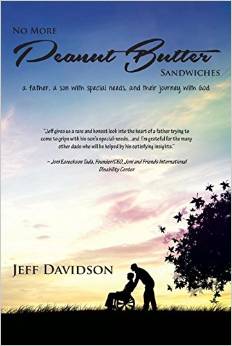
Vacant special needs dads are an unwanted reality for many families kids with disabilities. Today’s guest blogger and author Jeff Davidson was in danger of becoming a vacant dad after the birth of his son who has profound special needs. Today, Jeff shares the story of the grace that rescued him and his family and eventually led to his newly released book, No More Peanut Butter Sandwiches. 

No More Vacant Special Needs Dads

“My coping mechanism, like so many other dads of children with special needs, was to live in denial. I convinced myself that this was temporary and he would eventually catch up developmentally. For years I would not even utter the word autism out loud. I would say my son was on the autism spectrum, but not autistic. I would declare he had sensory processing issues but it wasn’t autism. I acted as if as long as I didn’t acknowledge it verbally, it didn’t exist. I was convinced he would just grow out of it someday. I would retreat at night to my home office and pour myself into my work, sitting at my desk until everyone else in the house was in bed.

“That’s what most of us do when we are in denial or just don’t know what to do. We retreat to something we are good at, or can master, and we throw ourselves into that instead. That’s our coping mechanism. So I dug in passionately at work and masked what was going on in my private life.”

Special Needs Dads and Moms Need to Grieve

“Coming to grips with the realization that you have a child with special needs is very much like many other life-altering moments in life. Everyone has to grieve. Everyone has to go through the grief process. What no one tells you is that you and your spouse will grieve differently and not be at the same stage or place in your grief at the same time.

“Men, for example, tend to get all tangled up in the denial and anger stages of grief. We can linger there for years and, for many dads, it’s unrecoverable. They never come to terms with it and it destroys them. Some dads choose to live forever in anger or denial. Often, dads check out within just a few years of receiving a diagnosis. Many will just walk away and leave the family fatherless.”

Why Special Needs Dads Become Vacant Dads

“For too many others, though, they just become what I call the ‘vacant dad.’ The vacant dad stays in the marriage, but he is pretty much there in body only. He doesn’t care, he doesn’t get engaged, and he doesn’t get involved. He’s checked out in every way except physically. I don’t know which is worse, the dad who leaves or the vacant dad. But I didn’t want to be either one.

“We have an epidemic of vacant dads in the special-needs community these days. We are losing too many dads within two or three years after diagnosis. As a result too many children with special needs are being predominantly raised by single female caregivers.”

Why I Write for Special Needs Dads

Those words are excerpted from my new book for parents of children with special needs, No More Peanut Butter Sandwiches: a father, a son with special needs, and their journey with God.

I began using the phrase “vacant dad” a couple of years ago after noticing the lack of engagement and involvement so many fathers have within their special-needs families. As a father of a son with profound special needs myself, I cannot imagine missing out on the blessings, joys, and cherished experiences I have had through my interactions with my own son.

As I like to say, “God sent a broken child into a broken world to a broken father, so that together they could find God in their brokenness.” That’s why I have become so passionate about starting a movement to reach more dads of children with special needs. That’s why I wrote my book from a father’s perspective to help other fathers along the journey.

How to Join the No More Vacant Dads Community

At risingaboveministries.org, fathers and mothers of children with special need can network, find support, participate in discussion forums, and link up with dad’s groups and activities across the country.

Unknown

Do you like what you see at DifferentDream.com? You can receive more great content by subscribing to the quarterly Different Dream newsletter and signing up for the daily RSS feed delivered to your email inbox. You can sign up for the first in the pop up box and the second at the bottom of this page.


By

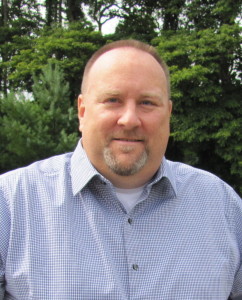
Jeff Davidson and his wife Becky founded Rising Above Ministries to help support and encourage special needs families. Jeff passed away in 2017.

Author Jolene Philo

To get posts delivered to your inbox, enter your email address:

Delivered by FeedBurner

Archives

Categories

Related Posts

Elevators, Bathrooms, and Car Trunks

Elevators, Bathrooms, and Car Trunks

Elevators, Bathrooms, and Car Trunks

Elevators.
Bathrooms.
Car trunk.

What could those three random items possibly have in common? As it turns out, quite a lot for my 1960s family that included a father who had multiple sclerosis (MS) and used a wheelchair. Dad’s mobility was dependent upon wheelchair accessible…

Elevators

He loved department stores that had them. Because elevators meant he could join his wife and kids while we shopped for school clothes and shoes in August and Christmas shopped in December. Instead of sitting alone on the first floor until we were done. He loved buildings with them. Because elevators meant he could join the other men at meetings instead of waiting alone on the first floor until someone came down to tell him what was happening.

Bathrooms

Most bathroom doorways weren’t wide enough for Dad’s wheelchair. Even if he could get into the bathroom of a public building or home, they weren’t big enough maneuvering a wheelchair. Because MS made it hard for Dad to control his bladder for very long, Dad’s urinal went with him everywhere, discretely tucked in an old leather shaving kit. Can you imagine being a 30-year-old man forced to use a urinal while sitting in a wheelchair in a dark hallway? Can you imagine being the child assigned to stand guard against intruders and then carry the receptacle to the bathroom to empty? A few experiences like that, and a family stops going to those places.

Car Trunks

When car shopping, my parents’ first question to a salesperson was never about the engine or tires. Instead, they asked to see the interior of the trunk. Because it had to be big enough to hold a wheelchair so Mom could heft Dad’s wheelchair inside and get the family where we needed to go. Which is why we had a 1960 something Ford Fury. As the picture shows, Plymouth Furies had big trunks. Though ours was a blah beige rather than a lovely blue.

But why a post about elevators, bathrooms, and car trunks for parents of kids with special needs in 2014? A couple reasons.

To read the rest of this post, please visit the Not Alone website where Jolene’s guest blogging today.

Do you like what you see at DifferentDream.com? You can receive more great content by subscribing to the quarterly Different Dream newsletter and signing up for the daily RSS feed delivered to your email inbox. You can sign up for the first in the pop up box and the second at the bottom of this page.

By

Jolene Philo is the author of the Different Dream series for parents of kids with special needs. She speaks at parenting and special needs conferences around the country. She’s also the creator and host of the Different Dream website. Sharing Love Abundantly With Special Needs Families: The 5 Love Languages® for Parents Raising Children with Disabilities, which she co-authored with Dr. Gary Chapman, was released in August of 2019 and is available at local bookstores, their bookstore website, and at Amazon.

Author Jolene Philo

To get posts delivered to your inbox, enter your email address:

Delivered by FeedBurner

Archives

Categories

Related Posts

Disability and Special Needs Are Part of Life

Disability and Special Needs Are Part of Life

Disability and Special Needs Are Part of Life

 Photo Credit: stock images at www.freedigitalphotos.net

A trip to the grocery store proved to Ellen Stumbo that disability and special needs are a part of life. In today’s guest post she describes how shopping with her daughters, two of whom have special needs, shows others that disabilities and special needs are a part of every day life.

Life with Disabilities: A Part of Life

I pushed a grocery cart, and behind me three little girls followed close by, each pushing a customer in training cart. We were the perfect display of a mother duck being followed by her little ducklings. We got smiles, waves, and many comments, “Looks like you got some little helpers with you today!” “How adorable!” On that trip, disability was inconsequential to our adoring audience.

Two of my daughters have obvious disabilities. My middle daughter has cerebral palsy, making it hard and clumsy for her to walk pushing a little cart. My youngest has Down syndrome, and what can I say, she’s a cute little rascal, but you can tell by looking at her face that she makes an extra chromosome look good.

But there we were, pushing our carts. Our little family parade. And don’t get me wrong, because grocery shopping with three girls is not one of my developed skills, nonetheless, I know we did more than shopping, we gifted plenty of smiles.

I was a frazzled mama trying to keep it together though.

“Nichole, watch where you are going!”

Thankfully we avoided all collisions, but we were close.

“Just a second girls, the walker just fell…again.”

I did my best to balance the walker on the bottom of the grocery cart.

When we arrived at the store, the girls went straight for the customer in training carts. My daughter with cerebral palsy wanted one too. I was not going to deprive her of the fun just because she needs a walker. It makes the trip more complicated, but it also makes her just one of the girls. The walker fell out more times than I wanted to reposition it. It got to be a frustration, but we just kept moving along. Nobody gets left out.

By the time we were half way done, my youngest was done pushing her cart and ready to ride in mine. I left her little cart in the middle of an aisle and let one of the workers know.

We checked out and Nina got her walker back, thank goodness! As we walked out of the store and headed to the car, a lady followed us.

“Excuse me.” She said, “I wanted to give you this.”

She handed me a grocery bag. “It’s for your girls. A thank you for making my day.”

I looked inside the bag and there was a bag a puffed corn. A bag Nichole had wanted to get and I’d said no to.

“Thank you!” I said.

“No, thank you.”

As we drove home I thought about our grocery store adventure. My little ducklings, and me, the frazzled mama. Disability was not invisible, but it wasn’t scary, and it wasn’t bad, and it wasn’t something to look away from. Disability was just a part of life. A mother shopping with her three girls. Disability was normal, because disability is part of life.

And every day we do this, as we do life, we show the world that disability is just a part of life. Disability happens. We balance the walker and sometimes it falls, perhaps more than we want it to, but we pick it up and keep on moving. And we can see people smile and recognize the pleasures of being a family, just a family, like everyone else. And sometimes, this is what it means to live life with disability.

Is Disability or Special Needs Part of Your Life?

Have disabilities and special needs become an integral part of your life? How did it happen? How has your attitude made disability more integral for others, too?

Do you like what you see at DifferentDream.com? You can receive more great content by subscribing to the quarterly Different Dream newsletter and signing up for the daily RSS feed delivered to your email inbox. You can sign up for the first in the pop up box and the second at the bottom of this page.

By

Ellen Stumbo is a writer and speaker and the mother of three girls, two with disabilities. To read more of Ellen’s writing, visit her blog at www.EllenStumbo.com.  She can also be found on Twitter and Facebook.

Author Jolene Philo

To get posts delivered to your inbox, enter your email address:

Delivered by FeedBurner

Archives

Categories

Related Posts