by jphilo | Dec 7, 2009 | Reviews
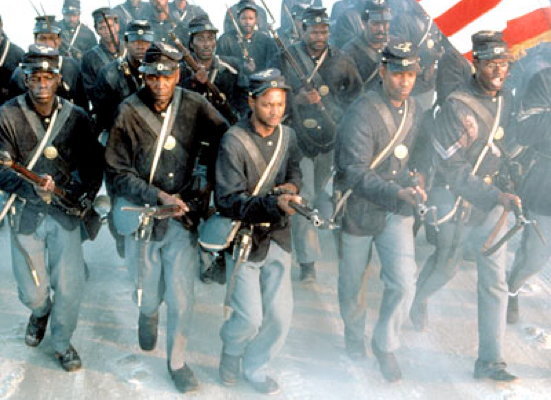
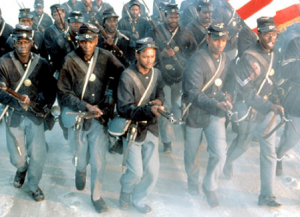
The 1989 movie Glory, starring Matthew Broderick, Denzel Washington, Morgan Freedman and many other stand out actors, is a fantastic, unforgettable film. Meticulously researched and produced, viewers enter the Civil War era as the story of the Union Army’s first black regiment during the Civil War unfolds.
Matthew Broderick is so not Ferris Bueller as Colonel Robert Shaw, the young officer in command of the regiment. The racism his soldiers face while fighting for their country and transforms Shaw from a dashing young officer into a compassionate, mature regimental commander. Washington, Freedman and the other actors playing the foot soldiers are complex heros, each one as brave as he is flawed. The entire movie is beautifully filmed and brilliantly acted. Without giving away the last battle scene, all I can say is that it will give you hope and break your heart simultaneously.
But take warning – This movie is too intense, impacting, and realistic to see alone. I learned this one night years ago when no one else was home, and I watched the video. In tears when the film ended, I vowed to never watch it again. I stuck to my guns (no pun intended) until this Thanksgiving when everybody trooped (again no pun intended) to my sister’s basement for a moviefest. After a mental pep talk about being tough, I joined them, and was glad I did, despite shedding a river of tears again. As before, the movie increased my awareness of what generations of Americans us did to ensure the freedom we enjoy today.
If you haven’t seen Glory, you should. And if you have seen it already, it’s worth seeing again. It’s worth watching with your kids who are adolescents or older. They need to see it. It’s a life-changing movie, because it will leave you humble and grateful. And you will never, never take for granted again the freedom we enjoy in America.

by jphilo | Sep 25, 2009 | Reviews
If you enjoy historical fiction, you’ll want to read Tallgrass by Sandra Eller. In it, she tells the story of Ellis, a rural community in Colorado’s sugar beet country. During WW II, the federal government erected Tallgrass, Japanese-American internment camp, a few miles out of town near the Stroud family’s farm.
Tallgrass is also a coming of age tale. Rennie Stroud, a precocious thirteen-year-old farm girl, narrates the action. Her innocence fades as prejudice against the Japanese-Americans increases, a classmate is violently murdered, and her mother’s health fails.
Dallas’s characters are memorable and tenderly flawed, especially Rennie and her parents. The major characters have distinctive, unmistakable voices that make them real. The townspeople are complex, doing good one moment and making fools of themselves the next. The descriptions of farm life reminded me of my mother’s stories of growing up on a Minnesota farm in the same era. And the historical details are accurate without being didactic.
If you were alive during WWII, Tallgrass will wrap you in memories. If you’re too young to remember the 1940s, let the book take you there while you read. Your grasp of an important time in our nation’s history will increase, along with your understanding of the prejudices that have long marked our country. Tallgrass is definitely worth a read.
by jphilo | Jul 3, 2009 | Reviews
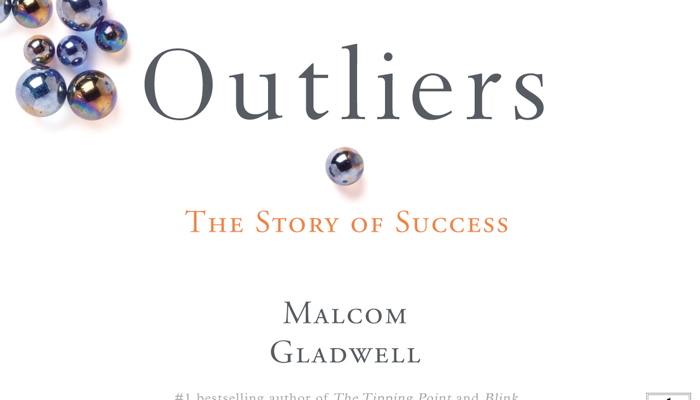
Malcolm Gladwell’s most recent book, The Outliers, is a thought-provoking read. In it, the author examines the formative years of people whose successes so far outstrips the norm they are considered statistical “outliers.”
In America, we say these people are self-made men (and he examines men almost exclusively) who worked hard and pulled themselves up by their bootstraps. But the conclusion Gladwell draws after delving into the cultures, socioeconomic status, educational opportunities, family structures, birth dates, and amount of time spent practicing craft, is quite different. His claim, which he backs up with convincing anecdotal and statistical evidence, is that highly successful people are a product of a combination of favorable factors, along with the incredible good fortune to be born in the right place at the right time.
Much of what he said is already accepted fact in educational circles, and as a former teacher, his premise didn’t surprise me. My ah-ha moment came when I replaced his continual use of words like luck, lucky, and good fortune with the word “grace” and realized that his entire book, whether he meant it to be or not, was an treatise about undeserved, unexpected, unwarranted grace. Using the book as a lens, Gladwell helped me recognize the many manifestations of God’s grace in my life, and I saw how crucial it is to offer grace to others.
Maybe you’ll come to the same conclusion when you read the book. Maybe not. But you should give it a read. No matter what conclusion you arrive at, the book will definitely make you think.
by jphilo | May 29, 2009 | Reviews
My favorite books are the ones where the characters are genuine, the plot compelling and not totally predictable, the story world so vivid I enter it, and the issues raised so realistically presented that I think about them long after finishing the book.
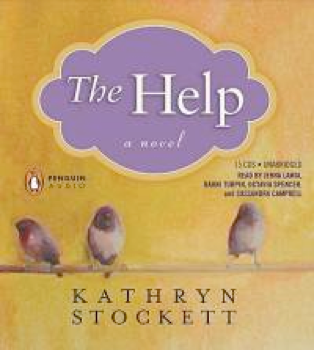
The Help did all those things. Stockett brings the the era to life, and the depth of her research is obvious. So many little touches, like a TV commercial sponsored by the US Postal Service urging watchers to include the five number zip, zip, zippy, zip code when addressing mail, adds authenticity to the book. (The fact that I remember watching those commercials as a child makes me feel old, but I’ve forgiven Stockett for the indignity.)
The author exposes the evils of the early 1960s Jim Crow south without sugar-coating. She weaves historical events such as the assassination of Medgar Evans and Martin Luther King’s March on Washington into the plot without making all whites evil and all black people saints. Kathryn Stockett’s heroines weren’t completely good and her villains weren’t completely evil. They were real people making real choices – some good, some bad, some totally unexpected – in the complex and changing world of 1960’s Jacksonville, Mississippi.
Perhaps the best thing I can say about this book is that I didn’t want it to end. Stockett did what the authors of Peace Like a River and Water for Elephants also did for me. She created characters I could befriend. And when I turned to the last page, I was sad to say good-bye to Miss Sketter, Aibilene and Minnie, the three women who told their stories in The Help.
You really should meet them. You’ll be glad you did.
by jphilo | Mar 30, 2009 | Reviews
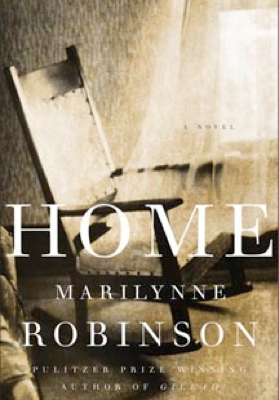
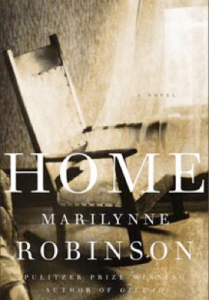
Home is Marilynne Robinson’s second book about in a small Iowa town. Her Pulitzer Prize-winning first book, Gilead, bears the name of the fictional town populated with characters as ordinary and flawed as all of us. But the beauty of Robinson’s language and her love for those she writes about elevates their ordinary lives and their flawed relationships into a graceful dance.
In Home, the author makes Jack Boughton, a minor player in Gilead, the central character. Reverend Ames, the previous story’s main character, is given a minor, crucial role. The story is told through the eyes of thirty-eight-year-old Glory, Jack’s youngest sister, who has come home to heal from a love affair gone wrong and care for Robert Boughton, her dying father. Jack is the prodigal son, a charming scamp since birth and a hopeless alcholic, who comes home for the first time in twenty years, to see his father.
The action is as slow as a lazy Iowa summer, and the characters are as rich, satisfying and fleeting as sweet corn in July. Best of all, Robinson takes the aspects of the Christian faith most difficult to reconcile with the realities of life – suffering, broken relationship, bondage to sinful, self-destructive behavior – and through her flawed characters reveals the unconditional love of God.
Home is not a page-turner. Read it slowly. Sadly satisfying and best read with plenty of tissues handy, you won’t read the last page and close the book with a happy sigh. Instead, you’ll ponder why a book so sad and haunting ends as it does. And you’ll ponder why it brings such comfort to your soul.
by jphilo | Feb 24, 2009 | Reviews
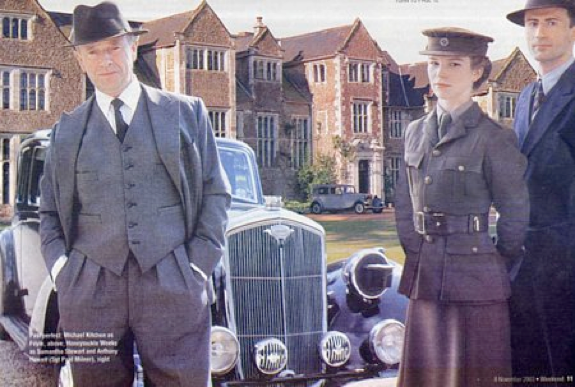
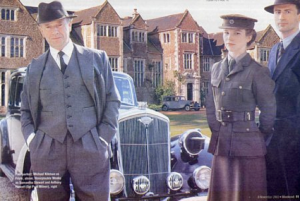
Last week, I checked out the first episode of Masterpiece Theater’s Foyle’s War. Ten minutes into the show, I was hooked, determined to watch every episode. I returned the first episode to the library yesterday and checked out the next three.
The woman at the circulation desk waved the DVD case in the air. “Aren’t these wonderful? We’re in the middle of season three.” Then she laughed. “Anybody who checks out one of these ends up watching the whole series.”
Last night I watched the second episode, entranced. What makes the series so good? Is it Michael Kitchen as Detective Chief Superintendent Christopher Foyle? His characterization of the detective who’s request to enlist during WWII has been denied is masterful, understated, poignant. The writers weave war news with Foyle’s work in war-weary England subtly and beautifully. They slowly build the life stories of the supporting actors into their relationship with Foyle in a way that brings me back for more. And the meticulous period costuming and the beautiful English countryside are a feast for the eyes.
If you like English mysteries, World War II and well-written, well-acted entertainment, this series is for you. Check this link for more information about the series and the order of the episodes. You’ll want to watch them in order to see the characters grow and change. Happy watching, and tell me what you think of Foyle’s War.