by jphilo | Jan 13, 2010 | Reviews
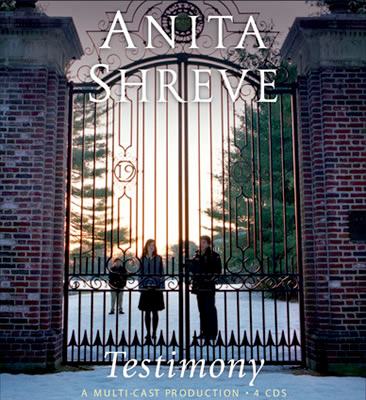
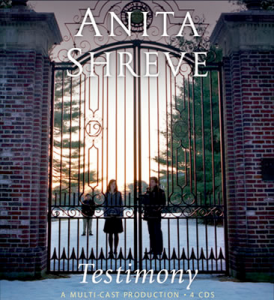
Anita Shreve’s novel Testimony is not an easy read. In it, she tackles a subject all parents wish didn’t exist: the prevalence of excessive drinking and sexual activity among high school students. She doesn’t just allude to the behaviors. She begins the novel with a graphic description of a tape confiscated at an elite private boarding school in Vermont and spends the rest of the book showing how those actions affect others.
The activity described on the tape is disturbing, but the consequences of decisions made by the main characters in the story are chilling. Lives are destroyed. The reputation of the school is ruined. A small town goes into decline, all because a group of teenagers chose to engage in risky behavior on a Saturday night.
But as the plot unfolds, readers learn about hidden choices made by several of the adults in the story. They begin to see how those decisions led to what happened on the tape. And, suddenly, the story isn’t about thoughtless, risky teen behaviors. It’s about adults who deliberately chose to satisfy their hidden desires even though they knew the hurt it might inflict upon others.
Testimony is a fairly short book. It shouldn’t have taken long to read. I could only take so much of its downward spiral at one sitting. Though I didn’t like it much, I’m glad I finished it. Why?
Because since reading it, the importance of hidden choices, the ones we convince ourselves no one else will ever know about, keeps coming back to me. Before making decisions I think about how my choices affect others and my relationships with them. And several truths illustrated in Testimony echo in my brain:
Our decisions and actions matter.
They can have unimaginable consequences, for good or evil.
They can hurt or help innocent people, so it’s important to choose wisely.
If you don’t believe those statements are true, read Testimony. By the end of the book, maybe you’ll change your mind.

by jphilo | Jan 7, 2010 | Reviews
For the past several months, I’ve been dabbling my toes in the ocean of pop culture. Several of the endeavors have been worth the effort. The HBO series, John Adams, was pure delight. Kathryn Stockett’s novel, The Help, was more enjoyable than any book I’ve read in recent memory. And as a fan of Hugh Laurie, I’m now hopelessly addicted to House. But my recent decision to watch the first season of the popular television series 24 proved to be a big disappointment.
At first I liked the show, and the values it seemed to champion. The show’s star Jack Bauer, played by Kiefer Sutherland, is trying to restore his broken marriage. David Palmer, the presidential candidate Bauer is charged to protect from an assassination attempt, is an honorable man. The pace of the first few episodes was fast, and the spy gadgets were captivatingly cool. But by the fourth or fifth show the killings, car crashes, and general mayhem escalated into sickening regularity.
But what disturbed me most weren’t the twists and turns of the plots, but the underlying value lessons that emerged as the show progressed and the characters developed. Here are a few things that made me uneasy:
- If a very important person or someone he loved was in danger, Jack Bauer broke all the rules and/or killed as many people as necessary to save them.
- Value Lesson: Some lives are worth saving and others are expendable, and the rules only apply to expendable lives.
- Main characters used the phrase “I promise,” but rarely (and perhaps never) kept those promises after getting what they wanted.
- Value Lesson: Promises are a means to whatever end you need to achieve and nothing more. So pretend to be trustworthy and don’t trust anyone.
- David Palmer, the presidential candidate, was portrayed as a man of honor but his wife of nearly 30 years proved to be a scheming, evil woman.
- Value Lesson: Honorable people are admirable, but are so innocent and trusting, they’re terrible judges of character. To succeed, they need help from dishonorable people, and since they can’t judge character worth a hoot, surrounding honorable people with dishonorable ones is easy to do. So you can’t trust honorable people either.
If my kids were still home, no matter their age, 24 would be on our No Watch list, because I wouldn’t want them to absorb those values. And one season of 24 was enough for me. I now understand the culture of the show and no desire to explore it further.
It’s not worth my time when so many better choices are available.
by jphilo | Dec 29, 2009 | Reviews
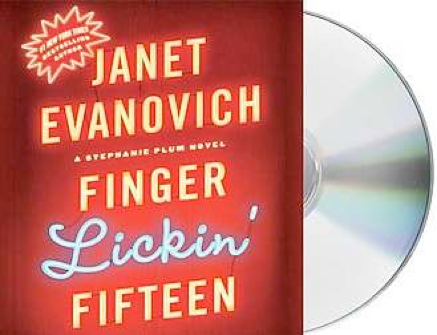
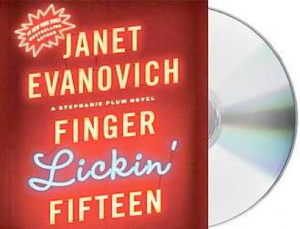
Every now and then, a girl’s gotta laugh. When I’m that girl, and need a rib-tickling belly laugh, Janet Evanovich’s Stephanie Plum series delivers yuckles and chuckles like nothing else.
The protagonist, Stephanie Plum, is a laid off lingerie buyer from Jersey turned bond enforcement agent. She’s not very good at the job, and whenever she teams up with her big, bold and beautiful co-worker Lula (a former streetwalker), things go from bad to worse.
Other series regulars appear in Finger Lickin’ Fifteen: Stephanie’s hamster Rex, her two love interests Joseph Morelli and Ranger, her parents and Grandma Mazur, co-workers Vinnie and Connie, nemesis Joyce Barnhart, and Bob the dog.
In Finger Lickin’ Fifteen, Lula teams up with Grandma Mazur to create what they think will be prize winning barbeque. Instead, they’re an instant fire hazard whenever they get near a grill, and their recipe’s effect on diners is similar to Montezuma’s revenge. In the course of the novel, Stephanie and Lula once again blow up several vehicles. In previous books, most of the destroyed cars belong to Stephanie, but Fifteen throws in a new twist. One torched car belongs to Lula and most of the rest, to Ranger.
If you’re looking for something to make you quit worrying about terrorists carrying bombs onto airplanes, global warming, and what in the world you should fix for supper tonight, Finger Lickin’ Fifteen could do the trick. But you might want to start with the first book in the series, One for the Money, and work your way to Fifteen. But skip the more recently created auxiliary Plum novels. They don’t measure up to the original series, which means that since the original fifteen books are hilarious drivel, but drivel nonetheless, the recent tag-alongs are really low life lit.
You might also want to listen to the audio renditions. (Note: not a good idea if you have kids listening in.) The actors who read them are fantastic and bring the characters to life. But never, never expect symbolism or deeper meanings in the Stephanie Plum books. Former lingerie buyers deliver laughs, not meaning. Some days, that’s about all Stephanie and I can handle.
by jphilo | Dec 21, 2009 | Reviews
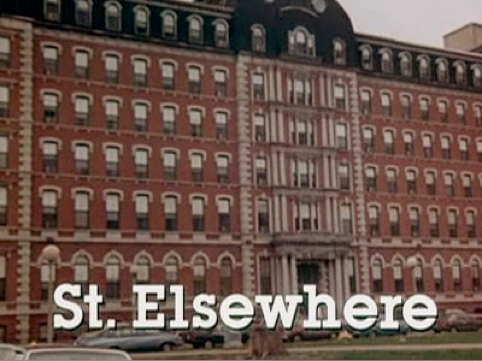
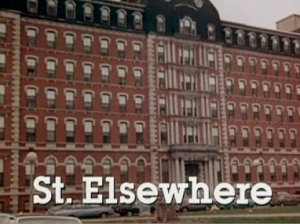
St. Elsewhere, one of my all time favorite TV shows, debuted when I was pregnant with our son and ended when our daughter was in utero. The quirky story lines, the antics of the talent-laden cast (including Mark Harmon, Denzel Washington, Ed Flanders, Howie Mandel, Ed Bagley, Jr.), and irreverent tone were perfect medicine during the years when our son was hospitalized more times than we can count. Maybe it was gallows humor, but one scene with the reoccurring patient, Mrs. Hufnagel (played by Florence Halop) and the belly laughs started coming.
This fall, somebody thought I might like House. (Yes, the show’s been on for several seasons, but I’ve never been a quick study.) Since it stars Hugh Laurie, a favorite actor of our whole family since we first saw his rubber face on Masterpiece Theater’s Jeeves (Steven Fry) and Wooster (Hugh Laurie) series. One episode, and I was a fan. House has the perfect balance of medical finesse, multi-dimensional characters and humor.
No doubt, some of you are incredulous. What about ER or Gray’s Anatomy or even Scrubs? Well, ER’s too blood and guts for my squeamish stomach, and Gray’s Anatomy is too much soap opera. Scrubs tickles my funny bone sometimes, but parodies get old fast.
But Hugh Laurie as the crotchety, pain pill popping, and brilliant diagnostician is fascinating. His character, so different from the vacuous 1920s socialite Bertie Wooster he portrayed convincingly, proves his acting ability. My hope is to watch the previous seasons and see how the series develops, so I have plenty to keep me busy.
St. Elsewhere kept me sane during our son’s medical adventure. Maybe House will keep me sane during what is shaping up to be a very cold, snowy and lengthy winter. If that happens, Hugh Laurie gets my vote for sainthood.
St. Housewhere. Has a nice ring, don’t you think?

by jphilo | Dec 13, 2009 | Reviews
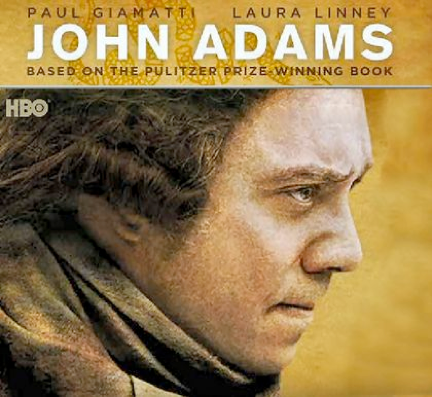
For the last week, Hiram and I have been watching the DVDs of John Adams, the award-winning miniseries that first aired on HBO in 2008. The miniseries lived up to the book in every way possible. The historical details, the costuming, the make up that aged the characters so accurately right down to rotting teeth and unhealthy skin tones (as noted by my nurse husband), meticulously researched and rendered settings and costumes, and brilliant acting brought the multi-faceted historical figures to life, illumiatinging both their great strengths and weaknesses.
At times I despised John Adams for not holding his temper in check, his pompous vanity, and his lack of mercy toward his alcoholic son and an unwise son-in-law. More often, I loved the man for his courageous pursuit of America’s independence, his passionate defense of the constitution, and his unending love, respect and dependence upon his wife.
The relationship between Adams and his wife Abigail is the very center of the series. Paul Giamatti and Laura Linney’s performances were rich and nuanced. Their characters matured, as did their relationship, over the fifty years covered in the story. And when each reached the end of life (I’m not giving away the ending here since they both died over 200 years ago), they had become such dear, familiar friends, it was hard to let them go.
If you’re looking for something to fill the long winter evenings, the John Adams miniseries could do the trick. Not only will the dark nights fly by, you’ll absorb thirty years of American history in the process. It will the most enjoyable social studies class you ever take. I guarantee it.
by jphilo | Dec 10, 2009 | Reviews
Monday afternoon, I went to see Mom. When I arrived at my brother’s house where she lives, she was wearing the same coral colored sweatshirt she’s worn almost every day since we got rid of the ugly gray cardigan she insisted on wearing all the time. She greeted me and said, “I’m so glad you came a day early. You shouldn’t be out in the storm that’s coming tomorrow.”
I asked her where she wanted to go for lunch, and she said she was hungry for pancakes and sausage. “IHOP or Village Inn?” I asked.
“Don’t ask hard questions,” she replied. “You decide. But afterwards, I need to get a new pocket calendar and Christmas cards. And it’s a good thing you came a day early. You shouldn’t be out in the storm tomorrow.”
When we finished eating, we went to Target. “Why are we here?” she asked.
“For Christmas cards and a pocket calendar,” I said.
“Right. And it’s a good thing you came a day early. There’s a storm coming tomorrow.” After she picked out a calendar she asked, “What else did I need?”
“Christmas cards.”
“Right, It’s a good thing you came a day early. A big storm is coming tomorrow.”
We went back to my brother’s and worked on her checkbook. While she recorded her automatic withdrawals and deposits, Mom said, “I’m so glad you came a day early. You shouldn’t be out in the big storm that’s coming.”
Sigh.
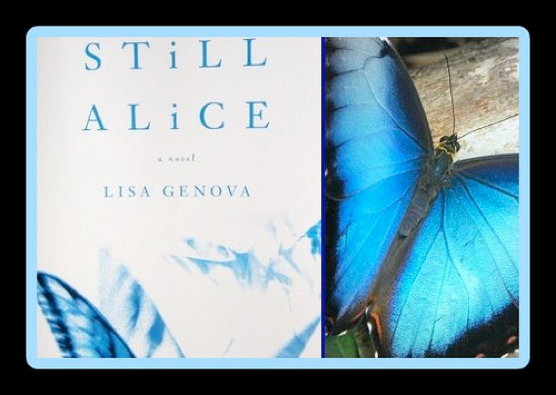
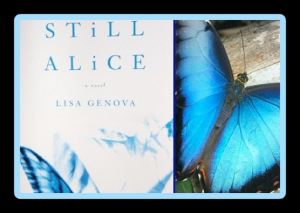
All Mom’s idiosyncrasies can be hard to tolerate, even though my head knows she has early stage Alzheimer’s and can’t help repeating herself. But recently, a wonderful novel, Still Alice, by Lisa Genova increased my understanding of what’s happening to Mom in a way other literature about the disease hadn’t.
The story is told from the perspective of fifty-year-old Alice, a brilliant Harvard professor diagnosed with early onset Alzheimer’s. Throughout the novel, readers experience Alice’s mental decline and frustration with her. Though she fails steadily and rapidly in the course of the narrative, the essence of Alice remains and by the end of the book, she’s still Alice, perhaps more Alice than she had ever been before.
Reading the book affirmed who my mother is. Intelligent and determined as Alice, and failing more slowly, she is still Dorothy. As this disease strips away her memories and her reasoning ability, it is also revealing a vulnerable, loving and funny woman she never allowed me to see when she was well. She’s still Dorothy, more Dorothy than she’s been since childhood when adult inhibitions and expectations had not yet limited her Dorothyness.
If someone you love has Alzheimer’s, you need to read this book. It will increase your compassion and patience when your mother, father, or sibling is irrational or stubborn. Even if you don’t know someone with the disease, you will find value in Still Alice. Genova’s writing is well-crafted, and she has created a worthy, fragile and unforgettable heroine.
Still Alice is more than a good read. It’s a reminder of the essence of personality, of the constancy of love, and the value of human life. I needed that reminder. Maybe you do, too.