Top 100 Special Needs Resources on the Web

Top 100 Special Needs Resources on the Web

Top 100 Special Needs Resources on the Web

The top 100 special needs resources on the web list was released recently by the folks at PhD in Special Education Online. And surprise, surprise…Different Dream made the cut! The news made me mighty thankful this Thanksgiving, that’s for sure! Almost as thankful as I was on my birthday when this website was named as one of the 40 best blogs for special needs parents.

The Top 100: Website Categories

The sites are divided into the following categories:

  • Special Education
  • Down Syndrome
  • Autism Spectrum
  • Batten Disease
  • Parenting
  • Miscellaneous

Different Dream appears as #64 the parenting column, along with some of my fave special needs parenting sites like Fighting Monsters with Rubber Swords, Love That Max, Hopeful Parents, and Support for Special Needs.

The Top 100 Other Favorites

Personal favorites listed elsewhere are:

Here are a few of the sites I’m eager to explore the next time I’m not busy lounging around the house eating bonbons:

  • The Life that Chose Me The title says a lot about the perspective of special education teacher who blogs there.
  • Life Is Simple. It’s Just Not Easy That title nails life as the parent of a child with special needs, in this case Down syndrome.
  • Try Defying Gravity Yup, I’m a sucker for catchy titles.
  • Taste Life. My son had an esophageal anomaly so this site about eosinophilic esophagitis, a condition that makes a child allergic to all food, is of interest to me.

Your Top 100?

But enough about what caught my eye at the Top 100 Special Needs Resources on the Web. Which of your favorites made the list? Which ones are going check out when the bonbon box is empty? What favorites are missing that deserve recognition? Leave your ideas in the comment box.

Do you like what you see at DifferentDream.com? You can receive more great content by subscribing to the quarterly Different Dream newsletter and signing up for the daily RSS feed delivered to your email inbox. You can sign up for the first in the pop-up box and the second at the bottom of this page.

By

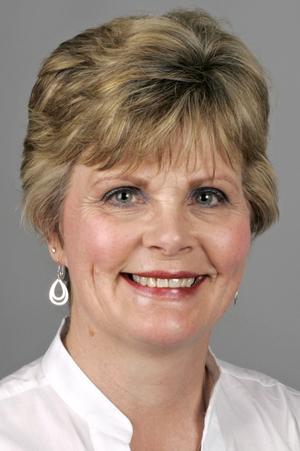
Jolene Philo is the author of several books for the caregiving community. She speaks at parenting and special needs conferences around the country. Sharing Love Abundantly with Special Needs Families: The 5 Love Languages® for Parents Raising Children with Disabilities, which she co-authored with Dr. Gary Chapman, was released in August of 2019 and is available at local bookstores, their bookstore website, and Amazon. See Jane Dance!, the third book in the West River cozy mystery series, which features characters affected by disability, was released in October of 2023.

Author Jolene Philo

To get posts delivered to your inbox, enter your email address:

Delivered by FeedBurner

Archives

Categories

Related Posts

Parenting Lessons in Letting Go

Parenting Lessons in Letting Go

Parenting Lessons in Letting Go

Parenting lessons don’t end when our kids become adults. Guest blogger Kathy Guzzo is here to share some parenting lessons she’s learned since her children, one of whom has special medical needs, reached adulthood.

Parenting Lessons in Letting Go

Years ago when we began our journey as parents, our goals included nurturing and guiding our children on the path where each step would bring them closer to becoming independent and responsible adults. We learned early that this desire would definitely be easier said than done, yet through all the tantrums of toddlers trials of four teenagers at once, and many mistakes made by us, we feel our children all in their mid twenties to early thirties, have become even more than we expected.

Parenting Lesson #1: The Good and Bad of Raising Responsible Children

Raising responsible children is great, right? Yes and no. Yes, because they have become hard workers, striving to improve the world around them and loving and loyal to friends and family. However, the downside of raising children that become self-sufficient responsible adults is that as parents, we have to step back and let them live their lives. No, because I had to let go of knowing all that’s going on in their lives and release total control. I had to accept the fact that they didn’t need me in the same capacity any longer. I thought watching them from the sidelines would be easy as they learned from their mistakes as they pursued their dreams, and it was—until it came to our daughter’s health issues.

Parenting Lesson #2: Need vs. Want

Although she is 28 years old, I’ve really struggled the past few years with not knowing everything that’s going on regarding her health issues. Of course, it doesn’t help that she lives alone and 500 miles away. Since the day she was diagnosed with lupus and Epstein Barr Replication over ten years ago, I’ve convinced myself that I need to know when she’s too tired to get up, not able to eat, has had to increase her medications, is getting IVs for dehydration, or when she just feels blah. After all, how can I help her if I don’t know what’s going on with her health? The answer is simple—I can’t.

I’m learning to accept the fact that I not only can’t help her, but at this point in her life she doesn’t need my help, and that’s hard to swallow. I have to acknowledge the reality that through all her struggles with illnesses, she has become what her dad and I had hoped—a well-rounded, responsible adult able to care for herself and make good decisions.

Another thing God in His graciousness is teaching me is that sometimes what I perceive at needs are really just wants, and that is so true in this situation. I don’t really need to be involved in her life—I want to.  She’s my daughter, so part of me feels I have a right to know how she is. Yet she’s an extremely capable adult, so I’m forced to step back and relinquish that desire. A few years ago, I was forced to deal with this same issue as my son left for his first deployment while in the Marines, and it was just as hard.

Parenting Lesson #3: Relinquishing Control

The only feasible solution is to allow God to help me let go, and the only way I can do that is to trust that He is more than able to care for her when I can’t. He blessed me with the opportunity to raise four amazing children, and although we dedicated each of them to Him at a young age, I now need to relinquish total control of their lives over to Him.

When Andrea was younger she used to say, “Do your best and let God do the rest.” and that’s where I’m at now. As a parent I did all I could to protect, love, and nurture our children, and now I have to let go and let God take over. It’s not an easy process and it probably won’t ever be unless I continually ask for His help in learning my role on the sidelines. I have to allow Him to be the coach now, and become the cheerleader on the sidelines. Regardless of what happens during the game of life my children, especially Andrea, are playing, I will trust God to be with them each step of the way.

What Parenting Lessons Have You Been Learning

Thanks, Kathy, for sharing your parenting lessons. How about you? What lessons have you learned lately? Leave a comment.

Do you like what you see at DifferentDream.com? You can receive more great content by subscribing to the quarterly Different Dream newsletter and signing up for the daily RSS feed delivered to your email inbox. You can sign up for the first in the pop-up box and the second at the bottom of this page.

By

Kathy Guzzo and her husband live in Northern Illinois and have 4 adult children. One of her daughters was diagnosed with lupus and Epstein Barr Replication as a young adult. Another began struggling with depression and OCD in her mid-twenties. She understands the need for her daughters to be able to make their own decisions regarding their health, but the nurturer in her sometimes has a hard time letting go. She desires to direct others to the peace and hope that God has abundantly available for them.

Author Jolene Philo

To get posts delivered to your inbox, enter your email address:

Delivered by FeedBurner

Archives

Categories

Related Posts

Siblings of Kids with Special Needs: Do Their Lives Change?

Siblings of Kids with Special Needs: Do Their Lives Change?

Siblings of Kids with Special Needs: Do Their Lives Change?

Siblings of kids with special needs often face their own set of challenges. But when the needs of their brothers or sisters are urgent and possibly life-threatening, these siblings sometimes suppress their own needs, feel guilty, or become resentful.

Sibling Confession: Ranit Mishori

Dr. Ranit Mishori, a family practitioner here in Washington and member of the faculty at Georgetown University School of Medicine, penned a Washington Post article about her struggles as the sibling of a brother with severe autism. She very honestly wrote about locking her brother in his bedroom so her date who was picking her up wouldn’t see him. She listed several challenges siblings face:

  • Missing out on typical family outings
  • Being embarrassed to bring friends home
  • Being the focus or cause of tantrums and outbursts
  • Being expected to grow up quickly and be responsible
  • Feeling second in importance to parents, because their time and energy is focused on the child with special needs

The article is quite extensive and informative and worth checking it out at Autism can have large effects, good and bad, on a disabled child’s siblings.

Siblings with Special Needs Conversation: Talk of the Nation

The article must have piqued the interest of the talk show planners at National Public Radio. Dr. Mishori was a guest of Neal Conan, host of Talk of the Nation, during the September 25, 2012 broadcast called Siblings with Special Needs Change Childhood. Several guests called in to share their experiences and emotions as the siblings of children with special needs. About halfway through the show, guest Don Meyer, the founder of Sibshops, joined the conversation. Sibshops is a national organization that trains volunteers to run local workshops that support siblings with kids with special needs.

The conversation covered more ground than can be summarized here, so you might want to listen to the story or read the transcript of Siblings with Special Needs Change Childhood at NPR.

Sibling Challenges: What Are You Dealing With?

What kinds of challenges are the siblings of kids with special needs facing at your house? How are you dealing with them? What kind of help do you need? What resources have you found useful? Leave a comment so we can work together to meet the needs of all our children.

Do you like what you see at DifferentDream.com? You can receive more great content by subscribing to the quarterly Different Dream newsletter and signing up for the daily RSS feed delivered to your email inbox. You can sign up for the first in the pop-up box and the second at the bottom of this page.


By

Jolene Philo is the author of several books for the caregiving community. She speaks at parenting and special needs conferences around the country. Sharing Love Abundantly with Special Needs Families: The 5 Love Languages® for Parents Raising Children with Disabilities, which she co-authored with Dr. Gary Chapman, was released in August of 2019 and is available at local bookstores, their bookstore website, and Amazon. See Jane Dance!, the third book in the West River cozy mystery series, which features characters affected by disability, was released in October of 2023.

Author Jolene Philo

To get posts delivered to your inbox, enter your email address:

Delivered by FeedBurner

Archives

Categories

Related Posts

Sleep Problems and Special Education Needs

Sleep Problems and Special Education Needs

Sleep Problems and Special Education Needs

Sleep problems in preschoolers may increase the likelihood of a child needing special education services later in life. That’s the finding of a study published in the September 2012 issue of Pediatrics.

Sleep Problems? What Kind of Sleep Problems?

I admit my first thought upon hearing the news was similar to my response to the study that showed regular school attendance increases kids’ learning. It took a study to prove that? Somebody could have saved a lot of money by asking teachers about the correlation between attendance and learning.

But a closer reading of the sleep problem study revealed a more complex issue. At first glance, I erroneously believed the sleep problem was kids getting too little sleep. Going to bed too late. Interrupted sleep. Stuff like that. But I was wrong. This study looked at problems like sleep apnea and snoring in infants, toddlers, and preschoolers.

Sleep Problem and the Special Education Correlation

The study, authored by Karen Bonuck, a professor at Albert Einstein College of Medicine’s Department of Family and Social Medicine, in New York City “found that kids who suffered from problems like sleep apnea and snoring in their infant, toddler and preschool years were more likely to need special education services for conditions such as speech and behavioral problems a few years later.”

The study found an association between the two factors, but it did not prove cause and effect. An article in U.S. News and World report says, “The higher risk of disabilities could be a statistical fluke, or something else besides sleep problems may explain it.” However, the article goes on to say, “Research has shown that sleep deprivation disrupts the making of memories in the brain.”

Now that’s alarming! Because, as the article states, “Sleep is not just ‘rest’ where the body needs to restore energy. The brain is active 24/7, and we now know that not only important aspects of learning and memory happen during sleep, but emotion regulation is also dependent on sleep. “No wonder pediatricians are being advised to screen for early sleep problems and address them.

Sleep Problems at Your House

What do you think of the study? Do the results surprise you? Do your young children have sleep problems or did they when they were younger? How did you deal with them? What did your pediatrician advise? Leave a comment about your reactions to this study and how the findings could impact your child.

Do you like what you see at DifferentDream.com? You can receive more great content by subscribing to the quarterly Different Dream newsletter and signing up for the daily RSS feed delivered to your email inbox. You can sign up for the first in the pop-up box and the second at the bottom of this page.

By

Jolene Philo is the author of several books for the caregiving community. She speaks at parenting and special needs conferences around the country. Sharing Love Abundantly with Special Needs Families: The 5 Love Languages® for Parents Raising Children with Disabilities, which she co-authored with Dr. Gary Chapman, was released in August of 2019 and is available at local bookstores, their bookstore website, and Amazon. See Jane Dance!, the third book in the West River cozy mystery series, which features characters affected by disability, was released in October of 2023.

Author Jolene Philo

To get posts delivered to your inbox, enter your email address:

Delivered by FeedBurner

Archives

Categories

Related Posts

Special Needs Guardianship:  What Parents Should Know, Pt. 2

Special Needs Guardianship: What Parents Should Know, Pt. 2

Special Needs Guardianship: What Parents Should Know, Pt. 2

Special needs guardianship was the topic at DifferentDream.com yesterday, and it still is today. Guest blogger Liz Matheis began Part 1 of the series by explaining what’s required for obtaining it and how long it takes. Now she’s back to finish the series.

Special Needs Guardianship: What Parents Need to Know, Pt. 2

Special Needs Guardianship: Limited vs. Full

Within the psychological report, the psychologist will make the recommendation as to the type needed: limited vs. full.  If the parent or other adult has full guardianship, this means that all decisions regarding education, finances, area of residence, vocation, and medical decisions requiring informed consent will be made by the guardian. This does not mean that the individual does not have a say in the matter, however all final decisions are made by the guardian.  If the guardian has limited guardianship, the psychological report should indicate in which of the 5 areas listed above the individual has the ability to make decisions, and in which areas the guardian makes decisions.

It is also good practice to recommend that the issue is re-visited when the individual is 30 years old (or sooner) in order to assess level of functioning and if guardianship needs to be a change from full to limited, or if there are a greater number of areas in which the individual can make decisions. The re-visiting of this legal issue takes into account that the individual will have had greater life experiences and life training that may decrease the need for guardianship in all areas or the majority of areas.

Special Needs Guardianship and Power of Attorney: What’s the Difference?

Power of Attorney (POA) is a document that allows a person to appoint an Agent to make financial and legal decisions on his/her behalf and have access to his/her financial and legal records.  POA is designed to allow the Agent to carry out the wishes of the young man or woman on legal and financial matters.  This is a legal document usually drafted by an attorney; however, that is not required.  POA does not require going to court. Instead, POA is registered through the Community Health Law Project.

Here is the key difference – the POA can be revoked verbally or in writing at any time. Therefore, if the individual is believed to be vulnerable or can be exploited easily, POA may not be the best option. Remember, guardianship is the removal of a person’s right to make decisions; however, it is done with the intention to protect a young man or woman with a developmental disability who may be at risk for exploitation.

Any More Questions?

Thank you, Liz, for your clear explanation of what this topic. If you have more questions, leave a comment. Maybe Liz will be able to answer it. If you haven’t read Part 1 of the series, be sure to check it out, too.

Do you like what you see at DifferentDream.com? You can receive more great content by subscribing to the quarterly Different Dream newsletter and signing up for the daily RSS feed delivered to your email inbox. You can sign up for the first in the pop-up box and the second at the bottom of this page.

By

Dr. Liz Matheis is a clinical psychologist and school psychologist in Parsippany, NJ. She offers support, assessments, and advocacy for children who are managing Autism Spectrum Disorders, ADHD, learning disabilities, and behavioral difficulties, as well as their families. She is also a contributor to several popular magazines. Visit www.psychedconsult.com for more information.

Author Jolene Philo

To get posts delivered to your inbox, enter your email address:

Delivered by FeedBurner

Archives

Categories

Related Posts

Special Needs Guardianship: What Parents Should Know, Pt. 1

Special Needs Guardianship: What Parents Should Know, Pt. 1

Special Needs Guardianship: What Parents Should Know, Pt. 1

Guardianship. What’s that mean exactly? What’s involved in establishing guardianship? A new DifferentDream.com guest blogger and licensed clinical psychologist, Liz Matheis, is here to answer our questions. In the first part of a two-part series, she explains what’s required in obtaining legal guardianship and when to start.

Special Needs Guardianship:  What Parents Need to Know

Remember when we counted the days until our 18th birthday and reminded all the adults around us that we were going to be in charge within a few days?  At 18 years of age, a young man or woman becomes an adult and is becomes responsible for making decisions about how to spend money or where to live.  However, for some young adults with developmental disabilities, their 18th birthday marks the time when their parents lose all legal ability to make decisions for their child. As a result, parents may seek to gain guardianship, or the removal of the constitutional right of self-determination because the young man/woman is unable to make decisions in his/her own best interests, and therefore needs to be protected.

Special Needs Guardianship: What is Required?

Let me be more specific. A guardian is a person who is appointed by the court to care for the adult. The guardian is usually a family member or close friend who petitions the court to become the guardian.  Note that the guardian consults with an attorney privately. Two evaluations are required: one psychological and one medical, or two medical evaluations.  A trained licensed Clinical Psychologist completes the psychological evaluation, and the medical evaluation is completed by a physician. Both the psychologist and physician must provide a written report that answers the question, “Does this person have the capacity to make decisions in his own best interests?”  This decision is made by assessing functioning in the following 5 areas:

  • Education
  • Finances
  • Area of residence
  • Vocation
  • Medical decisions that require informed consent

Keep in mind that transferring guardianship also takes away the person’s ability to vote or marry. Therefore, make certain that these two areas are assessed and addressed in the psychological and/or medical report. The report must indicate, clearly, whether the individual will retain the ability to vote and/or marry.  If the person will retain the ability to marry, the Psychologist may want to indicate whether this can be done with guardian guidance.

Special Needs Guardianship: Through the Court We Go….

Guardianship proceedings take approximately 3-6 months to complete and are handled through the court. So, begin the process by the middle of your child’s 17th year. And come back tomorrow to learn about the differences between limited vs. full guardianship and between guardianship and power of attorney.

What Questions Come to Mind?

Did questions coming to mind as you read what Liz wrote. Then jot them down and save them for Part 2 of the series.

Do you like what you see at DifferentDream.com? You can receive more great content by subscribing to the quarterly Different Dream newsletter and signing up for the daily RSS feed delivered to your email inbox. You can sign up for the first in the pop-up box and the second at the bottom of this page.

By

Dr. Liz Matheis is a clinical psychologist and school psychologist in Parsippany, NJ. She offers support, assessments, and advocacy for children who are managing Autism Spectrum Disorders, ADHD, learning disabilities, and behavioral difficulties, as well as their families. She is also a contributor to several popular magazines. Visit www.psychedconsult.com for more information.

Author Jolene Philo

To get posts delivered to your inbox, enter your email address:

Delivered by FeedBurner

Archives

Categories

Related Posts