6 EA TEF Warnings Hidden from New Parents

6 EA TEF Warnings Hidden from New Parents

6 EA TEF Warnings Hidden from New Parents

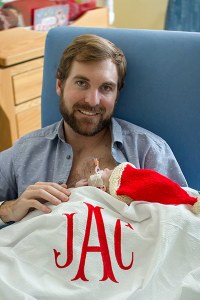
EA TEF Awareness Month is all about educating the masses about a rare and life-threatening birth anomaly. Today guest blogger and mom, Nanette Lerner educates new parents regarding 6 EA TEF warnings hidden by the well-meaning medical community.

6 EA TEF Warnings Hidden from New Parents

No one ever expects to have an EA TEF kid. The truth is, until you have one, you’ve probably never heard of the condition, ever.

What does EA TEF mean? It means that your baby is born unable to swallow due to a somewhat rare birth defect where the esophagus is attached to the trachea instead of the stomach. But what does it really mean? Until you’ve had a kid with it, you have no way of knowing.

Nearly 6 years ago on a frigidly cold January morning, our feisty, teeny TEF boy entered the world. He was 6 weeks early and at just 3 pounds, 13 ounces, the smallest baby our surgeon had ever performed a TEF repair on. Luckily, we didn’t know this fact until after the surgery was completed successfully. After that, we had 2 long, stressful months in the neonatal intensive care unit (NICU). And then a return to the NICU about 2 weeks later for his first dilation.

Almost 6 years and several hospital stays later, we’ve learned a lot. Some of it through trial and error. Some of it through the amazing TEF/EA community. I’m grateful to say entire days go by without thinking about the fact that our boy has TEF and all the complications that go along with it. But then he lets out a cough—that deep, echoing, barky cough—and the panic sets in again.

When he was born, we thought once his fistula was repaired, that would be it. All fixed! But as all TEF parents know, that is simply not the case. Here are 6 EA TEF warnings a few things nobody told us about:

EA TEF Warning #1: Oh, that cough.

That TEF cough. It doesn’t sound like anything else and it doesn’t necessarily mean your kid is sick. He could just be clearing food out of his throat. Or water went down too quickly. Or it could be he had a cold three weeks ago, and it still sounds like he’s got whooping cough.  In any case, the cough will earn lots of disapproving looks from parents who assume you are a terrible person for bringing your germy kid out in public. Expect to hear from worried teachers and alarmed school nurses. Try to ignore the glares and the judgements. Instead, remember that all those people don’t understand TEF. Most of them probably don’t even know what it is. Which brings me to my next point.

EA TEF Warning #2: Whether you like it or not, you are now an official TEF/EA educator.

No one’s heard of what your kid’s got? Okay, fine. That means it is your job to educate the world. When you get those dirty looks from a parent, explain exactly what your kid has.  Send the teachers/school nurses website links so they can understand what they are dealing with. We even printed out fliers about TEF for concerned parents at the playground. Turn an annoying moment into a teaching one.

EA TEF Warning #3: You will never look at food in quite the same way.

Once your kid starts eating real food, you will constantly evaluate it in choking hazard terms. Some foods are obvious (popcorn, grapes) while others seem innocent but aren’t. Watermelon was always a surprising culprit for our son; it was just soft enough that he probably didn’t chew it enough. Pizza with a bready, soft crust also proved to be a problem.

EA TEF Warning #4: Fall is the cruelest season.

Sad but true. Fall has the prettiest colors, the best holidays, and great apples. Unfortunately, it also comes with back-to-school germs that inevitably morph into a back-to-school cough. Of course, fall isn’t the only season your kid is susceptible to germs—ours wound up with a horrible flu that landed him in the hospital in June. June?! Who the heck gets sick in June?  TEF kids do.

EA TEF Warning #5: The scars you can’t see are worse than the ones you can see.

Yes, our boy has a serious scar from the surgery. It isn’t small and it sure isn’t cute. But that scar is what saved his life and it’s proof that he lived through it. However, he has emotional scars from being rushed to the emergency rooms so many times.  The fear when he has when he comes into contact with any medical professional. Having to pry him out from under a metal folding chair to get him his flu shot. Those scars suck, and they aren’t going away anytime soon.

As a parent, you will have emotional scars, too. I still can’t stand the smell of the soap in any doctor’s office since it reminds me of constantly washing my hands in the NICU.

EA TEF Warning #6: It gets better. Your kids get bigger.

They learn to handle the stuck food in their throat. They can communicate when they need help. One day, your kid will bite into a hamburger and you won’t get a panicked feeling as you watch him do it. Swear.

On the harder days, which luckily become less frequent, we remind ourselves that there are far worse things than EA TEF. Just remember this: your TEF kid is a work in progress.  Just like the rest of us.

What EA TEF Warnings Do You Have for New Parents?

What EA TEF Warnings would you add to Nanette’s list? Leave them in the comment box.


Do you like what you see at DifferentDream.com? You can receive more great content by subscribing to the quarterly Different Dream newsletter and signing up for the daily RSS feed delivered to your email inbox. You can sign up for the first in the pop up box and the second at the bottom of this page.

By

Nanette Lerner writes commercials, very long texts, occasional blog posts and young adult fiction. She lives in New Jersey with her husband and two children.

Author Jolene Philo

To get posts delivered to your inbox, enter your email address:

Delivered by FeedBurner

Archives

Categories

Related Posts

Our EA TEF Adventure: A Journey with Our Son

Our EA TEF Adventure: A Journey with Our Son

Our EA TEF Adventure: A Journey with Our Son

EA TEF adventure abounds when kids are born with this life-threatening birth anomaly. Guest blogger Maheen Tarver shares her family’s EA TEF adventure in this post in honor of EA TEF Awareness Month. 

Our EA/TEF Adventure: A Journey with Our Son

Our EA TEF Adventure Begins

After another night of near sleeplessness 31 weeks into pregnancy, I felt something warm and wet going down my leg. I opened my eyes and looked at the time on the phone. 6:59 AM.

“I think my water just broke!” I yelled to my husband, Wil. I stood up and a gush of water came pouring down, flooding our carpet.

The next 45 minutes became a blur as we rushed to the hospital and were escorted to the delivery ward. The doctors tried to halt my premature labor, and  he performed an emergency C-section 2 and a half hours after we arrived at the hospital.

At 10:08 AM on May 27, 2016, our son Waqeed Dean (WD) Tarver was born. I remember asking if he was okay, hearing that he was, and passing out.

Wil began calling family and friends with the news. I lay on the gurney, eager to hold my first born. A nurse grabbed Wil and took him out of the room while a doctor came in to talk to me. WD was being taken to surgery. I asked whether or not he would be okay. The doctor said he would be right as rain.

That night we learned our son had been born with a congenital birth defect, called Esophageal Atresia and Tracheoesophageal Fistula (EA TEF), along with Duodenum Atresia, in addition to typical preemie issues. He needed another surgery in 5 days. I didn’t worry much since the doctor had said he would be right as rain.

Our EA TEF Adventure in the NICU

5 days later, I went home without my baby, without having held him in my arms, without having touched him in his NICU isolette. Wil visited our baby daily and cared for me. We were alone in California, taking one day at a time while a few dear friends tried to help us. My parents in Bangladesh felt helpless. Wil’s parents in Georgia weren’t able to come until later.

I began blaming my obstetrician as I reflected upon my pregnancy. My anger turned into hours of crying. I blamed myself for not being proactive during pregnancy. I quit visiting WD. Wil said I was experiencing postpartum depression, but I was in denial.

I went to see my son when he was a week old. I caught myself wishing my baby had never been born. As soon as I realized what I was doing, I told Wil about it and constantly reminded myself that these feelings weren’t my true feelings, but chemical imbalances caused by postpartum depression.

I started visiting WD a couple hours a day and then for entire days. When WD was almost 1 month old, NG tube feedings began. Weeks went by with no improvement in the feedings because of GERD. He developed a wet cough. He had his first esophageal dilation without much success. The NICU nurses hinted about the need for a G-tube. They quit feeding him orally, and his need for oxygen assistance increased. The doctor’s “right as rain” promise was a hollow one.

I began researching EA TEF and premature babies. The more I read, the more I realized we needed to ask more questions. I began talking to the doctors and nurse practitioners and not just the NICU nurses. On WD’s due date, we finally sat down with the entire care team to discuss his care plan. They explained why he needed G-Tube and Nissen fundoplication surgeries. We asked questions and soon realized WD would come home only after he had the surgeries and that we would need to provide consistent care at home.

During surgery, WD was diagnosed with more anomalies. He experienced several complications during his recovery, but eventually became more stable. We tried to control our excitement and learned feeding tube management as we prepared to bring him home. On the 100th day of his NICU stay, Waqeed Dean Tarver came home.

Our EA TEF Adventure at Home

WD flourished for several months. Wil and I learned new things every day about bottle/nipple compatibilities and signs of retching/gagging. The best part was enjoying our son every minute of every day.

WD improved until October of 2016 when he went from taking most of his food orally to taking no food at all. His reflux returned, and it became evident his Nissen fundoplication had failed. Eventually, we moved to Massachusetts to be closer to Boston Children’s Hospital. The doctors there put him on some new drugs, and he is slowly improving. A few more issues have been found, but we are optimistic WD will continue to make progress.

An EA TEF Adventure Should Not Be Attempted Alone

Many parents of kids with EA TEF feel alone because it is a rare defect. It can seem bleak. It can feel like you are the only parent whose child who is not being properly treated or that no one understands your pain. Please know that you are not alone, that others have gone before you and are with you.

We learned much from other EA TEF parents on the internet. I am thankful for all of them. It takes a huge effort for me to share our story. But this is my way of coping–to tell about my son’s condition and to assure parents that it is okay to feel what they feel. After all, we are human.

Both my parents and my in-laws told me one thing that stuck with me. “Whatever God gives you, it is to make you a better human being.” I truly believe that this experience has a purpose in our lives and is going to make WD and us better human beings. I want you to know that you are blessed with the love of your little one. You too can stay positive and educate others about EA TEF.

Do you like what you see at DifferentDream.com? You can receive more great content by subscribing to the quarterly Different Dream newsletter and signing up for the daily RSS feed delivered to your email inbox. You can sign up for the first in the pop up box and the second at the bottom of this page.

By

Maheen Tarver is a Bengali Muslim born and raised in Bangladesh.  Before she was a full time, messy bun, no makeup, super-busy mom, she was a project coordinator in Bangladesh educating underprivileged, young garment workers about health, safety and environment. She lives with her husband William and son Waqeed Dean (WD) in Massachusetts. Maheen now spends her researching EA/TEF and encouraging other EA/TEF moms to become advocates for their children.

Author Jolene Philo

To get posts delivered to your inbox, enter your email address:

Delivered by FeedBurner

Archives

Categories

Related Posts

EA TEF Awareness Month Is Here Again!

EA TEF Awareness Month Is Here Again!

EA TEF Awareness Month Is Here Again!

January is EA TEF Awareness Month. If you’re not sure what EA TEF Awareness Month is about, Different Dream is the right place to fill in your knowledge gap. The word “gap” was carefully chosen because EA TEF (short for Esophageal Atresia/Tracheo-Esophageal Fistula) is a birth anomaly caused by a gap in the esophagus and trachea of a newborn.

Different Dream makes a big deal about EA TEF Awareness Month because my son was born with the condition in 1982. During past awareness months, I’ve shared our story. Some of those posts will be featured during January. But for me, the most exciting part of this year’s awareness raising are the stories new guest bloggers who are parents of kids with EA TEF are sharing. Posts from bloggers like Matt Allen, whose son was born with with EA TEF just a month ago. Tips from moms of toddlers and young children. Their stories put flesh and bones and faces on the life-threatening medical condition that affects 1 in every 4000 newborns.

I hope you find EA TEF Awareness Month to be informative and encouraging. I hope it offers a peek into life for kids with EA TEF and their parents. Most of all, I hope that if you’re the parent of a child with EA TEF find this page. I hope you will leave a comment in the box below to introduce us to you and your child. And I hope you’ll find the support and encouragement you need to be the advocate your child needs.

Welcome to the family!

Do you like what you see at DifferentDream.com? You can receive more great content by subscribing to the quarterly Different Dream newsletter and signing up for the daily RSS feed delivered to your email inbox. You can sign up for the first in the pop up box and the second at the bottom of this page.

By

Jolene Philo is the author of the Different Dream series for parents of kids with special needs. She speaks at parenting and special needs conferences around the country. She’s also the creator and host of the Different Dream website. Sharing Love Abundantly With Special Needs Families: The 5 Love Languages® for Parents Raising Children with Disabilities, which she co-authored with Dr. Gary Chapman, was released in August of 2019 and is available at local bookstores, their bookstore website, and at Amazon.

Author Jolene Philo

To get posts delivered to your inbox, enter your email address:

Delivered by FeedBurner

Archives

Categories

Related Posts

5 Tips for New Dads with an EA TEF Baby

5 Tips for New Dads with an EA TEF Baby

5 Tips for New Dads with an EA TEF Baby

January is EA TEF Awareness Month. Guest blogger Matt Allen is here to kick things off the awareness-raising. Just a few short weeks after the birth of his adorable son, Matt has gained new wisdom to pass along to dads with an EA TEF baby in neonatal intensive care units (NICU).

5 Tips for New Dads with an EA TEF Baby in the NICU

My son is only 5 weeks old at the time of this writing, but there are some things that I’ve learned that I think will be helpful to other new dads of an EA TEF baby in the NICU. My wife and I live in San Francisco, and our son is our first. He had the most common type of EA/TEF, Type C, and the surgery went as planned.

He had a leak following the initial surgery that took 2 weeks to heal. At the time of this writing, we’re still waiting for his first dilation. I know every case is different, but I figure some general tips for dads with an EA TEF baby would be helpful based on what I’ve learned:

Tip #1: Be At the Hospital As Much as Possible

This may seem obvious, but for guys it’s not always that easy. I’m lucky to work at a company that gives 5 weeks paid time off for bonding leave for dads, but I’m sure there are many dads that don’t have that luxury. Often, you’re choosing to get sleep or exercise versus spending an extra hour at the hospital.

Spending as much time as possible the hospital lets you be a constant barometer of how your baby is doing and to be part of providing care for your EA TEF baby. Nurses don’t stand by your baby’s isolette, and they change shifts often. Parents are the only constant.  Parents see if their child is changing color or needs suctioning. Studies show it’s good for babies to be held and to hear their parents’ voices.

Tip #2: Be Assertive and Communicate Often With the Doctors and Nurses
Matt holding his son at the NICU on Christmas day.

Matt holding his son at the NICU on Christmas Day.

Dads with an EA TEF baby can be advocates for their children. Doctors and nurses are busy. If parents aren’t assertive, they may not get necessary updates, or the special attention their baby deserves. Last week, we discovered a big communication breakdown between the surgical and medical team because each thought they were communicating with us when in fact neither was. This was all going on while they were in the midst of debating about when to do the first dilation. To us, it seemed like they just decided to go on radio silence. No news is not always good news.

Remember that in the NICU, the squeaky wheel gets the grease. So be present at “family rounds” if they have them. Ask for regular updates. Write down your questions. Know who is in charge. Ask them about their concerns. Tell the medical team how you want to be involved.

Tip #3: Wash Your Wife’s Pump Parts and Do Other Small Things

Dads, remember that your wife is exhausted from labor. She’s pumping every 2-3 hours. She’s emotionally and physically exhausted with her baby in the NICU. As a husband, step up and do the small things that you can do for her.

  • Wash the breast pump parts for her. This is easy to do, but can get tiring for your wife. You can also help label and store milk. Your freezer will fill up quickly so you may need to go buy another freezer.
  • Make tea for her. We have 20 boxes of Mother’s Milk tea, which has to be sipped frequently to get any benefit.
  • Handle the food. Dads can coordinate meal delivery, order Chipotle, or going to the grocery store to pick up food – all relatively easy things to take over.
  • Take over family communication. Borrow your wife’s phone for a few hours so she doesn’t have to expend energy updating everyone. Be as helpful as possible and do things to remove stress. Your wife will love you for it, and it will help you feel more a part of what’s happening.
  • Deal with insurance and handle the bills. For us, comparing our work insurance plans to see which one was better financially. We got someone to help us with this decision. While I definitely wanted my wife involved in the decisions, I’ve tried to handle the logistical details, such as setting up the calls and organizing the bills into folders.
Tip #4: Decide What You Want to Share on Social Media

Tons of people will want to know what’s going on. A smaller subset wants updates and will ask for ways to help. An even smaller subset of people is truly involved, assertive, and offer practical help. Then there’s family.

We decided not to share many details of our son’s condition on social media such as Facebook and Instagram. We want our son to make the decision later about whether he wants his condition known. So we send weekly emails to key people that we wanted to stay informed. We also keep text chains going with both sides of our families for real-time updates. This means about 80 people are involved and aware of the details. Our approach isn’t necessarily the right one, but it’s working. It doesn’t take a huge amount of effort, maintains privacy and security, and keeps everyone apprised of what is going on.

Whatever approach you choose, make sure you have a plan, and that you’re consistent. If not, you risk hurting relationships with friends and family and not getting the support you need.

Tip #5: Pray

I’m a Christian, and I believe God heals people. Sometimes it is really tough to pray boldly, but me and my wife pray every day for our son’s perfect and complete healing. I haven’t personally experienced miraculous healing yet, but I have heard enough to know that God is actively at work. My favorite verse is this:

My son, give attention to my words; Incline your ear to my sayings.
Do not let them depart from your eyes; Keep them in the midst of your heart.
For they are life to those who find them, and health to all their flesh.
(Proverbs 4:20-22 NKJV)

As dads with an EA TEF baby in the NICU, we may easily feel disconnected. Progress seems to be two steps forward, one step back. The constant roller coaster of having a child with EA TEF can weaken parents. But, as the dad, you are the spiritual leader for your family. You get to choose life every day. You can connect prayer to a daily practice. Pray when you wake up. Then do 10 push ups  and make the bed to set a positive tone for the day.

That’s it! I hope these ideas are helpful. If you’re  have any other advice or lessons learned as dads with an EA TEF baby, please include them in the comments!


Do you like what you see at DifferentDream.com? You can receive more great content by subscribing to the monthly Different Dream newsletter and signing up for the daily RSS feed delivered to your email.


By

Matt Allen and his wife, Adrienne, live in San Francisco where Matt works at a database software company. They are members of RealitySF Church. Matt sits on the board of International Cooperating Ministries, a non-profit that builds churches around the world. His other passion is oil painting.

Author Jolene Philo

To get posts delivered to your inbox, enter your email address:

Delivered by FeedBurner

Archives

Categories

Related Posts

3 Special Needs Resolutions for a New Year

3 Special Needs Resolutions for a New Year

3 Special Needs Resolutions for a New Year

Are you thinking of making a list of special needs resolutions before the new year begins? Guest blogger, Dr. Liz Matheis, is here with 3 resolutions guaranteed not to stress you to the max!

3 Special Needs Resolutions for a New Year

It’s the end of the year, and you as a parent, are beginning to reflect back and look at the upcoming new year. You hope it will be a better one. You hope it brings you, your family, and your child with special needs a bit more constancy than this year did.

As a parent of a child with special needs, you are likely traumatized yourself and don’t realize that you need to be kinder to yourself by engaging in more self care. Not only are you tired, but you are hard on yourself. You open up each year with big goals for your role in your family: what you will do for your child with special needs, for that child’s siblings, and perhaps for your marital relationship. Those goals are high. Maybe a little too high. Let’s try to set expectations for the upcoming new year with a bit more kindness, realism, and forgiveness.

Special Needs Resolution 1: Keep it Realistic

As you reflect on the past year, please realize that any progress that your child should have made was small but steady. That means you should compare where your child was at 6 months ago to today or even 1 year ago to where your child is today. But please don’t compare last month to today. Your child will make gains, but they may be slow without the big leaps that you hoped would be made. It’s natural to have high hopes for the expensive therapies started this year, but it’s won’t be quick.

Instead, assess and compare your child’s overall functioning every 6 months. At that point, you can decide if you’re investing in the right area. If your child has made sufficient progress, it may be time to challenge your child within the next area.

Be kind to yourself as you set your expectations, as this can serve to be stressful for both you and your child.

Special Needs Resolution 2: Do Less

When you think about investigating a different therapy for your child, how you will be better organized, prepare meals for your family, or have a cleaner home, I want you to stop.

Yes, please stop.

Please create different goals. Shift your focus from doing more to doing less. Yes, you heard me correctly. Perhaps it’s time to ask your family to take on more chores and responsibilities. Maybe it’s okay to not plan a play date, or a fun event on your child’s day off. It’s okay to spend the afternoon doing some bonding by reading a book together, snuggling on the couch while watching a movie, running errands, or making dinner. Please don’t feel like you have to make every minute of every hour count for something. Sometimes, it’s okay to keep it real and focus on doing less, which will be more beneficial in the long run.

Special Needs Resolution 3: Silence

Sounds silly, right? Who schedules silent time? Human beings require quiet time each day to decompress and allow the brain to process what has already happened. Doing so settles our thoughts and bodies so we can prepare for rest. We are not meant to be as stimulated all day long by texts, emails, activities, and appointments. A built-in quiet time allows you all to collectively be together without conversation. It also triggers creativity and problem solving. Did you ever notice that you come up with your best solutions in moments of silence? Electronics such as television, computer, iPads and iPods should not be used during quiet time as they tend to overstimulate the senses. As a family, you may want to build in 30 minutes of crossword puzzle time, reading time, time to work on a craft, knitting, or whatever will help to quiet your mind and body.

Try implementing each of these 3 special needs resolutions 1 by 1 rather than all 3 all at once. That way these special needs resolutions should reduce stress rather than increase it.

Your Special Needs Resolutions?

Have you made a resolution for the new year? Feel free to share it in the comment box.

Do you like what you see at DifferentDream.com? You can receive more great content by subscribing to the quarterly Different Dream newsletter and signing up for the daily RSS feed delivered to your email inbox. You can sign up for the first in the pop up box and the second at the bottom of this page.

By

Dr. Liz Matheis is a clinical psychologist and school psychologist in Parsippany, NJ. She offers support, assessments, and advocacy for children who are managing Autism Spectrum Disorders, ADHD, learning disabilities, and behavioral difficulties, as well as their families. She is also a contributor to several popular magazines. Visit www.psychedconsult.com for more information.

Author Jolene Philo

To get posts delivered to your inbox, enter your email address:

Delivered by FeedBurner

Archives

Categories

Related Posts

Top 5 Special Needs Posts at Different Dream in 2016

Top 5 Special Needs Posts at Different Dream in 2016

Top 5 Special Needs Posts at Different Dream in 2016

Different Dream is filled with special needs posts that reach families with the support and encouragement they need. As this year winds down, here’s a look at our readers favorite special needs posts in 2016.

Post #5: So You’re a NICU Parent

Brianna Lennon shared 5 lessons she learned when her newborn son spent several months in NICU after his EA/TEF repair surgery. The lessons she learned resonate with parents with a hospitalized child  of any age.

Post #4: Disability Etiquette

Readers loved guest blogger Trish Shaeffer’s advice about what to say and what not to say to parents of kids with special needs. Her bottom line about disability etiquette is this: Make positive comments about kids with special needs because all parents love to hear good things about their kids.

Post #3: Adopting a Child with Special Needs

In February Kimberly Drew, mom to a daughter with special needs, announced that she and her husband were adopting a baby with special needs. Her post explains what her older daughter has taught her about the true special needs of kids with special needs. When you read her surprising and delightful lessons, you’ll see why this post continues to be popular.

Post #2: 11 Ways to Reduce Special Needs Stress

Special needs posts that encourage stressed parents are always popular at Different Dream. So it’s no surprise that Jolene Philo’s list of 11 ways to reduce special needs parenting stress was an instant hit when it went live in May. If you’ve been feeling stressed lately, you might want to give it a read if you haven’t already.

Post #1: When You Can’t Put Special Needs Behind You

Different Dream’s top post of 2016 tackled a difficult subject: PTSD in parents of kids with special needs. The post reviewed symptoms of this mental illness and treatments to alleviate it. If you can’t put your child’s special needs trauma behind you, this post is one you need to read immediately!

Add Your Favorite Special Needs Posts to the List

Are your favorite special needs posts of 2016 missing from this list? Add them in the comment box!

Do you like what you see at DifferentDream.com? You can receive more great content by subscribing to the quarterly Different Dream newsletter and signing up for the daily RSS feed delivered to your email inbox. You can sign up for the first in the pop up box and the second at the bottom of this page.

By

Jolene Philo is the author of the Different Dream series for parents of kids with special needs. She speaks at parenting and special needs conferences around the country. She’s also the creator and host of the Different Dream website. Sharing Love Abundantly With Special Needs Families: The 5 Love Languages® for Parents Raising Children with Disabilities, which she co-authored with Dr. Gary Chapman, was released in August of 2019 and is available at local bookstores, their bookstore website, and at Amazon.

Author Jolene Philo

To get posts delivered to your inbox, enter your email address:

Delivered by FeedBurner

Archives

Categories

Related Posts