Grammar Geeks, Unite!

Grammar Geeks, Unite!

Can it be? Can it possibly be? In a world replete with tweets and texts and sound bites, is proper grammar making a comeback?

A small flurry of coverage in the media has this grammar geek throwing caution to the wind. Giddy with excitement, I teeter on a dangerous cliff of improper usage: punctuating my inward thoughts with mental exclamation points and dangling my prepositions for the world to see. Naughty, naughty!

The media circus began with the Save the Serial Comma from Extinction Debate. You can read the case for extinction here and compare it to the case against extinction here.

Not a black and white matter at all, is it? No wonder passionate proponents of proper grammar – editors, writers, and teachers – are using the media to raise public awareness and champion their cause. Next thing we know, California’s English majors will propose drafting a proposition and bringing it to a vote.

But even if the Serial Comma Debate cools, grammar will still be the spotlight, at least in the grammatically conscious midwest. The Des Moines Register, Iowa’s biggest newspaper, used a substantial amount of ink on Sunday. An article touted the services of Dr. Grammar, aka Linda Adkins, a mild-mannered University of Northern Iowa (UNI) writing instructor. (If “UNI” rings a bell, their Panther basketball team took down Kansas during March Madness, 2010. Not that I’m bragging or anything.)

In real life, Adkins teaches college writing and research at UNI. But in the virtual world, Dr. Grammar, diagnoses and treats grammar gaffes at the Dr. Grammar website, www.drgrammar.org. If your niggling grammar issue keeps you awake at night, you can click the “ask a question” link on the home page and submit your query to Dr. Grammar.

Now that concept is a media attention grabber guaranteed to trip the trigger of every red-blooded language lover in the US of A. This could become a clarion call, a rallying cry, the dawn of a new era of well-spoken life in our land.

Grammar geeks, unite! The time for well-spoken speech has arrived.

Pretty Selfish

Pretty Selfish

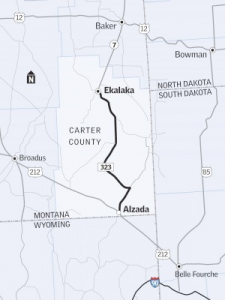
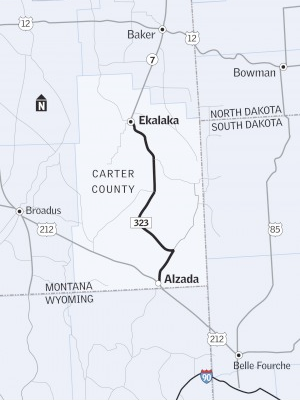
My old stomping grounds, way too close to the McFarthest Spot for comfort, is inching closer to civilization every year. A Facebook friend posted this article from the Billings Gazette about a road project in the southeast corner of Montana. After decades of effort, the last 17 miles of Montana state highway 323 were blacktopped this fall.

The people who live there are ecstatic, as the article makes clear. But my feelings were ambivalent when I first skimmed the article. I realized I didn’t want the quaint corner of the world where Hiram and I lived for seven years, where Allen was born, to change so dramatically. I wanted it to remain exactly the same. No changes. No progress. No easier life for friends who still live in the remotest corner of the south 48 states. How selfish is that?

Pretty selfish.

A more careful reading of the article calmed me down. Highway 323 wasn’t the road I thought had been paved, but a good distance west of Camp Crook, South Dakota where we lived. (Camp Crook was 3 miles east of the Montana border and 20 miles south of the North Dakota border, in case you wondered.) So progress isn’t nipping at its heels with the immediacy I imagined. So I breathed easier. How selfish is that?

Pretty selfish.

Funny how the progress I wished for when we lived there – paved roads, more people, easier access to civilization –  saddens me now.  But isn’t that human nature? Always wishing for a better future and idealizing the the hardships others wrestle daily, the hardships I left behind several decades ago? How selfish is that?

Pretty selfish.

So instead of wishing for the future, I’ll try to wrap my head around the present: a paved road all the way from Alzada to Ekalaka (don’t you love those names?) before my next trip out west. Can’t wait to see it!

Take That, You Young Whippersnappers

Take That, You Young Whippersnappers

Hiram and I really enjoyed listening to one of Terri Gross’s interviews on Fresh Air a few months ago. Her guest was Barbara Strauch, the health and medical science editor at The New York Times and author of the new book, The Secret Life of the Grown-Up Brain.

We liked the interview because Strauch listed several ways middle-aged brains function better than teen brains. Now that we’re merrily tripping through our fifties, we appreciate hearing how we can still outperform our twenty-something children. Take that, you young whippersnappers!

Here are some snippets from the interview transcript.

GROSS: Are there processes that improve in the middle-aged brain?

Ms. STRAUCH:  We think we’re sort of the smartest in college or graduate school or whatever, and when they do the tests they find that’s not true in many areas, including reasoning, inductive reasoning – we are better than we were in our 20s. And there’s a whole host of areas where they’re finding that we actually improve in middle age, over our, you know, our 20-something selves, and it’s extremely encouraging. We are better at getting the gist of arguments.

When you’re younger, you may, I mean this is a very simple example but, you may be better at remembering a list of fruit: bananas, oranges, whatever, grapes. But when you’re older, as you get older, you’re better at recognizing categories. Oh, those are all fruit. Or oh, those are all vegetables. And we’re much better at sizing up situations. They find that we’re better at things like making financial decisions. It reaches a peak in our 60s. Social expertise, in other words, judging whether someone’s a crook or not a crook, also improves and peaks in middle age….

GROSS: And you mentioned that there’s, you know, a, I guess a physiological explanation for it. It’s called bilaterization, that middle-aged people are better able to use two sides of their brain instead of one when thinking through a problem. Would you explain?

Ms. STRAUCH: When you’re younger you use one side of your brain to learn something and another side of the brain to recall it. And as you age, they watched people use both sides of their brain for both tasks. And originally, they thought uh-oh, this must mean bad things. It must mean that there’s some deficit somewhere, and these people, they’re really trying to figure it out. And there was some concern because people with Alzheimer’s will use sometimes more parts of their brain to try to do simple tasks that they could use with one part of their brain before.

But what they’re finding is, the people who use as they age, two parts of their brain rather than one to do a task that they used to be able to do with one, are really the people who are functioning the best in terms of cognitive function….

If it is something that calls for our frontal cortex to do the tasks that we want to do, then you’ll see, as you age, people calling on two parts. We have two sides to our brain – right and left – and if they call on two parts of their frontal cortex to do a task, they can usually perform it better. If it’s something that they usually don’t need their frontal cortex for, you’ll find that people who are really cognitively better than others will go in and reach for that frontal cortex to help them do whatever they need to do.

And they think that basically, the people who are used to reaching up and getting some of that high-power brain juice, really, they find correlations with education. The higher-educated people are better at doing that. They find people who maybe have more efficient brains, through genetics or whatever, are better at doing that. And what they’re trying now to do, actually, is teach people to use two parts of their brain to call on their frontal cortex more. And that’s why you get all these efforts to try to push the brain – as you get older – to try and make it work really hard.

And what they’re trying to do is get you to use more of your brain and keep using more of your brain, so that your brain doesn’t get into a rut and go fallow, or call on that frontal cortex more so those pathways are clear and you have it there when you need it….

GROSS: In your book you mention that exercise and oxygen can be helpful for memory.

Ms. STRAUCH: Yes. If there’s a star in aging brain research, it is probably exercise. The best data is with exercise and across the board they find that if the brain needs anything, it is very much like the heart and it needs blood. It needs to circulate – the blood needs to be circulated. It needs oxygen. And so when they do the studies, from rats to humans, about vigorous exercise, they find that it improves cognitive function across the board. And they’re finding now, as they look inside brains, it creates new baby brain cells. Something they didn’t…

GROSS: Exercise?

Ms. STRAUCH: Yes. Something they didn’t think happened in the grown-up brain at all. So you get better. You get bigger brain volume if you exercise, and it seems to last. So there’s no question that, sadly, exercise works in terms of keeping your brain in better shape. So that one is studied probably the best out of all the things you can do.

GROSS: When we say exercise, what are we talking about? Does it have to be like lifting heavy weights and, you know, doing all the machine stuff in the gym? Are we talking about walking every day? What are we talking about?

Ms. STRAUCH: Well, some of the studies – Art Kramer, University of Illinois, has found that people who simply walked around a track three times a week, you know, at a certain pace were better off than others. Walking, anything aerobic is considered quite good. You can’t – it’s probably best not to sort of take a stroll, but actually get your heart pumping. That’s really what you want. Just as you were thinking about what do I need to do for my heart, think about the fact that you should do that also for your brain.

To learn more, go to this link at www.npr.org. You’ll find a related article, the entire transcript, or downloadable audio version are available. And strut your stuff by sending the link to your kids, too. They need to know how smart we are, don’t you think?


My MOPS Mess

My MOPS Mess

Last December, when an invitation to speak at the 2010 International Mothers of Preschoolers (MOPS) Convention arrived, I was pretty pumped. With about four or five thousand young moms attending the August 5 – 8 event, the convention would be a great place to hawk A Different Dream for My Child and connect with parents raising kids with special needs.

When two BFFs agreed to road trip with me to Nashville, stay at the Grand Old Opry Hotel, and help sell books, I was even more pumped – at least until last spring when Nashville was smacked with a devastating flood. Life changed dramatically for people along the flooding river. I can’t imagine what horrors they endured and are still enduring. But I do know the effects of the flood flowed far beyond the Tennessee shoreline. One small ripple made it all the way to Iowa and left me with a MOPS mess to tidy up.

The convention planners moved the event from Tennessee to a conference center in Kissammee, Florida, just south of Orlando. My BFFs said it was too far for them to travel. My daughter can’t come because her new in-laws are hosting a reception for the newlyweds that weekend. My new daughter can’t come because she just started a new job and doesn’t have any vacation time. My husband can’t come because he’s used all his vacation time on weddings, Family Camps, and man-of-steel hikes in the wilderness with other men of steel.

So I’m going to Florida…alone.
I’ll be minutes away from the happiest place on earth…alone.
I’ll be counting out change and signing books…alone.

In the grand scheme of things, it’s a tiny disappointment. It’s a teeny-tiny mess compared to the flood in Nashville. It’s still a great opportunity, and I’m eager to learn why God is sending me there all by myself. What will happen on the way? Who will I meet? What opportunity awaits? When I think like that, my MOPS mess looks tidier by the minute.

But what about the people in Nashville?

Russell Moore on NPR: Not Your Stereotypical Evangelical

Russell Moore on NPR: Not Your Stereotypical Evangelical

Sunday morning, I was running a little late. Okay, I was running very late, late enough to know my entrance into Sunday school would be extremely embarrassing. In too much of a hurry to pay much attention to what was on the radio, the announcer’s trailer for the next NPR news story didn’t register at first.

Wait a minute, I said to my half-lipsticked reflection in the mirror, did she say Russell Moore from the Southern Baptist Convention would be the next guest? And he’s going to talk about an environmental resolution about the Gulf oil spill? This should be interesting.

Sure enough, NPR interviewed Russell Moore, an evangelical Baptist southern pastor who is not afraid to tackle difficult current issues and discuss them in a thoughtful, respectful manner. And sure enough, the topic the need for conservative Christians to become environmentally concerned in light of the Gulf oil spill.

Rather than trying to summarize the story here, I’m posting the link so you can read and process the conversation yourself. This link takes you to a summary of the article. To read the entire article, click on the transcript button on the page. Or you can listen to the audio by clicking the download button.

If what you read or listen to piques your interest, visit Moore’s blog, www.russellmoore.com. Moore uses it as a forum for raising prickly issues and to deal with thorny questions raised by readers. Unlike many evangelicals, his responses are considerate, humble, and kind. Even when I don’t agree with his conclusions, I find his manner refreshing and engaging.

Not your stereotypical evangelist. The world needs more men and women like him, don’t you think?

These Lovely Students: Time Capsule, 2010

These Lovely Students: Time Capsule, 2010

Yesterday, one of the sweetest days of spring unfolded. Perfect weather. Crab apple trees in blooms. Tulips swaying in the breeze and lilacs bursting into bloom, their scent wafting through the air like honey.

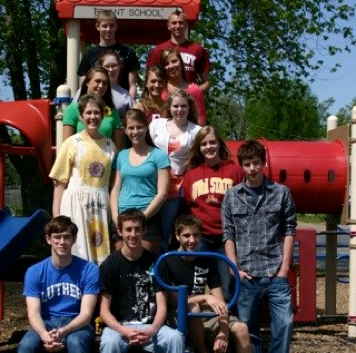
But best of all was the hour I spent with the high school students who were once my fourth grade students and their parents. We met at Bryant School, where we learned together for nine months some years ago. They were taller than when we said goodbye on a warm June day in 2002. I had more wrinkles.

But yesterday I managed to hold back the tears, just barely, that flowed freely when our little fourth grade family broke up housekeeping way back then. I was determined not to cry because I wanted to be clear-eyed enough to see the people they’d become and to search their faces for traces of the nine and ten-year-olds they used to be.

So while they looked at old pictures and watched videos of their social studies presentations and how-to demonstrations, I watched them. And what did I find behind bravado they’ve cultivated to survive high school or hard times?

Tucked behind their smiles were Alex D’s quiet kindness and Josh’s  soft humor. Maddie’s sparkling excitement about life and Hannah’s joyful optimism were written in their eyes. II saw Chuck’s gentleness and Heather’s compassion in the set of their shoulders. Brogan’s determination hid behind his grin, and Alex B’s gaze was as intense as it was the day we first met. Nikki’s shyness was barely visible beneath her confident voice, but it peeked out now and then. Jordan thoughtful nature waited behind her laughter, and Stephanie L was still a natural observer, noticing things in pictures the rest of us missed. Dillan’s childhood inquisitiveness was evident in his career choice, while Erin’s love of words marked her conversation.

They are still there, the children I had loved so much and carried in my heart since we lived fourth grade together so many years ago. My prayer for each of them, the ones present and the ones who didn’t come, as they enter adulthood is simple.

Hold the sweet child you once were close to your heart. Remember who you were and where you’ve been. Build upon the best of your past to create a firm foundation for your future. Rejoice daily. Give thanks hourly. Savour the moment.

Live well, lovely students. Live.