by jphilo | Jan 17, 2011 | Current Events
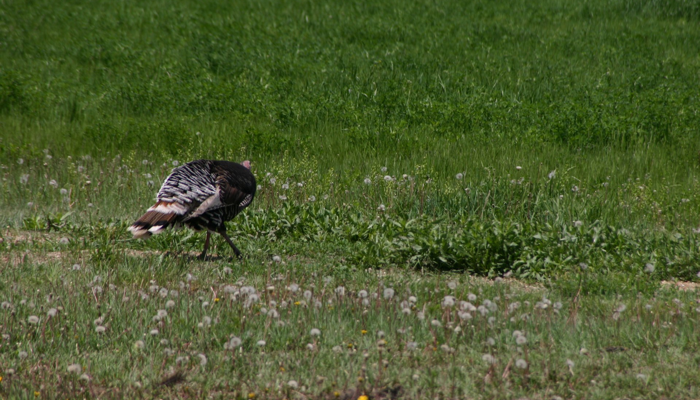
Between having to boil drinking water since Friday night (a city water main broke) and some unexpected news from Harding County, South Dakota, prairie thoughts dominated the weekend.
The water business increased my admiration for Ma Ingalls and every other prairie woman ten-fold. I thought about them every time I ran a potful of water and heated it on my clean, electric stove. Those prairie gals hauled and heated water constantly. Water for washing, cleaning, bathing, cooking. Every drop of it hauled in cold, then heated on a wood stove. Throw babies in cloth diapers, without rubber or plastic pants, and I get tired just thinking about their workloads.
So prairie folks were on my mind before the news came that Sky Ranch for Boys, where Hiram and I worked after college, is closing. The ranch, a residential facility for troubled boys, is at least in part, a victim of economic times. Their website announcement says:
We are deeply saddened to report that our program will cease providing residential treatment and educational services for troubled teens in the first part of 2011. This painful decision was a result of the trend away from the kind of residential treatment program Sky Ranch offers in favor of less expensive, community based alternatives for kids in trouble and at risk. The Ranch is currently caring for less than 20 boys (down from 40 a few years ago) and that number is expected to decline sharply in the weeks ahead as states implement new budget policies. Although exacerbated by the recession, this does not appear to be a short term trend.
After reading the announcement, I kept thinking about the boys who will need residential treatment in future, but won’t have it available. And I kept thinking about all our friends in Harding County who will be affected by the closing: teachers, counselors, caseworkers, cooks, and so many more. Will they be able to find jobs in the vast, sparsely populated, short grass prairie they love? Will they have to sell their ranches and move away? Will the tiny, struggling towns die? These prairie thoughts, disturbing and unwelcome, put a weekend spent boiling water in proper perspective.
I am ashamed of my complaining.
I am grateful for a secure livelihood.
I am praying for my Harding County friends.

by jphilo | Jan 6, 2011 | Current Events
Are you looking at the jumble of letters in the title and wondering if you can stomach another helping of alphabet soup? Believe me, if you were afflicted with EA/TEF, you wouldn’t be eating alphabet soup or anything else without emergency surgery.
EA stands for Esophageal Atresia, which is the new and improved name for a Tracheoesophageal Fistula (TEF), the condition our son was born with. Very briefly, esophageal atresia (or TEF for old timers like me) is a congenital defect. In most cases, the upper esophagus ends and does not connect with the lower esophagus and stomach. The top end of the lower esophagus connects to the windpipe. That’s the version Allen had. Immediate, major surgery was required to correct his plumbing issues, as is the case with all babies born with EA/TEF.
To read more about the condition, more information is available at www.DifferentDream.com, my website for parents of kids with special needs. You might also like this FaceBook page where parents of EA/TEF kids share experiences and seek advice: Bridging the Gap of EA/TEF. Since finding the group and it’s founder, Lori Dorman McGahan, I’ve swapped stories with parents whose vocabularies include words like seal cough, tracheomalacia, sphincter valve, and fundoplication. It is way cool.
During January, I’ll be featuring some of these families at the Different Dream website, if you’re interested. Many of their stories make Allen’s sound like a walk in the park. So take a gander if you like. And if you know a family dealing with EA/TEF, please pass on the information to them. It took me almost 28 years to connect with parents who identify with what we went through. No parent should ever have to wait that long again!
Here’s a note from Kristin Cooley that clarifies some of the information I gave about EA/TEF. I would have posted it at as a comment, but can’t get it to work. If anyone else is having the same trouble, please email me. The odds are slim that I can fix what’s wrong, but it’s worth a try. Now for Kristin’s information:
Hi, Jolene! Thanks so much for taking the time to help out the cause!!
I wanted to say that your second paragraph leads readers to believe that EA and TEF are the same thing; this is not the case. In fact, they are two completely distinct anomalies. EA, or esophageal atresia, is the ending of the esophagus in a blind pouch before it connects to the stomach. TEF, or tracheoesophageal atresia, is the abnormal connection of the esophagus to the trachea. While in a majority of cases they do co-exist, there are instances when EA occurs as an isolated anomaly, especially in long gap patients.
I know your son was born with EA/TEF, so I know the cause means as much to you as any of us. I just felt compelled to bring this to your attention because many of us will share your website with our friends and family who have a very basic understanding of this birth defect. So, for those of them who are trying to grasp the complexity of the birth defect, I wanted to make sure they got complete information.
Thank you,
Kristin

by jphilo | Dec 14, 2010 | Current Events
The season’s first real snow made a grand entrance Saturday, greasing the skids with a sheen of ice, then sliding in with a howling wind that lasted all night. We woke Sunday to three or four inches of snow – it’s hard to tell because of the drifting – no church because of the ice, below zero temps, and a brilliant, blue sky.
Our kids had it worse. Anne emailed Saturday to say they were snowed in. Allen called Saturday afternoon with a similar report, their second snowed in Saturday in two weeks. “I still haven’t done my Christmas shopping,” he said.
We talked about what we want to do as a family when he and Abbey, Kailen and Anne are here for a long New Year’s weekend when we’ll celebrate Christmas. Sunday, the conversation was repeated during a phone call with Anne. Our children’s voices conveyed eagerness and anticipation of some quiet family time together, something in short supply this past year with its crowded schedule of weddings and reunions.
I hung up the phone, keenly aware of the grace surrounding our family on this snowy, dangerous weekend and the festivities to come. Some years ago, our family circumstances required us to relinquish every dream of a simple family Christmas with both our children. Unexpectedly and miraculously, in the past two years that dream has abundantly restored beyond our wildest imaginings.
So today I look outside at the bleak landscape, all bare trees and hard sunshine, and think about our gathering to come. I hesitate and ask. “God, is it too much for me to ask for a weather favor? Could a blizzard hit once they are safely here? Could we all be snowed in together?”

by jphilo | Dec 6, 2010 | Current Events
Yesterday, our church body had an all day Christmas party in our new home. The morning service was devoted to praise and thanksgiving for God’s marvelous and miraculous provision of our facility. Community members came in droves for the afternoon open house. Contractors, builders, bankers, and the pastor of the church from which our body was birthed ten years ago, and many more were special guests at the dedication service following the open house. Then we gathered for a feast and fellowship.
The kids ate and played, oblivious to the significance of the moment. Being young, they take miracles in stride. But we older folks, who spent the past ten years waiting and working and wondering and doubting, relished the moment when grace rained down, wetting our cheeks with tears.
Over and over, our guests commented, “This doesn’t feel like a church. It feels like home.” Which made every person on the decorating committee jig with joy because from the very beginning, those talented women said, “We want this place to feel warm and welcoming, like coming home.”
Not an easy task, but with black ceilings (we all thought they were crazy), warm colors on the walls (I was concerned it would be too dark), hubcaps decorating the men’s bathrooms (you have to see it to believe it), a farm theme in the nursery (makes me want to be a kid again), a youth room with neon, blinking palm trees (way cool), a cozy fireside room (the donated leather sofas are so inviting), and a gigantic Christmas tree smack dab in the middle of the foyer (who would think to put the tree in the center of the entry?), they pulled it off.
If you missed the open house, don’t take my word for it. Stop by to see it. We’d love to show you around and tell you the story of how God brought us to our new home just in time for the holidays.
It’s a story to shout from the rooftops, but incredible as it is, it doesn’t hold a candle to the Christmas story. The story of the Son of God, who left his heavenly home to live among men. The story of Jesus, who gave up comfort so he could become our comfort. The story of hope not found in ceilings and walls and hubcaps and leather sofas or in any other earthly thing.
Our hope came down from heaven on the wings of love divine, all love excelling, joy of heaven to earth come down. When that hope enters our trembling heart, we are finally and eternally home for the holidays.
by jphilo | Nov 24, 2010 | Current Events
shellacking: present participle of shel·lac (Verb)
1. Varnish (something) with shellac.
2. Defeat or beat (someone) decisively: “they were shellacked in the election”.
First, Obama won the Nobel Peace Prize. Now he’s reviving dead language. Our president is proving to be quite the leader, at least in areas he hadn’t planned to pursue.
After his famous admission that the “Democrats took a shellacking” in the midterm elections, media groupies have used the word with the fervor of young adolescents imitating the most popular kid in middle school. According to the Christian Science Monitor, “It was Obama’s use of the word ‘shellacking’ that had the blogosphere talking.”
All I know is that every time I turn on the radio, broadcasters and talk show hosts work the word into their copy. They use it with eagerness and obvious pride, their intonation hinting at their delight and pride in using the same word the coolest guy ever in the White House uses. Pretty cool, huh? Huh?
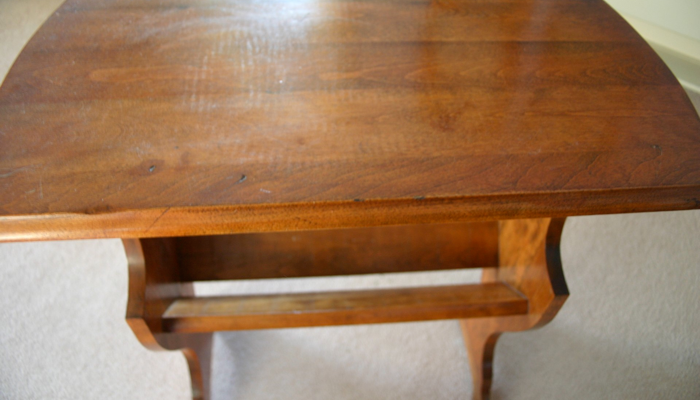
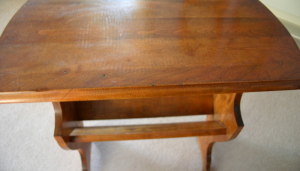
They’re loving keeping up with the big guy, but I’ve had about had my fill of shellacking. In fact, I haven’t been this fed up with the stuff since the summer of sixth grade. Mom was gone for a week or two, taking graduate classes for her masters degree. In her absence, Dad worried that I wouldn’t have my 4-H project – refinishing an old end table – done for the county fair. So he roped our elderly neighbor into helping me glue and clamp the pieces together. Then Dad wheeled out to the garage to direct the staining, sanding, and varnishing stages.
He had me load the brush a little too heavily, coat after coat, so the shellac formed unsightly runs and ridges. My half-hearted sanding efforts between coats didn’t improve matters. The end result was less than stellar, and project only earned a red ribbon at the county fair. A real shellacking in my blue ribbon family.
To this day, every time I walk by that little end table in our upstairs hall, my shellacking debaucle comes to mind. Makes me wonder if Obama regrets his overloaded word choice as much as I regret overloading the paint brush years ago. Anyway, I think it’s pretty cool that the same word taught me and the big guy the same lesson – albeit through alternate meanings.
A little shellacking goes a long way. And don’t we both know it?

by jphilo | Nov 15, 2010 | Current Events
Most Sundays, reading the opinion pages of the paper is the quickest, dirtiest way to rain on my personal feel-good parade. Public debates have never interested me. Heated, public debates make me want to curl up in a corner and disappear. Political debates seem to be an exercise in futility, and considered by many as permission to engage in name-calling. And from what I’ve observed, name-calling never accomplished anything positive.
So why bother reading the opinion page at all?
Here are a couple reasons. First, to get a sense of prevailing thoughts on hot issues. Second, to become a more informed voter. Third, because our shrinking state daily rag sometimes includes book and art reviews, which I enjoy, in the opinion section. And fourth, because once in a while, the Iowa View column, written by guest writers, has something good.
Sunday, November 7 was one of those days. What first caught my eye was the photograph accompanying the column. A sucker for pictures of old farm guys in tractors, I started reading the article by Jennifer Dukes Lee, a former Des Moines Register staff writer and young farm wife.
A summary of the article can’t do justice to its themes of love for the land, grief and sorrow, hope and harvest. No more than a description of the photographs will bring the colors and expressions to life. Instead, go to this link and read the article for yourself. It will put you in the Thanksgiving mode. If you like the article, more of Jennifer’s writing can be found at her blog,http://gettingdownwithjesus.blogspot.com/. Her writing is thoughtful and illustrated with vibrant, and sometimes quirky photographs.
Editors include stories like Jennifer’s draw a certain group of readers – a large, quiet group who don’t like controversy and would never write a letter to the editor – to the Sunday opinion page. Those editors know what they’re doing.
Their ploy worked on me, a sucker for stories about old farm guys on tractors. Does it work on you?