EA TEF Awareness Month Is Here Again!

EA TEF Awareness Month Is Here Again!

EA TEF Awareness Month Is Here Again!

January is EA TEF Awareness Month. If you’re not sure what EA TEF Awareness Month is about, Different Dream is the right place to fill in your knowledge gap. The word “gap” was carefully chosen because EA TEF (short for Esophageal Atresia/Tracheo-Esophageal Fistula) is a birth anomaly caused by a gap in the esophagus and trachea of a newborn.

Different Dream makes a big deal about EA TEF Awareness Month because my son was born with the condition in 1982. During past awareness months, I’ve shared our story. Some of those posts will be featured during January. But for me, the most exciting part of this year’s awareness raising are the stories new guest bloggers who are parents of kids with EA TEF are sharing. Posts from bloggers like Matt Allen, whose son was born with with EA TEF just a month ago. Tips from moms of toddlers and young children. Their stories put flesh and bones and faces on the life-threatening medical condition that affects 1 in every 4000 newborns.

I hope you find EA TEF Awareness Month to be informative and encouraging. I hope it offers a peek into life for kids with EA TEF and their parents. Most of all, I hope that if you’re the parent of a child with EA TEF find this page. I hope you will leave a comment in the box below to introduce us to you and your child. And I hope you’ll find the support and encouragement you need to be the advocate your child needs.

Welcome to the family!

Do you like what you see at DifferentDream.com? You can receive more great content by subscribing to the quarterly Different Dream newsletter and signing up for the daily RSS feed delivered to your email inbox. You can sign up for the first in the pop up box and the second at the bottom of this page.

By

Jolene Philo is the author of the Different Dream series for parents of kids with special needs. She speaks at parenting and special needs conferences around the country. She’s also the creator and host of the Different Dream website. Sharing Love Abundantly With Special Needs Families: The 5 Love Languages® for Parents Raising Children with Disabilities, which she co-authored with Dr. Gary Chapman, was released in August of 2019 and is available at local bookstores, their bookstore website, and at Amazon.

Author Jolene Philo

To get posts delivered to your inbox, enter your email address:

Delivered by FeedBurner

Archives

Categories

Related Posts

Top 5 Special Needs Posts at Different Dream in 2016

Top 5 Special Needs Posts at Different Dream in 2016

Top 5 Special Needs Posts at Different Dream in 2016

Different Dream is filled with special needs posts that reach families with the support and encouragement they need. As this year winds down, here’s a look at our readers favorite special needs posts in 2016.

Post #5: So You’re a NICU Parent

Brianna Lennon shared 5 lessons she learned when her newborn son spent several months in NICU after his EA/TEF repair surgery. The lessons she learned resonate with parents with a hospitalized child  of any age.

Post #4: Disability Etiquette

Readers loved guest blogger Trish Shaeffer’s advice about what to say and what not to say to parents of kids with special needs. Her bottom line about disability etiquette is this: Make positive comments about kids with special needs because all parents love to hear good things about their kids.

Post #3: Adopting a Child with Special Needs

In February Kimberly Drew, mom to a daughter with special needs, announced that she and her husband were adopting a baby with special needs. Her post explains what her older daughter has taught her about the true special needs of kids with special needs. When you read her surprising and delightful lessons, you’ll see why this post continues to be popular.

Post #2: 11 Ways to Reduce Special Needs Stress

Special needs posts that encourage stressed parents are always popular at Different Dream. So it’s no surprise that Jolene Philo’s list of 11 ways to reduce special needs parenting stress was an instant hit when it went live in May. If you’ve been feeling stressed lately, you might want to give it a read if you haven’t already.

Post #1: When You Can’t Put Special Needs Behind You

Different Dream’s top post of 2016 tackled a difficult subject: PTSD in parents of kids with special needs. The post reviewed symptoms of this mental illness and treatments to alleviate it. If you can’t put your child’s special needs trauma behind you, this post is one you need to read immediately!

Add Your Favorite Special Needs Posts to the List

Are your favorite special needs posts of 2016 missing from this list? Add them in the comment box!

Do you like what you see at DifferentDream.com? You can receive more great content by subscribing to the quarterly Different Dream newsletter and signing up for the daily RSS feed delivered to your email inbox. You can sign up for the first in the pop up box and the second at the bottom of this page.

By

Jolene Philo is the author of the Different Dream series for parents of kids with special needs. She speaks at parenting and special needs conferences around the country. She’s also the creator and host of the Different Dream website. Sharing Love Abundantly With Special Needs Families: The 5 Love Languages® for Parents Raising Children with Disabilities, which she co-authored with Dr. Gary Chapman, was released in August of 2019 and is available at local bookstores, their bookstore website, and at Amazon.

Author Jolene Philo

To get posts delivered to your inbox, enter your email address:

Delivered by FeedBurner

Archives

Categories

Related Posts

How Weighted Blankets Benefit Kids with Special Needs

How Weighted Blankets Benefit Kids with Special Needs

How Weighted Blankets Benefit Kids with Special Needs

Today’s guest post comes from the people at Special Needs Essentials, a website that specializes in products and resources for special needs families. Today’s post explains how weighted blankets benefit kids with special needs. 

How Weighted Blankets Benefit Kids with Special Needs

Have you ever heard of weighted blankets? These revolutionary tools provide pressure and sensory input, similar to a good hug. They are made of plastic pellets, evenly distributed in a quilted pattern in order to provide a widespread sensation of pressure. Studies have proven that the pressure provided by hugs or weighted tools enables the release of serotonin, a hormone that calms and relaxes the body. It also stimulates oxytocin, a hormone that promotes feeling of contentment and willingness of social bonding, among others.

This sensation is particularly valuable for individuals affected by autism and other sensory seeking individuals. They can use weighted blankets as a calming tool or simply as a regular blanket at night. During the day, you can try using it when you feel anxious, aggressive or just want to be comfortable. Sit and wrap yourself in your blanket or lay down and stay there a few minutes to hours, as long as you feel the benefits. At night, weighted blankets used in place of regular blankets will help your child go to sleep faster and stay asleep better.

Pay attention to buy a washable blanket made with non-toxic materials, as it is not always the case. As for the color, your child may appreciate the calming effect of solid blue. Some blankets have the ability to be warmed in your dryer or cooled in your freezer, thus providing the additional benefit of adapting to your child’s favorite temperature. Fringes can provide additional sensory input too, enabling the person to run their fingers around and play with them. The suggested blanket weight is 10% of your weight plus 1 pound, but it is best to check with your physician or therapist.

                 weighted blanket turtle       weighted blanket 2       weighted blanket washable

Weighted vests and weighted lap pads are also on the market, providing a different kind of pressure for sensory seeking individuals. Find your favorite weighted tool today!

Weighted blankets Special Needs Essentials Logo (Company)Special Needs Essentials is dedicated to offering essential materials that can enhance the quality of life for people with special needs, their families, and their support communities. SNE specializes in educational, therapeutic, play to learn, living aids, and sensory products. The intent of these skill-builders varies and includes providing sensory input, improving motor function, increasing cognitive development, and providing daily living assistance. Overall, SNE intends to enhance developmental skills in individuals of all abilities.

Your Take on Weighted Blankets?

Has your family had experience with weighted blankets? What do you think of them? Leave a comment in the box below. 

Read more about the research behind weighted blankets at these links:

Calming Effects of Deep Touch Pressure in Patients with Autistic Disorder, College Students, and Animals
Serotonin and Prefrontal Cortex Function: Neurons, Networks, and Circuits Molecular Neurobiology

Do you like what you see at DifferentDream.com? You can receive more great content by subscribing to the quarterly Different Dream newsletter and signing up for the daily RSS feed delivered to your email inbox. You can sign up for the first in the pop up box and the second at the bottom of this page.

By

Jolene Philo is the author of the Different Dream series for parents of kids with special needs. She speaks at parenting and special needs conferences around the country. She’s also the creator and host of the Different Dream website. Sharing Love Abundantly With Special Needs Families: The 5 Love Languages® for Parents Raising Children with Disabilities, which she co-authored with Dr. Gary Chapman, was released in August of 2019 and is available at local bookstores, their bookstore website, and at Amazon.

Author Jolene Philo

To get posts delivered to your inbox, enter your email address:

Delivered by FeedBurner

Archives

Categories

Related Posts

6 Special Needs Tax Deductions for Families

6 Special Needs Tax Deductions for Families

6 Special Needs Tax Deductions for Families

Tax season is here, and special needs tax deductions make a difference for families when every penny counts. That’s why Different Dream is passing along special needs tax deductions tips recently posted at the Military One Source website. Many of them are plain old common sense, but common sense can be easy to overlook when chasing down receipts and pay stubs. Some of them highlight some surprising deductions that you may not know exist. See what you think!

6 Special Needs Tax Deductions

  • Claim all eligible dependents 
  • Explore adoption credit
  • Recoup child and dependent care expenses
  • Check Out the Earned Income Tax Credit
  • Ditto for Credits for the Elderly or the Disabled
  • Claim medical and dental expenses when possible


Where to Find More Information about Special Needs Tax Deductions

Each of the 6 deductions is explained in full at Military One Source. The article explains age restrictions, what family members are and aren’t eligible, the percentages of expenses that can be deducted, and more. The original post even has links to specific IRS publications that explain each of the 6 special needs tax deductions. Of course, you should ask your accountant to investigate all the possible deductions to be sure they apply to your situation.

What Special Needs Tax Deductions Do You Use?

Has your accountant successfully applied any of the deductions in this article? Do you have tips about how to make them work? Are there other special needs tax deductions you can recommend? You can tell all about them in the comment box. Thanks!

Do you like what you see at DifferentDream.com? You can receive more great content by subscribing to the quarterly Different Dream newsletter and signing up for the daily RSS feed delivered to your email inbox. You can sign up for the first in the pop up box and the second at the bottom of this page.

By

Jolene Philo is the author of the Different Dream series for parents of kids with special needs. She speaks at parenting and special needs conferences around the country. She’s also the creator and host of the Different Dream website. Sharing Love Abundantly With Special Needs Families: The 5 Love Languages® for Parents Raising Children with Disabilities, which she co-authored with Dr. Gary Chapman, was released in August of 2019 and is available at local bookstores, their bookstore website, and at Amazon.

Author Jolene Philo

To get posts delivered to your inbox, enter your email address:

Delivered by FeedBurner

Archives

Categories

Related Posts

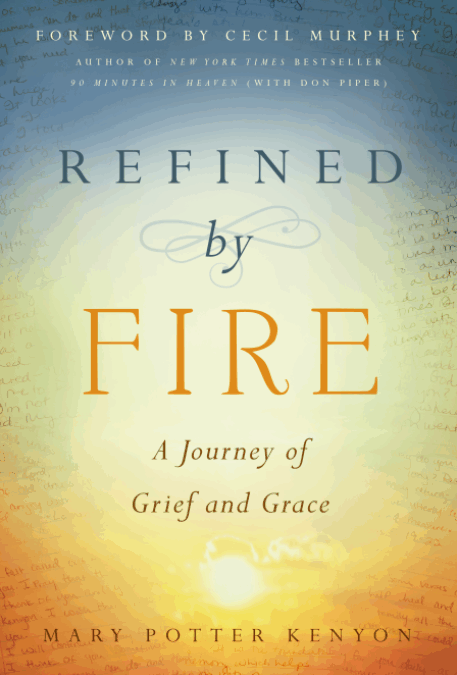
Refined by Fire: A Journey of Grief and Grace

Refined by Fire: A Journey of Grief and Grace

Refined by Fire: A Journey of Grief and Grace

I suspected, when asking Mary Potter Kenyon for a review copy of Refined by Fire, that it would be a hard book to put down. Once I opened the book, my suspicions proved to be absolutely true. The book was nearly impossible to put down for two riveting reasons.

Refined by Fire: Two Reasons It’s Hard to Put Down

First, the author tells a heartbreaking story of loss. In the span of a few years, Kenyon lost her mother Irma and then her husband David. Just as she discovered writing as a way to regain her emotional footing, her young grandson Jacob died of cancer.

Second, she makes the story more compelling by being transparent. She lays her journey of grief before the reader, refusing to hide her emotional pain, her tears, her anger, her loneliness, and her doubts. We see grief take its toll on her relationships and especially on her youngest daughter, Abigail, who was just 8 when her father died.

Refined by Fire: Snapshots of Grief

Though overwhelmed by grief and shedding tears every morning for years, Kenyon somehow writes her way through her grief. Throughout the book, excerpts from her blog and daily journals are featured:

Grief at Ten and a Half Weeks
The First Holiday
Grief at Twenty Weeks
Grief at Five Months

Each entry is a word picture, a snapshot of grief frozen in time. Between those entries, the reader sees grief melt and morph and reform as Kenyon questions God and hears him answer in sweet and unexpected ways. Though devastated by her losses, she begins to see God at work in her life. Her heart is still broken at the end of the book, but thanks to her determination to cling to God, she is also stronger and more capable than before.

Do you like what you see at DifferentDream.com? You can receive more great content by subscribing to the quarterly Different Dream newsletter and signing up for the daily RSS feed delivered to your email inbox. You can sign up for the first in the pop up box and the second at the bottom of this page.

By

Jolene Philo is the author of the Different Dream series for parents of kids with special needs. She speaks at parenting and special needs conferences around the country. She’s also the creator and host of the Different Dream website. Sharing Love Abundantly With Special Needs Families: The 5 Love Languages® for Parents Raising Children with Disabilities, which she co-authored with Dr. Gary Chapman, was released in August of 2019 and is available at local bookstores, their bookstore website, and at Amazon.

Author Jolene Philo

To get posts delivered to your inbox, enter your email address:

Delivered by FeedBurner

Archives

Categories

Related Posts

Birth Injury Website for Special Needs Parents

Birth Injury Website for Special Needs Parents

Birth Injury Website for Special Needs Parents

Birth injuries are at the root of many special needs diagnoses in children. Therefore, it’s a delight to introduce you to a new website, Birth Injury Guide, which is devoted to educating and supporting parents. Today’s guest post comes from Leigh Egan. She’s a writer who, as a mother, has a special interest in children’s issues. She researches and writes about health problems and cognitive behaviors that stem from birth trauma. In this post, she​ acquaints you with what’s available at the site.

Birth Injury Guide Dedicated to Comprehensive Information

Each year, thousands of babies are injured before, during, and shortly after childbirth. Unfortunately, even the smallest medical mistake can lead to a lifetime of health problems, and in some cases, permanent cognitive disabilities for injured infants.

As a result, a comprehensive site, Birth Injury Guide, was recently created as an in-depth, resourceful guide for people to learn more about birth injuries and the traumatic impact it can have, not only on babies, but family, friends, and loved ones. Here are a few of the most common types of birth injuries.

Brachial Plexus Injuries

The brachial plexus is a set of nerve fibers that run from the spine and throughout the neck, armpit, and arms. When the brachial plexus nerves are injured, weakness, pain, numbness, and even paralysis may occur.

During childbirth, and often during a difficult, stressful delivery, an infant’s brachial plexus is at risk for injury if a physician tugs or twists too forcefully when trying to pull the baby out. If birth-assisting tools are used incorrectly, such as forceps or a vacuum extraction tool, the risk of injury heightens even further. The two most typical brachial plexus injuries include:

  • Erb’s Palsy occurs when the brachial plexus nerves in the upper arm is damaged. Symptoms may include arm numbness, loss of sensory function, weakness in the affected arm, and full or partial paralysis.
  • Klumpke’s Palsy affects the muscles in the forearm and the hand of the affected area. Symptoms may include a claw-like appearance to the affected hand, limp or paralyzed arm on the affected side, lack of muscle control, and loss of feeling in the affected area.

Brain Injuries

Traumatic infant brain injuries happen to numerous babies each year. Brain injuries can occur for a variety of reasons, including oxygen deprivation during childbirth, untreated jaundice that leads to kernicterus (a rare type of brain damage marked by excessive bilirubin), physical trauma, and even maternal infections.

Symptoms of brain injuries will depend on how severe the damage is, and how the injury occurred. Generally, however, signs and symptoms may include development delays, abnormal temperament, and an usual physical appearance, such as a small skull, deformed facial features, and spinal cord abnormalities.

Bruises and Lacerations

Bruising is common during childbirth, and most infants will go on to heal without any problems. Lacerations, however, can lead to long-term medical problems, such as face nerve palsy, bone fractures, cervical cord injuries, and cephalhematoma. According to the National Institutes of Health (NIH), pregnant women who have cesarean section (C-section) deliveries are much more likely to have infants who sustain lacerations.

In addition, the Patient Safety Authority (PSA) states that a recent study indicates that 1.5 to 1.9% of babies born via C-sections experienced lacerations. A similar study by NIH, however, shows that fetal lacerations occur at least 3% of all pregnancies.

How We Can Help

Along with extensive resources and information on birth injuries, Birth Injury Guide provides comprehensive details treatment options, financial resources, state programs and assistance for disabled children, and much more. In addition, we have medical experts and assistants available to help people with any questions or concerns about their baby’s injuries.

For more information, we invite you to visit BirthInjuryGuide.org. You can also find us on Twitter and Facebook.

Do You Have Birth Injury Experience?

Do you have a child with a birth injury? If so, Different Dream and Birth Injury Guide would love to hear from you. Leave your questions or story in the comment box.

Do you like what you see at DifferentDream.com? You can receive more great content by subscribing to the quarterly Different Dream newsletter and signing up for the daily RSS feed delivered to your email inbox. You can sign up for the first in the pop up box and the second at the bottom of this page.

By

Author Jolene Philo

To get posts delivered to your inbox, enter your email address:

Delivered by FeedBurner

Archives

Categories

Related Posts