by jphilo | Dec 20, 2010 | Reflections on the Past
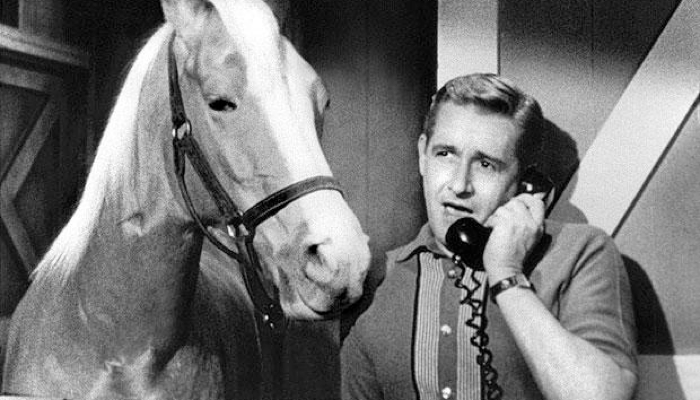
Mom called Sunday afternoon to see if I’d read the obituaries yet. She gets on these funeral patrol kicks now and then, checking for a final report on old friends, acquaintances, and former students.
Well, yesterday she hit pay dirt. “Kathy Knudtson died,” she informed me, her voice animated. “I thought you might want send a card to Kari.”
Mom didn’t seem to notice my slight pause, caused by neither her death watch fixation or her management of my sympathy card outflow. Without her two proclivities, I wouldn’t have seen the announcement, and thus sent no card to one of my dearest high school friends.
No, I paused because the news of Mrs. Knudtson’s death was so surprising. She was, I realized after hanging up the phone, one of those fixtures from childhood I thought would live forever.
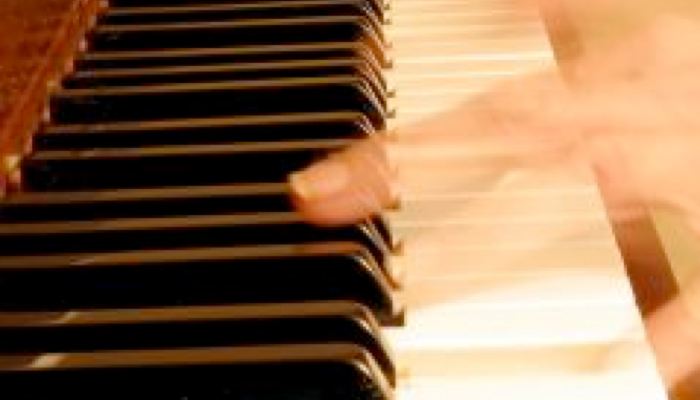
You see, Mrs. Knudtson was my first piano teacher. Considering my limited musical ability, she should be called Saint Knudtson. How she greeted me with a smile before each lesson, I’ll never know. How she kept her patience, teaching the same fingerings over and over, gently tapping out rhythms with her yellow pencil week after week is a mystery.
And somehow, while she folded back the page of my older sister’s hand-me-down piano book and erased the glowing comment my more musical sibling had earned, she came up with an encouraging word for me. “Try this song one more week,” she would write, the pencil lead making the scritching sound I loved. “Practice makes perfect.”
Well, it didn’t.
Mrs. Knudtson, on the other hand, didn’t need any practice. In my eyes, she was perfect. Small and graceful, she dressed stylishly without being showy. All the years of my childhood, she looked young and beautiful, every strand of her wavy cap of dark hair in place. Even after my piano lessons ended, she greeted me by name at church, school, wherever.
In a photo Kari sent a year ago, Mrs. Knudtson was lovely. The past four decades treated her kindly. Her hair remained dark, her face unlined – perhaps because of lowered stress after my parents gave up the dream of a musical career for their middle child.
So the news of her death gave me unexpected pause. How can she be gone, this lovely woman, this practically perfect woman – the Mary Poppins of my childhood?
Already, though we haven’t seen one another for over forty years, I miss her gentle smile.
by jphilo | Dec 13, 2010 | Reflections on the Past
The packages have been arriving thick and fast for the past week or two. Christmas presents ordered on the internet, a repair part for the upstairs shower, my camera lens back from the fix-it shop (yippee!), and a box all the way from cowboy country.
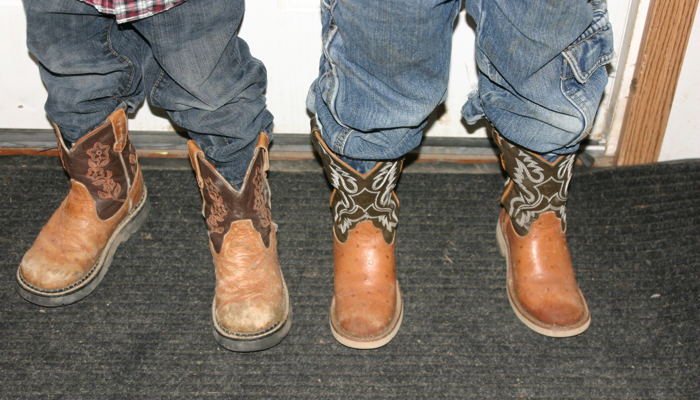
In the package were three Camp Crook 125th (1883-2008) Anniversary Cookbooks, one for each of our newlywed couples and one for us oldyweds. Gerald and Becky, friends from Harding County, South Dakota sent them. Becky, grandma of the two boys attached to the boots above, wrote a note in each one. In the elder Philo copy she wrote, “ May these names and recipes remind you of all the memories in Harding County.”
Eagerly, I turned the pages. Many of the recipes were new, but a good portion came from the 1983 Centennial cookbook, which was created during the years we lived in the tiny town. Turning the pages brought back memories of the townspeople who supported us through the tough years after Allen was born.
- Prairie Style Baked Beans from Walter Stuart, the crotchety old widower who kept chickens and his old cow, Snippy, in a makeshift barn behind the school.
- Several yeast bread recipes in memory of Effie Brewer, the gruff widow who always wore a work shirt, trousers and a squashed, pork-pie hat wherever she went.
- Contributions from fellow teachers during my first year in the classroom: Marie Knapp, Carol Odell, and Karen Douglas.
- Recipes from parents of my former students. Submissions from the former students – which I could handle – knowing that most of them were married now. And recipes from their children – which was hard to swallow – who can’t possibly be old enough to cook!
And there amidst the recipes submitted by strong women who have made the vast, tall-grass prairie their home, were my recipes. What an honor, what sweetness it was thirty years ago to be counted a cook with them. What a delight to be part of their history still.
Thank you, Becky, for a most delicious gift.
by jphilo | Oct 8, 2010 | Reflections on the Past
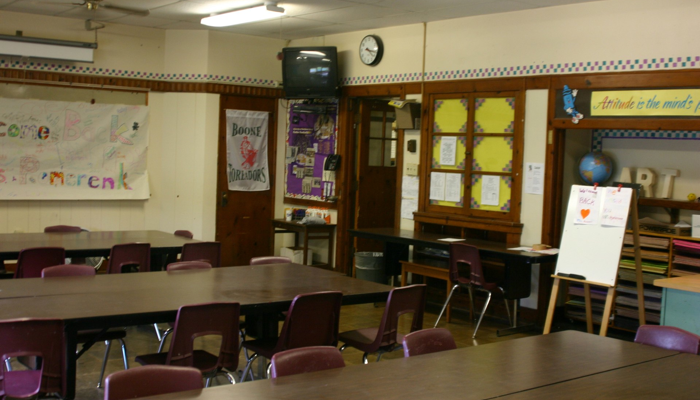
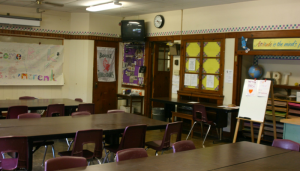
Last night I dreamed I was teaching again. At the school I last worked in – the fact that it closed last spring having no bearing on my subconscious mind – pulled into the classroom on an emergency basis.
But the emergency continued, and there I was week after week. The kids were second graders. Very energetic. Confused by my teaching style. Not motivated to rise to my expectations. Cuter than all get out, but noisy too.
I was unprepared. No relationship with the students and thus no control over their behavior. No ingredients for the recipe that was doubling as a science experiment. No lesson plans. No idea of the curriculum. To make it, I would have to devote all my evenings, weekends and energy to planning.
All I could think was, “When will I write my book?” and “How did this happen?” and “Teaching is the hardest work on earth.”
Then the alarm clock beeped, and I was saved by the bell.
But the memory of the dream – perhaps “nightmare” is more accurate – still lingers. And my thoughts fly to the teachers I know. They do the hardest work on earth every day, willingly, lovingly, creatively, and with great passion. They shape the future.
Thank you, teacher friends. You are my heros!
by jphilo | Aug 30, 2010 | Reflections on the Past
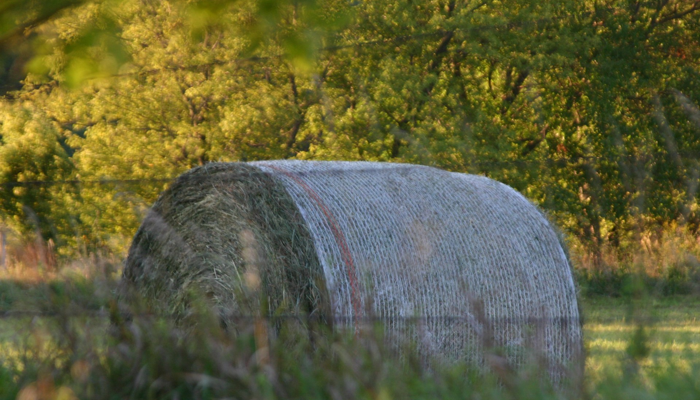
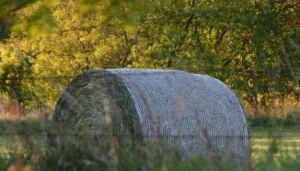
Jim Croche wanted to put time in a bottle, but not me. If I bottle anything in the world, it would be the smell of cut alfalfa drying in the field. In the dark of winter or in times of great loss, one whiff would lift my spirits.
Every time the rich, grainy aroma – a close cousin to fresh baked bread – wafts across a field and tickles my nose, it uncovers a memory that lie deep in the core of who I am. Suddenly, my sister, brother and I are in the back seat of our old Chevy on a hot, summer day. We’re tormenting each other as Mom drives our old Chevy down country roads. Dad is sitting in the passenger seat, his arm out the window, his grin wide around the pipe stuck between his teeth. He’s checking the crops, commenting on the dirty bean fields, asking Mom to pull into a farmstead’s driveway to see if the owner has time for a Sunday afternoon chat.
In that memory, I am too young to know what I know now. Those Sunday afternoons were when Dad was happiest. No longer a county extension agent because multiple sclerosis was ravaging his body, those rides were the remnant of his twin passions: farming and people. Those days when he could be near to both were when he was most fully and joyfully alive.
Oon those afternoons, the smell of cut alfalfa, baking in the blazing Iowa sunshine poured through the open car windows, mingling with road dust, pipe smoke, and Dad’s flashing, joyful smile. Hot and sweaty in the back seat, exasperated with my pesky siblings, his smile made my world safe and happy.
And whenever the smell of drying alfalfa meets my nose, I am once again safe and happy in the shadow of my father’s smile.
by jphilo | Aug 16, 2010 | Reflections on the Past
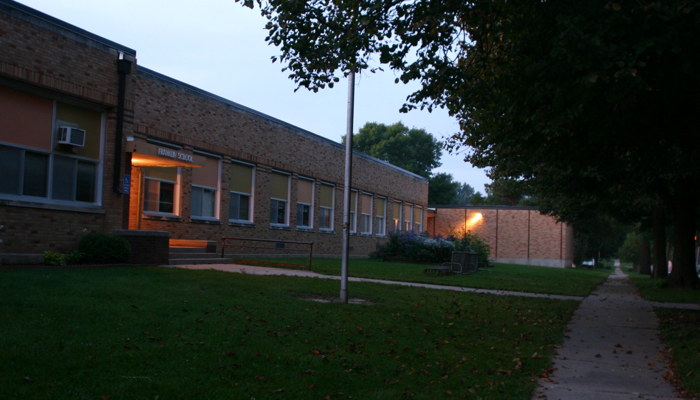
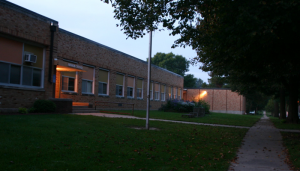
Ever since 1961, when I set foot in Franklin School as a kindergarten, the same its-almost-time-for-school-to-start-pit-in-the-stomach-reaction occurs at summer’s end.
It doesn’t matter that I graduated from high school in 1974 and college in 1978. It doesn’t matter that I’ve been out of teaching since 2003. It doesn’t matter that my kids’ public school days are a thing of the past. One rustle of the calendar page turning from July to August, one glance at the back-to-school ads in the paper, and my stomach ties up in knots. I can take deep cleansing breathes, engage in positive self-talk, and count my blessings until the cows come home, and my gut still feels queasy.
I tell myself it’s a conditioned response. You know, my personal version of Pavlov’s dogs. Only instead of salivating at the thought of food, my intestines go all grumbly at the thought of entering a classroom. Why is that? I loved reading and learning as a kid. As an adult, I loved teaching and developing relationships with students.
I attribute my annual August gut reaction to one thing. Teaching is hard work physically, emotionally, and mentally. It’s harder than any job I ever did. Detassling corn, working in the Hy-Vee Deli, washing dishes and cooking at a nursing home, being a nurse’s aid at the same home. All of those were child’s play compared to teaching. The same can be said of my present career which involves writing books and speaking to large groups of people.
Here’s why. Every day teachers must be organizational whizzes, entertainers, mind readers, communicators, multi-taskers, disciplinarians, record keepers, clock-watchers, counselors, comforters, problem-solvers, and tough guys in the classroom. But that’s only half the job. The other half involves trying to keep up with the legislative requirements that change and grow more demanding every year.
So say a prayer for teachers this month. Then put your prayers into action by doing something special to. Bake cookies. Send an encouraging email or card. Take them supper. Mow their lawn. Pick a bouquet of flowers. Say thank you.
This August, do something to untwist their tummies.
They’ll be glad you did.
by jphilo | May 28, 2010 | Reflections on the Past
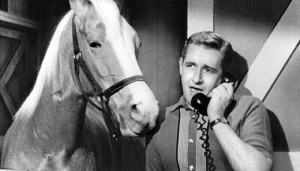
My speaking engagements earlier this week took me out of town for less than 24 hours. But the time away resulted in a wink from God and a blast from the past. The blast from the past came during morning exercise time after my overnight stay. I flipped through the TV channels, looking for something to distract me from the pain and boredom that accompanies the stretching the kinks in these old muscles. When strains of the Mr. Ed theme song began, minus the lyrics, I quit channel surfing.
But why wasn’t anyone singing the lyrics (which practically every child who attended elementary school in the 1960s knows by heart) along the sit com’s perky little melody?
Because, as the first scene revealed, this was the first episode of the entire series. The lyrics would have given away the show’s hilarious premise – unsuspecting, newlywed couple buys a new house complete with a talking horse, who only talks when the husband is around.
Boy oh boy, this history lover was in for a pop history lesson!
However, my childlike enthusiasm was short-lived. My fifty-three-year-old sensibilities were not nearly as impressed by the show’s hilarious premise as my eight-year-old self had been. By the first commercial break, I understood why my parents hated the show and added a few of my own reasons:
- Displays of tame, natural affection between newlyweds were interpreted by other characters as shameful.
- The wife was portrayed as only concerned about making a good impression and going to parties.
- The husband was portrayed as really stupid.
- The smartest character in the show was the horse, but he was nasty smart.
- Every character in the show (including Mr. Ed) was totally self-absorbed.
The only redeeming feature of the show was Wilbur’s safety tip about not leaving a garden rake lying on the ground. He explained to his wife how someone could step on the rake head which would cause the handle to fly up and bonk the unsuspecting passerby in the face. Of course, the pretty little wife then asked, “You mean like this?” and the rake flew up and bonked Wilbur on the head. The gag was absolutely necessary to the intricate plot because the head bonk explained why Wilbur was seeing things – like a talking horse. Silly guy!
Anyway, I remember how Wilbur’s safety tip and lawn accident transformed my life. For several years, any yard I entered required a thorough scoping in case any renegade rakes were lying in wait. I found several, but thanks to Wilbur’s advice, I never experienced a head bonk. So I never discovered a talking horse which made everyone think was crazy, which was a good thing because being a dreamy, goofy kid I didn’t need any fuel added to that fire.
Even though that safety tip changed the course of my life, I can’t get sentimental about Mr. Ed. It’s about the dumbest TV show ever created, unless you’re eight years old, in which case it’s transformational.
Some days, being fifty-three is wonderful.