Making an Autumn Sensory Fidget Box

Making an Autumn Sensory Fidget Box

Making an Autumn Sensory Fidget Box

Making an autumn sensory fidget box is easier than it may sound. Guest blogger Mark Arnold is here with ideas, pictures, and step-by-step guidance to help you and your kids create a delightful activity for this beautiful season of the year.

Autumn is a fabulous time of the year, with its many changes and many treasures to look for and find! Our family has been making a sensory fidget box, and I thought you would like to make one too.

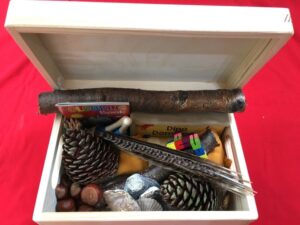
There are loads of nature items things to add to your fidget box. I’ll show you what we’ve put in ours so far, as well as some ‘extras’ that we included.

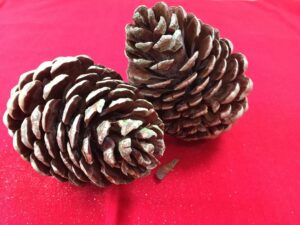
Pinecones: We live near some pine woods so we’ve gathered these lovely cones for our box. They are wonderful to feel and explore with our fingers.
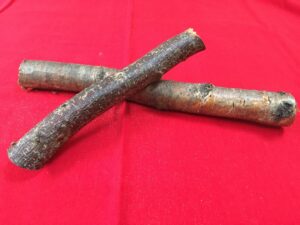
Wooden Batons: We cut these tactile, wooden batons from fallen branches in the woods. They are smooth with little rough bits too!
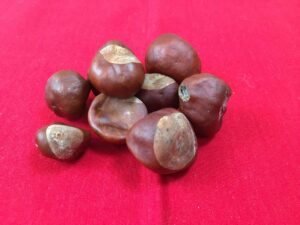
Conkers (also known as Buckeyes): We walked an avenue of horse chestnut trees. It was worth it to get these smooth conkers. They are great to hold and rotate in the palm of the hand! Be sure to supervise their use as they can be a choke hazard.
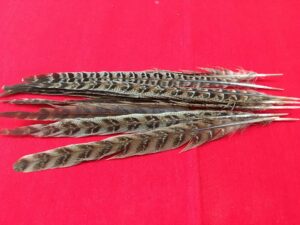
Feathers: There are plenty of pheasant feathers near where we live, and lots of others to find too. We washed them first so they are nice and clean. They are great sensory items to stroke with.
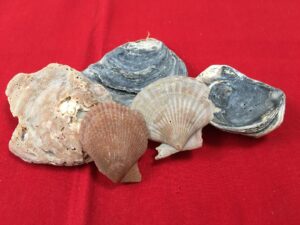
Shells: We also live near the sea (we’re very lucky), so we picked up some nice seashells to add to the fidget box. Again, we washed them first. Shells are tactile and sensory, very calming to feel.
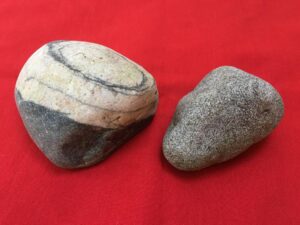
Pebbles and Stones: The weight of pebbles and stones can be sensory. The experience can be enhanced by popping them in the fridge to cool down!
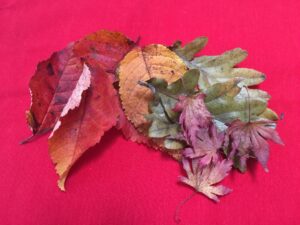
Scrunchy Autumn Leaves: Fallen autumn leaves are beautiful to look at and scrunchy to feel! If you like, stick them to a piece of paper to keep them longer.
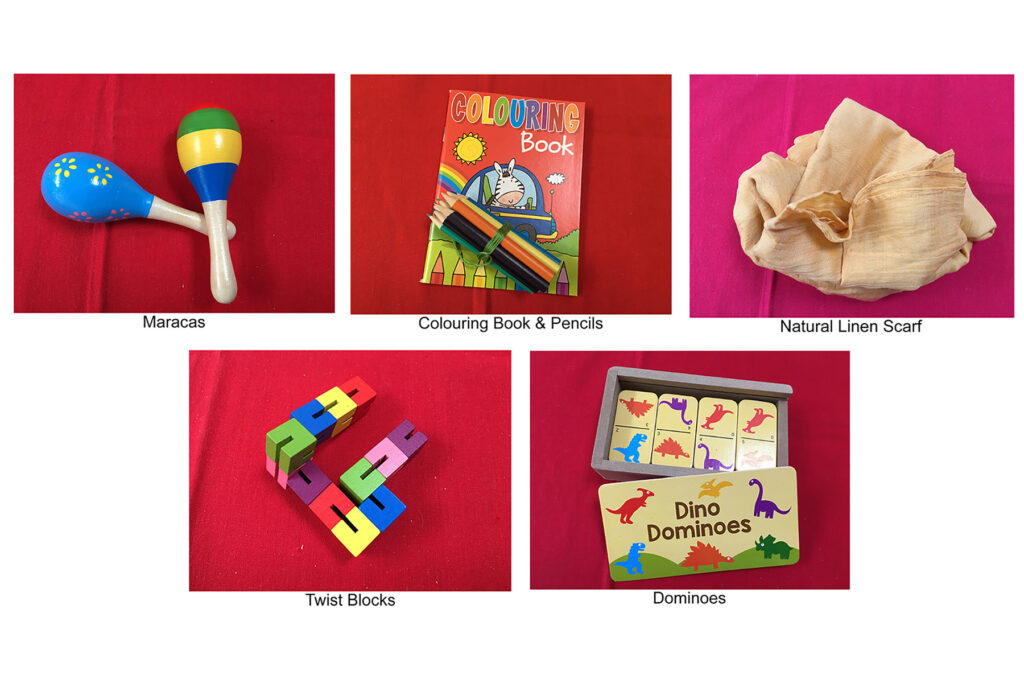
Purchased Items: We bought a few items for our fidget box that are in keeping with the natural feel. For us, that means no plastic. Here are some of them:
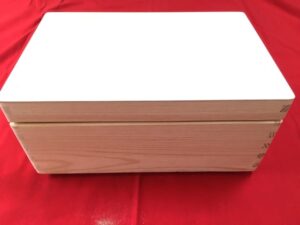
Finally, you need a nice wooden box to put everything in. We found one to paint and decorate to make it look special.
Creating your own autumn sensory fidget box is lots of fun. You’ll enjoy exploring and collecting, putting it together, and using the fidget box throughout the winter…until you can make one for spring!
© Mark Arnold/The Additional Needs Blogfather

Do you like what you see at DifferentDream.com? You can receive more great content by subscribing to the monthly Different Dream newsletter and signing up for the daily RSS feed delivered to your email.

Images courtesy of Mark Arnold


By

Mark Arnold is the Additional Needs Ministry Director at Urban Saints, a leading national Christian children’s and youth organization. He is co-founder of the Additional Needs Alliance, a national and international advocate for children and young people with additional needs or disabilities. Mark is a Churches for All and Living Fully Network partner, a member of the Council for Disabled Children and the European Disability Network. He writes an additional needs column for Premier Youth and Children’s Work (YCW) magazine and blogs at The Additional Needs Blogfather. He is father to James, who has autism spectrum condition, associated learning disability, and epilepsy. To find out more about how Mark’s work can help you, contact him at: marnold@urbansaints.org or @Mark_J_Arnold

Author Jolene Philo

Archives

Categories

Subscribe for Updates from Jolene

Related Posts
The Caregiver’s Treasure

The Caregiver’s Treasure

The Caregiver’s Treasure

This morning, in the chilly half dark, I passed the houses along the route that leads to my favorite path. The acrid odor of burning electrical wires grew strong when I neared a ramshackle, uninhabited house that is the neighborhood eyesore. Yellow fire scene tape, barely visible in the dim light, stretched along the chain link fence surrounding the property, and I resolved to retrace my steps and get a better look near the end of my walk.

The clear light of day revealed the extent of the damage. The roof of the small, ranch house had caved in. Two sides of the house were burned away. The interior walls had collapsed. The house’s contents were unrecognizable, melted lumps of goo.

Yesterday, when I walked by, the house had been standing–in need of paint, sporting several broken windows, the yard shaggy and neglected–but it was still there.

This morning it is gone.
Dead.
Finished.
I am once again aware of how quickly and completely life can change.

I stared at the house and thought of when I first learned that lesson: the day my father died. For 38 years, my mother, my siblings and I watched multiple sclerosis rob Dad of the ability to walk, to write, to read, to control his bodily functions, to think clearly, to speak, and to feed himself.

The changes were small and incremental, sometimes barely discernible. They came so slowly and so gradually that for years it felt like nothing would ever change. Dad was trapped in a body that continually betrayed him. We were in limbo, waiting for the end we all knew was coming. But when he began to struggle to swallow, we knew the end was near.

On Sunday, Dad was fine when I took my 7-year-old daughter to read a story to him.
On Monday night, we received a call that Dad was running a fever.
On Tuesday, he died before noon.

One day Dad was there–his body compromised, his mind weakened, his spirit calm–but he was there.

The next day, he was dead.
His life was finished.
He was gone.
I experienced, for the first time, how quickly and completely life can change.

I stared at the burned out shell of the house. When the officials complete their inspection of the fire scene, there will be little for the demolition crew to do but cart away the rubble and smooth the ground. The house will be gone forever.

But, I realized, the same can not be said about Dad. My father is still here. He is part of who I am. Because of him, my perception of what constitutes a good life is quite different from the world’s view of a life well-lived.

For caregivers, a good life isn’t measured in major accomplishments–
Races won.
Money earned.
National acclaim.
Education achieved.

For caregivers, a life well-lived is measured in the small things–
A delayed milestone reached.
A tender moment shared.
The squeeze of a hand.
A fleeting smile of recognition.

These are the things Jesus teaches his people to treasure.
These are the things that matter.
This is the jewel caregivers carry with them when their loved one lives and when their loved one dies–
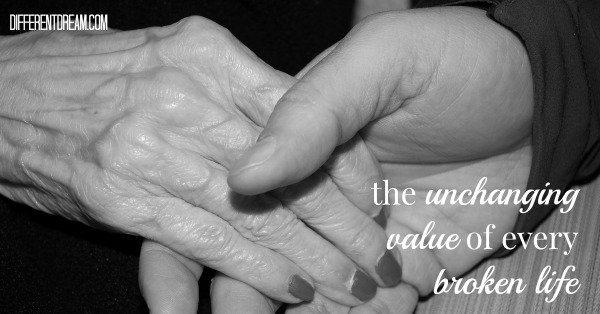
the unchanging value of every broken life.

Do you like what you see at DifferentDream.com? You can receive more great content by subscribing to the quarterly Different Dream newsletter and signing up for the daily RSS feed delivered to your email inbox. You can sign up for the first in the pop up box and the second at the bottom of this page.


By

Jolene Philo is a published author, speaker, wife, and mother of a son with special needs.

Author Jolene Philo

Archives

Categories

Subscribe for Updates from Jolene

Related Posts

Top Ten Things About the End of Daylight Savings Time

Top Ten Things About the End of Daylight Savings Time

daylight savings time breakfast for supper

10. It’s the closest thing to time travel most of us will ever get.

9.  There’s more time to turn the lights down low for a romantic evening and not notice the need to dust the furniture.

8.  When it’s dark by suppertime, jammies are perfectly acceptable dining attire.

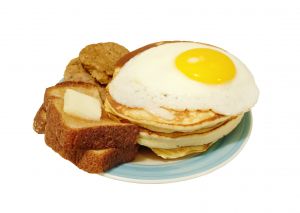
7.  Once everyone’s wearing jammies to the table, serving breakfast for supper is also perfectly acceptable.

6.   So is going to bed early after meal clean up. Which is incredibly easy when cereal bowls and spoons are the only things that need washing.

5.  School children who wear jammies to the table, eat breakfast for supper, and wake up early because they went to bed early the night before no longer have to wait for the bus in the dark on school days.

4.  Writers and bloggers who wear jammies to the table, eat breakfast for supper, and wake up early because they went to bed early no longer have to take their morning walk in the dark either.

3.  On evenings when people don’t hit the hay immediately after wearing jammies to the table and eating breakfast for supper, it’s too dark to do anything but binge watch the Modern Family Season 5 DVD, which you have on loan from the library for 1 short week after waiting months for your turn to check it out.

2.  Fall back in the fall means an extra hour of sleep this weekend. Heavenly!

1.  The end of Daylight Savings Time means only 4 short months until March 9 when it and spring make their glorious re-appearance.

What would you add to the list? Leave a comment!

Top Ten Reasons to Appreciate Shrinking Daylight Hours

Top Ten Reasons to Appreciate Shrinking Daylight Hours

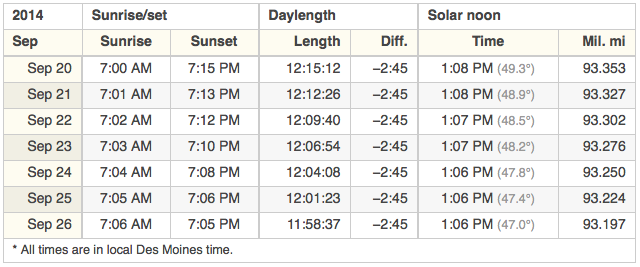
Shrinking daylight hoursThe September equinox left the building two days ago. That means shrinking daylight hours and increasing hours of darkness for the next several months. Not my favorite time of year. But in an effort to think positive, I came up with ten things to appreciate this season of darkness.

10.  Unemployment will go down as work hours expand for burglars and peeping toms.

9.   It gets dark soon enough to take kids outside to play with sparklers before bedtime. Yes, toes and fingers and bums will freeze. But we are thinking positive, remember?

8.  Burned out lightbulbs are more obvious and therefore are replaced sooner.

7.  Sunscreen bills go way, way down. No need to mention that heat and lighting bills go up because that wouldn’t be positive. At. All.

6.  Less daylight means people won’t notice dirt in the corners of my car/bathroom/kitchen/closets. You get the idea.

5.  Those who wait to binge watch TV series on DVDs and Netflix don’t have to wait so long.

4.  Putting on jammies right after supper is perfectly acceptable when it’s dark outside.

3.  Long, cozy, dark nights + reading lamp = more hours to read!

2.  Long, dark nights + cold + nasty weather = a perfect reason to stay home and write.

1.  Once each day’s minutes of darkness overtake the minutes of daylight, only three months remain until the December solstice when daylight hours start increasing again!

Top Ten Things about Fall

Top Ten Things about Fall

Does and Fawns

Being a spring kind of girl, I am always surprised by people who say fall is their favorite season. But with summer turning to autumn, I’m focusing on what’s good about this new season. It didn’t take long to come up with this top ten list:

10.  Longer nights mean my morning walk begins by moon and starlight. Beautiful!

9.    Acorn squash, Hiram’s favorite side dish, is in season. Menu planning is easy this time of year.

8.    Earlier sunsets make it perfectly acceptable to put on jammies after supper and curl up in bed with a good book.

7.    Early fall=perfect sleeping weather

6.    The does and summer fawns are less skittish and easier to photograph.

5.    Apple season is here!

4.   Deal’s apple cider is in the grocery store.

3.   The dry, spicy scent of fall leaves and crops drying in the fields.

2.    This time of year feels like the world’s being tucked into bed for a good night’s sleep.

1.    Our grandson’s birthday and the opportunity to celebrate his young life.

What do you like about fall? Leave a comment.