Does My Child Have PTSD? Has Been Released

Does My Child Have PTSD? Has Been Released

Does My Child Have PTSD? Has Been Released

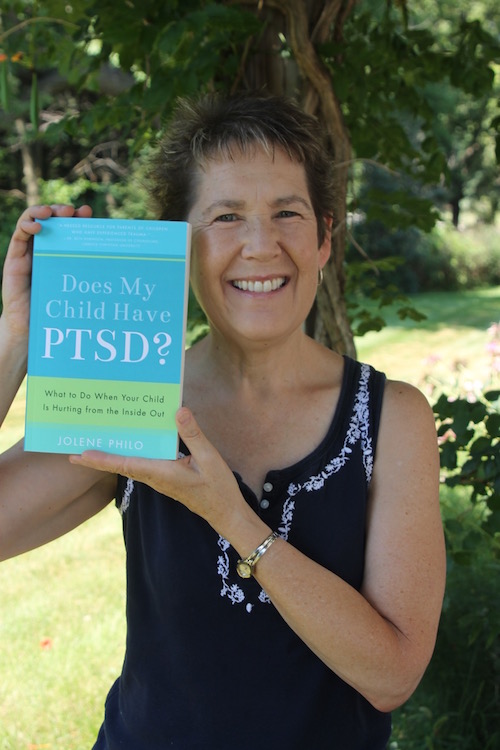
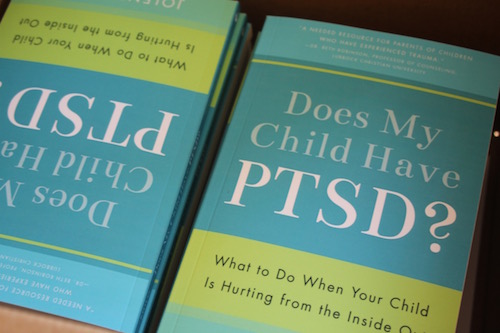
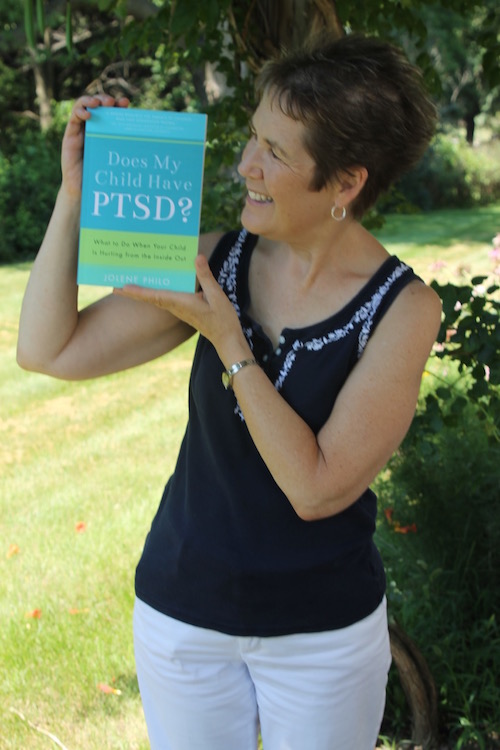
I am happy to announce the official release of Does My Child Have PTSD? What to Do When Your Child Is Hurting from the Inside Out. Those of you who pre-ordered the book on Amazon should receive copies soon. Those who were waiting to order it after the book release need wait no longer. You can also take a look inside the book at Amazon. It is also available at independent bookstores and at chains like Barnes & Nobles. Or if you’d like a signed copy, please contact me for details and pricing information.

What’s in Does My Child Have PTSD?

For those of you who prefer to look before you leap, here’s a peek at the table of contents page.
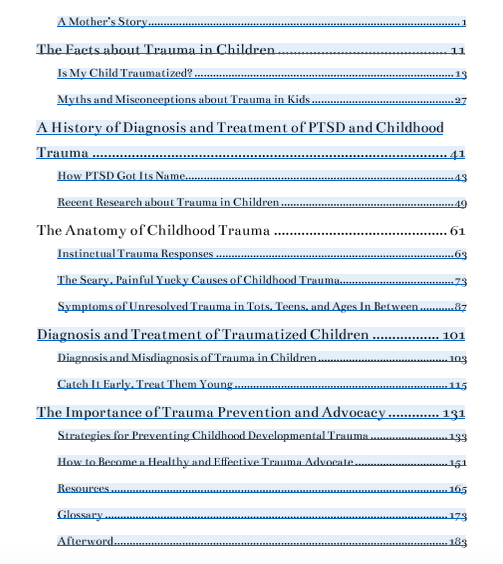
Screen Shot 2015-09-28 at 12.33.58 PM

Lest you feel intimidated by the fancy-schmancy words in the table of contents, rest assured that every one of them is carefully and clearly explained within chapters and then listed in the glossary. And every single chapter begins with a family or teaching story where kids are featured front and center.

My Goal While Writing Does My Child Have PTSD?

My goal in the writing the book was not only to pass along information about PTSD, but also to explain the information in an easy-to-understand way to parents, educators, and others who care about kids but aren’t part of the mental health care community. Therefore I was very pleased when Christopher Robbin of Familius, the house that published the book, emailed to say it received a starred review from Publishers Weekly (PW). That was exciting news because a starred review in PW, the leading book review source in the United States, means it should get more attention and hopefully get into the hands of more families who need the information in it. But I was even more pleased because the review confirmed that the book’s goal was accomplished, as this short quote shows.

In a single sentence, Philo can make a dramatic statement (e.g., trauma “changes the very structure of the brain”) and then evenly explain the physiology behind it. Though occasionally heart-wrenching, the book is organized so simply and logically as to be easy to follow and digest.

Do you like what you see at DifferentDream.com? You can receive more great content by subscribing to the quarterly Different Dream newsletter and signing up for the daily RSS feed delivered to your email inbox. You can sign up for the first in the pop up box and the second at the bottom of this page.

By

Jolene Philo is the author of the Different Dream series for parents of kids with special needs. She speaks at parenting and special needs conferences around the country. She’s also the creator and host of the Different Dream website. Sharing Love Abundantly With Special Needs Families: The 5 Love Languages® for Parents Raising Children with Disabilities, which she co-authored with Dr. Gary Chapman, was released in August of 2019 and is available at local bookstores, their bookstore website, and at Amazon.

Author Jolene Philo
Archives

Categories

Subscribe for Updates from Jolene

Related Posts
Does My Child Have PTSD?, a Bouncing Baby Book Is Here!

Does My Child Have PTSD?, a Bouncing Baby Book Is Here!

My latest book Does My Child Have PTSD? has arrived, & here's why its not getting as much attention as its older siblings did when they appeared.The advance copies of my newest baby book, Does My Child Have PTSD? What to Do When Your Child Is Hurting from the Inside Out have arrived. As you can tell from the picture, meeting this 9″ X 6″, 186 page, soft-covered beauty made me very, very happy.

But I feel a little guilty about its arrival, too. Since it’s the third baby book to arrive in less than a year, the poor little tyke didn’t receive the undivided attention my firstborn book did. Truth be told, the box sat on the dining room table for three days before I got around to opening it. Then it received only a cursory once over and didn’t have an in-the-box picture taken for two more days.

IMG_5073I keep meaning to do a happy dance, but taking care of the other four kids blogging about and marketing my other four books keeps distracting me. And to add insult to injury, this baby can’t go out in public for two more months the official release date won’t arrive for two more months, though it can be pre-ordered on Amazon now.

In addition to feeling guilty about the lack of attention the new baby book has received, I’m consumed by worry. Because, as the book makes clear, neglect can be very traumatic for children. So I’m not even practicing what I preach to other parents.

Therefore, I am taking steps to rectify the situation. Step one is to make regular eye contact with the baby book, so it learns to trust its mother author.

IMG_5082Step two will be to sit down with the baby book on my lap and read it from cover to cover as soon as time allows. Because as I also learned during my pregnancy during my researching and writing, babies and very young children who have experienced trauma can experience great healing when they have a loving and consistent primary caregiver to provide security and reassurance.

Which means that in the next few months, given a choice between spending time with our three grandchildren, all under the age of three, and reading or marketing my latest bouncing baby book, I’ll choose the grandkids every single time.

Why Kids with PTSD Need Mentally Healthy Parents

Why Kids with PTSD Need Mentally Healthy Parents

Why Kids with PTSD Need Mentally Healthy Parents

Throughout June Different Dream is shining the spotlight on PTSD, short for post-traumatic stress disorder. This post continues the ongoing series about PTSD in parents of kids with special needs. Below is an excerpt from Does My Child Have PTSD? What to Do When Your Child Is Hurting from the Inside Out. The excerpt comes from the last chapter which explains why kids with PTSD need mentally healthy parents.

How to Become a Healthy and Effective Trauma Advocate

“People tend to keep quiet about trauma. Don’t give up. Keep talking. Don’t let it go. Keep it in the conversation.”
—Peggy, whose son who endured complications from early surgery and chronic, painful ear infections

Mentally Healthy Parents Have Healthier Kids

The previous chapter emphasized the positive impact a mentally healthy primary caregiver has on developing resilience in children before and after trauma. The flip side to that positive statistic is sobering. Children who are dependent upon a mentally unhealthy caregiver are less resilient and often suffer long-term complications of PTSD after a traumatic childhood event. Therefore, adults who want to nurture resilient children must first attend to their own mental health. Study after study proves this to be true.

After the 2013 missile attacks in Israel, researchers found that the children of mothers who developed PTSD after the attacks were at much higher risk of developing PTSD than other children. In a different study from 2013, mothers filled out a questionnaire about how often they abused their children, either physically or emotionally. Mothers diagnosed with both depression and PTSD were most likely to report abuse. But mothers diagnosed with only PTSD reported more abuse than those with only depression. And moms with any mental illness reported abuse more often than did mentally healthy moms. This study leaves no doubt in my mind of the importance of parents tending to their own mental health for the good of their children.

The Journal of Pediatrics published a study in 2014 about family members who had been in serious accidents together. Sometimes only the parent was injured, sometimes only the child, and sometimes both the parent and the child were injured. The study found that if parents were depressed after suffering severe injuries, their children were at risk of developing PTSD even when the kids weren’t injured. It seems that children are emotional sponges that soak up their parents’ mental health and are easily traumatized by it.

But parents can be also emotional sponges that absorb their children’s trauma, as the following two reports show. In 2005, the Children’s Hospital of Philadelphia found that parents of kids with cancer exhibited many symptoms of post-traumatic stress disorder. Similarly, Laurie Tarkan summarized the results of several studies in a New York Times online article. Her review revealed that parents of NICU infants are at a higher risk of PTSD than parents of babies never in the NICU.

Maybe Dr. Tinnin, the doctor who treated our son’s PTSD, was familiar with some of those studies when he stopped in the clinic waiting room to ask me, “What about you, Mom?” Or maybe in his years treating clients for PTSD, he’d come to understand the emotional impact parents and their children have on one another. Whatever his reason for asking the question, his words eventually spurred me to action.

Perhaps “spurred” is the wrong word. In reality, I inched my way into action after interviewing Dr. Liz Matheis and Margaret Vasquez for this book. Both of them made comments that reminded me of Dr. Tinnin’s question. Dr. Matheis said that children often change after they experience trauma, which makes parents feel helpless and anxious. When that happens, parents need time with a therapist, too. If possible, she advised, “the therapist should work with both the parent and child. Sometimes together, sometimes separate.”

Vasquez put it another way. “Where there’s trauma, there’s drama. And where there’s drama, there’s trauma. To get rid of the drama, treat the trauma,” she said. Her words made me sit up and take notice. I tended to react dramatically to events other people took in stride. Especially if the events were similar to our son’s early years. Or if they made me feel like I did the day my baby was taken away, my husband was gone making travel preparations, and I was lying alone and frightened in a hospital bed.
Was I possibly responding to unresolved trauma more than three decades later? Could I need trauma treatment, too? I couldn’t answer those questions on my own. So I once again called my big sister, the mental health counselor, and ran my questions by her.

“You went through a lot when Allen was born, and for so many years,” she said. “My guess is that some EMDR therapy would help you.” She even offered to do the research and later sent me an email with the names of several therapists in our area.

Then she gave me some final advice. “Check to see if these therapists are in your insurance network. Then call and make an appointment with one of them. If you go to the first appointment and the therapist doesn’t feel right, try a different one.”

Her advice proved to be very wise. I found a therapist who helped me work through unresolved trauma so that I am now able to step back when old memories surface and think about them rationally. Even better, I can use what I learned during my parenting years to help other families without becoming an emotional basket case in the process.

My only wish is that such treatment had been available during Allen’s early years. It would have made it easier for me to soothe and comfort him before, during, and after his surgeries and medical procedures if I hadn’t been such a bundle of nerves. Perhaps had I received treatment soon after he was born, his risk of developing PTSD would have been lower. We’ll never know what could have been different for us, because PTSD awareness and treatment was far in the future.

But for you, the future is now. If you are raising a child with PTSD or other mental issues, you are probably dealing with your own trauma, too. You need to tend to your own mental health by practicing self-care. If your child is receiving mental health treatment, ask the therapist to include you in some of the sessions or to set up a separate appointment for you. If that won’t work, ask your child’s therapist for recommendations. If all else fails, do your own research, following my sister’s advice so you can get the necessary support. You are worth the effort, and so is your child.

Excerpted from Does My Child Have PTSD?
with permission from Familius


Do you like what you see at DifferentDream.com? You can receive more great content by subscribing to the quarterly Different Dream newsletter and signing up for the daily RSS feed delivered to your email inbox. You can sign up for the first in the pop up box and the second at the bottom of this page.

By

Jolene Philo is the author of the Different Dream series for parents of kids with special needs. She speaks at parenting and special needs conferences around the country. She’s also the creator and host of the Different Dream website. Sharing Love Abundantly With Special Needs Families: The 5 Love Languages® for Parents Raising Children with Disabilities, which she co-authored with Dr. Gary Chapman, was released in August of 2019 and is available at local bookstores, their bookstore website, and at Amazon.

Author Jolene Philo

Archives

Categories

Subscribe for Updates from Jolene

Related Posts

Refined by Fire: A Journey of Grief and Grace

Refined by Fire: A Journey of Grief and Grace

Refined by Fire: A Journey of Grief and Grace

I suspected, when asking Mary Potter Kenyon for a review copy of Refined by Fire, that it would be a hard book to put down. Once I opened the book, my suspicions proved to be absolutely true. The book was nearly impossible to put down for two riveting reasons.

Refined by Fire: Two Reasons It’s Hard to Put Down

First, the author tells a heartbreaking story of loss. In the span of a few years, Kenyon lost her mother Irma and then her husband David. Just as she discovered writing as a way to regain her emotional footing, her young grandson Jacob died of cancer.

Second, she makes the story more compelling by being transparent. She lays her journey of grief before the reader, refusing to hide her emotional pain, her tears, her anger, her loneliness, and her doubts. We see grief take its toll on her relationships and especially on her youngest daughter, Abigail, who was just 8 when her father died.

Refined by Fire: Snapshots of Grief

Though overwhelmed by grief and shedding tears every morning for years, Kenyon somehow writes her way through her grief. Throughout the book, excerpts from her blog and daily journals are featured:

Grief at Ten and a Half Weeks
The First Holiday
Grief at Twenty Weeks
Grief at Five Months

Each entry is a word picture, a snapshot of grief frozen in time. Between those entries, the reader sees grief melt and morph and reform as Kenyon questions God and hears him answer in sweet and unexpected ways. Though devastated by her losses, she begins to see God at work in her life. Her heart is still broken at the end of the book, but thanks to her determination to cling to God, she is also stronger and more capable than before.

Do you like what you see at DifferentDream.com? You can receive more great content by subscribing to the quarterly Different Dream newsletter and signing up for the daily RSS feed delivered to your email inbox. You can sign up for the first in the pop up box and the second at the bottom of this page.

By

Jolene Philo is the author of the Different Dream series for parents of kids with special needs. She speaks at parenting and special needs conferences around the country. She’s also the creator and host of the Different Dream website. Sharing Love Abundantly With Special Needs Families: The 5 Love Languages® for Parents Raising Children with Disabilities, which she co-authored with Dr. Gary Chapman, was released in August of 2019 and is available at local bookstores, their bookstore website, and at Amazon.

Author Jolene Philo

Archives

Categories

Subscribe for Updates from Jolene

Related Posts

Refined by Fire: A Journey of Grief and Grace

Refined by Fire: A Journey of Grief and Grace

refined by fire cover

I suspected, when asking Mary Potter Kenyon for a review copy of Refined by Fire, that it would be a hard book to put down. Once I opened the book, my suspicions proved to be absolutely true. The book was nearly impossible to put down for two riveting reasons.

Refined by Fire: Two Reasons It’s Hard to Put Down

First, the author tells a heartbreaking story of loss. In the span of a few years, Kenyon lost her mother Irma and then her husband David. Just as she discovered writing as a way to regain her emotional footing, her young grandson Jacob died of cancer.

Second, she makes the story more compelling by being transparent. She lays her journey of grief before the reader, refusing to hide her emotional pain, her tears, her anger, her loneliness, and her doubts. We see grief take its toll on her relationships and especially on her youngest daughter, Abigail, who was just 8 when her father died.

Refined by Fire: Snapshots of Grief

Though overwhelmed by grief and shedding tears every morning for years, Kenyon somehow writes her way through her grief. Throughout the book, excerpts from her blog and daily journals are featured:

Grief at Ten and a Half Weeks
The First Holiday
Grief at Twenty Weeks
Grief at Five Months

Each entry is a word picture, a snapshot of grief frozen in time. Between those entries, the reader sees grief melt and morph and reform as Kenyon questions God and hears him answer in sweet and unexpected ways. Though devastated by her losses, she begins to see God at work in her life. Her heart is still broken at the end of the book, but thanks to her determination to cling to God, she is also stronger and more capable than before.

Refined by Fire: A Grief Handbook

Kenyon’s Refined by Fire is essentially “grief handbook” for those dealing with loss, something Kenyon wished for as she grieved. It is also a useful tool and resource for pastors, grief support group leaders, hospice workers, funeral home directors, and anyone working with people dealing with grief.

Refined by Fire Give Away

I have a copy of Refined by Fire to give away. To enter the drawing, leave a comment in the box below between now and midnight on November 1, 2014. To increase your chances of winning, sign up for the Gravel Road’s RSS feed at the top, right side of this page and leave another comment saying you did so by midnight on November 1, 2014.

MPKheadshot (2)Mary Potter Kenyon graduated from the University of Northern Iowa with a BA in Psychology and is the Director of the Winthrop Public Library. She wrote several of the devotions included in the NIV Hope in the Mourning Bible released by Zondervan in 2013. Mary writes a weekly couponing column for the Dubuque Telegraph Herald and conducts writing and couponing workshops for women’s groups, libraries, and community colleges. Mary is also the author of Coupon Crazy: The Science, the Savings, and the Stories Behind America’s Extreme Obsession and Chemo­Therapist: How Cancer Cured a Marriage.