by jphilo | Oct 1, 2009 | Different Dream, How-Tos, Special Needs Parenting

In the first post in this series, I shared three commonalities of parents who live triumphantly with special needs children. Today we’ll look at three more. As was suggested in the previous post, don’t implement all the ideas immediately. Concentrate on one until you master or complete it before going on to a new one.
#4 Triumphant parents advocate for their children.
They advocate at school, becoming familiar with the laws about what schools must provide. They persistently, calmly and respectfully insist that the provisions be implemented. If necessary, they enlist the help of doctors to accomplish this. They advocate for extra-curricular activities, presenting solutions to the deficiencies they see. For example, they don’t insist that someone else start a Little League Challenger Division. They lead the effort themselves. They advocate for their children within the medical community. They may insist on a second opinion or do further research. In rural areas, they may need to educate the doctor and even the hospital staff about how to deal with their child. And they may need to advocate at church, showing staff members special needs Sunday school curriculum available from www.friendship.org and organizing a class.
#5 Triumphant parents find support groups.
Ecclesiastes 4:12 saysThough one may be overpowered, two can defend themselves. A cord of three strands is not easily broken. To find a support group, check this website’s resource page. If your child’s condition isn’t listed, do a google search. Often the national websites for specific diseases and conditions provide a local support group locator. Or start your own support group on Facebook or www.MomLogic.com. If necessary, ask your doctor or pastor for a list of mental health counselor who can help you work through your emotions.
#6 Triumphant parents watch for signs of PTSD in themselves and their kids.
If you or your special needs child or your other children exhibit signs of extreme anxiety, you need to seek treatment. If you have frequent contact with a major children’s hospital, ask the child life specialists or social workers for assistance. They may be able to provide therapy themselves or refer you to someone who can. You can also go to the Different Dream resource page which has a link to the Intensive Trauma Therapy Inc. where our son was successfully treated in December of 2008.
Today’s last thing – if you discover national websites for illnesses not listed on this site’s resource page, please leave a comment and include the URL. If the organization checks out as legitimate, I’ll add it to the page. Thanks!
Do you like what you see at DifferentDream.com? You can receive more great content by subscribing to the quarterly Different Dream newsletter and signing up for the daily RSS feed delivered to your email inbox. You can sign up for the first in the pop up box and the second at the bottom of this page.
by jphilo | Sep 28, 2009 | Books and Resources, Different Dream, Special Needs Parenting
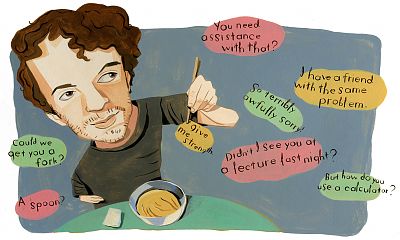
The other day I was exercising, trying to distract myself by listening to one of my favorite radio shows, Splendid Table with Lynne Rossetto Kasper. It wasn’t working.
Enter J. J. Goode
But when her guest, food writer J.J. Goode, read his essay about single-handed cooking, I stopped exercising, captivated by his story. He spoke with eloquence and honesty about life with a disability, addressing issues and attitudes often glossed over and ignored. Goode is a survivor, but he neither sugar-coated his life nor descended into self-pity. Instead, he provided a realistic picture which will help me understand and respond realistically to people with disabilities. If you want to listen to his essay, click on this link.
What’s a One-Armed Mirepoix?
If you wanted to know more about J.J. Goode, go to jjgoode.com and read more of his essays. Here’s the link to One-Armed Mirepoix, where he gives a glimpse of his childhood. And if you’d like to know what a Mirepoix is before you click the link, Wikipedia says this about the French term. “Mirepoix is the French name for a combination of onions, carrots, and celery. Mirepoix, either raw, roasted, or sauteed with butter, is the flavor base for a wide number of dishes, such as stocks, soups, stews and sauces.”
J. J. Goode certainly chose an apt title. My short encounter with him flavored the rest of my day, and I returned to my exercises with renewed vigor. I hope he touches you, too.
Do you like what you see at DifferentDream.com? You can receive more great content by subscribing to the quarterly Different Dream newsletter and signing up for the daily RSS feed delivered to your email inbox. You can sign up for the first in the pop up box and the second at the bottom of this page.
Save

by jphilo | Sep 26, 2009 | Different Dream, How-Tos, Special Needs Parenting
Life as a parent is wearing. Life as the parent of of a special needs child is especially wearing. The specter of life as a perpetual care give and decision-maker can be overwhelming. But the parents I interviewed for A Different Dream for My Child lived joyfully despite their circumstances. Many parents of special needs students I worked during my teaching career. Over the next three days, I’ll share nine commonalities I observed in them. Here are the first three.
#1 Triumphant parents view their children as a gift.
Peggy described her early attitude toward her severely disabled daughter. When Lacey was young, many people said, “Oh, it myst be so hard for you.” As a result Peggy began to see Lacey as a burden. But Psalm 127:3 helped her. Don’t you see that children are God’s best gift? The fruit of the womb his generous legacy? The verse said all children are a gift, not just the whole children, the pretty children, the easy children. Peggy began to view Lacey as a gift and treat her as a gift. In doing so, she found joy.
#2 Triumphant parents cultivate a victor, not victim mentality in their kids.
To do so they treat kids as victors over their circumstances rather than as victims of them. They expect their kids to do as much as possible for themselves. And they treat them as kids, not as sick kids. Kids are smart enough to milk adults for special treatment to make the here and now easier. But they’re not smart enough to see the future harm inherent in that special treatment – the skills they aren’t learning and the experiences they aren’t having. Triumphant parents are smarter than their kids. They look ahead and prepare children for their future, instead of allowing them to stagnate in the present.
#3 Triumphant parents educate themselves and others about their child’s condition.
They read about their child’s disease, treatment, and management. They ask questions of experts. They compare knowledge with other parents. Once they’ve learned all they can, they educate the people around their kids. First, as much as their children are able, they teach them how to deal with the condition. Second, they teach family members – siblings and extended family – about what to expect and how to treat the child. Third, they tell teachers, classmates and other school personnel about it. If classmates understand a special needs child’s abilities and limitations and learn how to how to talk to them, they are more willing to include them in school activities.
One word of advice. Tackle only one of these suggestions at a time. Once it’s firmly in place choose another. Triumphant living is best accomplished one step at a time!
Do you like what you see at DifferentDream.com? You can receive more great content by subscribing to the quarterly Different Dream newsletter and signing up for the daily RSS feed delivered to your email inbox. You can sign up for the first in the pop up box and the second at the bottom of this page.

by jphilo | Aug 21, 2009 | Different Dream, Self-Care and Stress, Special Needs Parenting
When a child survives a serious illness, life is good again, right? Of course it’s good, but most likely it isn’t perfect since raising a survivor comes with a number of potential challenges. In this post, we’ll identify some of those challenges and the typical ways parents respond to them. Future posts will discuss each one in greater depth and point you to available resources.
Challenge 1: Over-Vigilance
After a child is seriously ill, parents can become over-vigilant. Because moms and dads know how bad things can get, the smallest sniffle and headache kicks the parental worry meter into high gear. And if the health care provider sends parents home with a long list of cautions and potential treatment side effects, they can agonize over the tiniest irregularities. This over-vigilance strips life of joy. It is no way for a family to live.
Challenge 2: Special Treatment
Conscious of what they nearly lost and grateful for renewed life, parents can easily fall into the trap of treating their little survivor like royalty. Instead of returning to normal, pre-illness life, they lavish the child with gifts, rewrite the family rules, and withhold discipline. Kids, unable to see the harmful consequences of such treatment, will eagerly milk the system. If this goes on for very long, the child so graciously restored to you, will become a small, unmanageable tyrant.
Challenge 3: Victim Mentality
Victim mentality can afflict both parents and kids. It often begins in the hospital when control over a child’s life and death is ripped away from the parents and placed in the hands of medical personnel. When all control rests in someone else’s hands, parents can easily view themselves as victims and pass that attitude on to their child. If the hospital stay is long, the illness is serious, and the complications are frequent, parents and children can’t shake the mentality of helplessness even when the child survives and goes home.
Challenge 4: Post-traumatic Stress Disorder
Children who experience significant medical trauma during their illness run the risk of developing post-traumatic stress disorder (PTSD). Most children’s hospitals or large medical campuses have child life specialists who are trained to reduce that risk. But a child life specialist was not available or your child is exhibiting signs of PTSD, treatment is available. This subject will be discussed in future posts, but if you have immediate concerns, visit www.traumatherapy.us for more information.
If any of these challenges sound familiar, rest assured that you’re not alone. All parents of survivors struggle with them at some time to some degree. If you would like to share how your family handles them or about other challenges you’ve experienced, please leave a comment. Or ask a question, if you have one. I’d love to hear from you.
Do you like what you see at DifferentDream.com? You can receive more great content by subscribing to the quarterly Different Dream newsletter and signing up for the daily RSS feed delivered to your email inbox. You can sign up for the first in the pop up box and the second at the bottom of this page.

by jphilo | Aug 19, 2009 | Different Dream, How-Tos, Special Needs Parenting
The past two posts suggested ten ways people can help when your child is hospitalized. Today’s ideas are designed to bring some fun into the mix. The longer a hospital stay is, the more necessary fun and laughter become, at least if you plan to keep your sanity. So the next time people ask what they can do, let them play with these ideas.
Food
Cafeteria food gets old after awhile. Ask people to bring a home-cooked picnic meal or take-out food.
Shopping
Give a power-shopping friend a list of toiletries and other things you need. She’ll have a good time, you’ll get what you need, and you’ll both be happy.
Transportation
Depending on how far you are from home, trips to and from the hospital can be difficult. Ask someone to arrange rides for you, your kids, spouse, parents, or others who want to visit.
Decorating
If your child’s hospital room looks like, well, a hospital room, get some home-decorating mavens to add a homey touch or decorate for the holidays. It will raise your spirits and your child’s.
Entertainment
If the hospital and your child’s condition allow, have someone organize a weekly movie night or even parties for a special occasion.
Even when your child is seriously ill, you have permission to play. So go ahead and laugh. Get silly. Have fun. It’ll do everybody good: you, your family, and the people who want to help. If you have more ideas of ways people can help, please leave a comment.
Do you like what you see at DifferentDream.com? You can receive more great content by subscribing to the quarterly Different Dream newsletter and signing up for the daily RSS feed delivered to your email inbox. You can sign up for the first in the pop up box and the second at the bottom of this page.
by jphilo | Aug 17, 2009 | Different Dream, How-Tos, Special Needs Parenting
The previous post suggested five ways parents of hospitalized kids can respond when people offer to help. The longer your child’s illness lasts, the more ways people can assist you. Here are five more ideas for the people who want to make your situation manageable.
Pet Care
Arrange for someone to care for your pets in your home or provide “foster care” in theirs.
Laundry
Have someone drop off clean clothes once or twice a week and talke your dirty ones home to launder.
Technology
If you’re uncomfortable with technology, have a teenager or computer guru create and update a webpage for you on www.carepages.com or www.caringbridge.com. Or ask a techie friend to help you connect with the outside world by downloading your digital camera, sending out pictures via email, ordering prints, dealing with cell phone issues, or creating a facebook account.
Yard work
Depending on the season, ask a neighbor to mow, water, shovel snow, and tend flower beds.
Cleaning
A long absence can leave your house and refrigerator pretty skanky. Ask volunteers to give your house a thorough going over before you come home. They can even throw the moldy stuff in the refrigerator away and stock it with milk, eggs, and bread. Coming home to a clean house makes the transition from hospital to real life go much smoother.
If accepting help or admitting that you need assistance is hard for you, remember that the people who care about you are hurting for you, too. When let them shoulder your needs, not only are they ministering to you, you are ministering to them.
In my next post, you’ll learn five more ways people can help when you’re in the hospital with a sick child.
Do you like what you see at DifferentDream.com? You can receive more great content by subscribing to the quarterly Different Dream newsletter and signing up for the daily RSS feed delivered to your email inbox. You can sign up for the first in the pop up box and the second at the bottom of this page.