Cerebral Palsy Means No Empty Nest

Cerebral Palsy Means No Empty Nest

Cerebral Palsy Means No Empty Nest

Cerebral palsy means no empty nest for parents like Trish Shaeffer, today’s guest blogger. March was Cerebral Palsy Awareness Month, which led to some soul-searching for Trish.

Cerebral Palsy Awareness Month led me to a realization that is in many of our minds as caregivers and parents. Cerebral palsy means no empty nest, a reality that worries and scares us to the core somedays. A reality we sometimes face when we look at our child Alex. I wanted to be honest and and open book and share my thoughts about what I personally deal with.

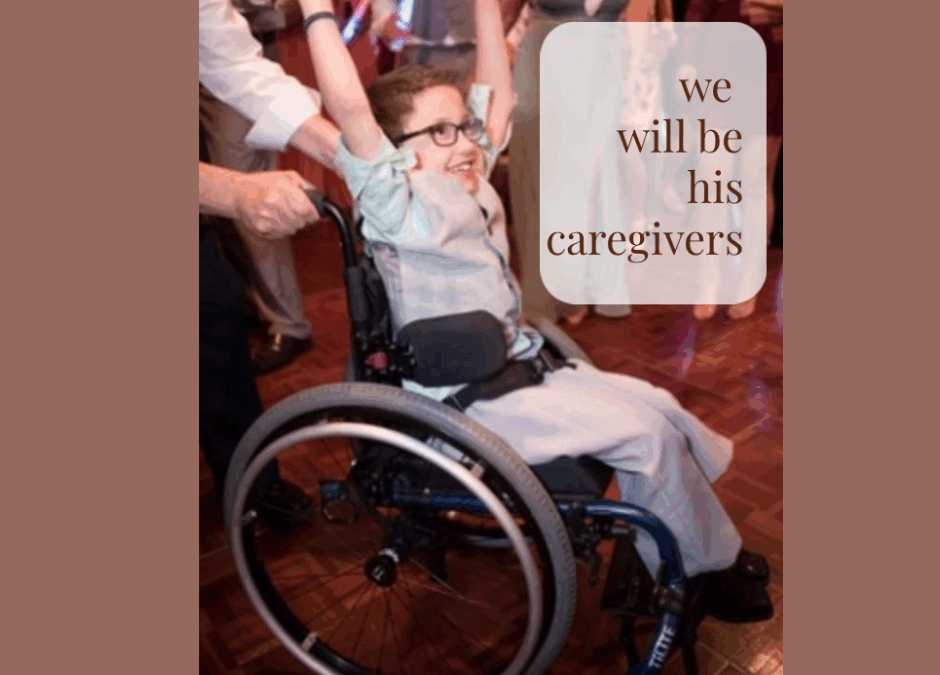
I see my oldest son being accepted into dental school courses. Alex’s twin became class president and is working on his violin solos. Watching them, I am reminded that cerebral palsy means no empty nest for us.

Cerebral palsy comes in many forms. For Alex it’s severe spastic quad cerebral palsy. This means his body is fully affected and he is in a wheelchair. He also has epilepsy and an intellectual disability. Walking and standing are very hard for him and he needs someone to hold on to him when he uses his walker for short transfers. 

He cannot do many simple tasks that we take for granted. Such as taking a bath, or brushing his teeth. Some days he has seizures. And he has a baclofen pump in his body that has to be refiled every few months. He has a lot of medical conditions, such as asthma and heart issues, that need to constantly be monitored.

He also has trouble writing and reading. Even talking sometimes is a challenge. A lot of times, he can not even communicate when he hurts or is ill. Its sometimes a guessing game.

All this comes with the sad reality that Alex may never be fully independent and on his own. We hope that he will be. We want nothing more than him to be out on his own. We want him to be happy.

But a crushing reality stares us down everyday. While our other two children grow older and more independent, we are left with the nagging thought of Alex always needing us. 

He can do some things on his own and in his own way. Like dressing himself and wheeling himself around. But, there are many things Alex may not be able to do. Like balance a checkbook, drive, or cook. Someone has to lift him and help him transfer in and out of things such as a car and his chair. He will probably always need someone there at all times to help him, whether it’s us or a nurse. So we talk often about how we will care for Alex in the future and set him up in life.

Cerebral palsy means no empty nest, but not all is negative.

I’ll always have a buddy and partner in crime. We plan to get an RV and travel with Alex all over the United States once our other two are grown. We are setting up funding so Alex will get the help and care he needs once he is 18.

We also have a tight-knit community, with people just like Alex to guide us into the future. To talk to. To share our stories with.

And we have his two brothers that care for and love Alex. They enjoy helping him with whatever he needs. For ten years Alex has been working on skills in therapy, at school, and at home to become more independent. Such as using an iPad to write, learning to snap and zip his jacket, using adaptive equipment such as an auto access seat to get out of his handicap van and transfer to his wheelchair, using a stair lift to get himself up and down stairs, and so much more.

We choose to focus on our future RV travels when we get sad or defeated when reality comes knocking. We focus on the positive steps Alex is taking to be come more independent.

Because it’s all about perception.

Some days are harder than others. We don’t know what the future holds. But we do know that Alex is a fighter, and he has a fire in his soul.

We will be his caregivers, cheerleaders, and biggest supporters. Despite not being empty nesters. Despite the challenges he faces. ?

Do you like what you see at DifferentDream.com? You can receive more great content by subscribing to the monthly Different Dream newsletter and signing up for the daily RSS feed delivered to your email inbox. You can sign up for the first in the pop up box and the second at the bottom of this page.

By

Trish Shaeffer is the mom of 3 active boys with special needs. She’s a peer supporter for Parent to Parent and volunteers with the United Cerebral Palsy Network, Special Olympics, and the United Way. She’s also an equine volunteer at Leg Up Farm. She’s married to her best friend and biggest supporter, Chris Schaeffer.

Author Jolene Philo

To get posts delivered to your inbox, enter your email address:

Delivered by FeedBurner

Archives

Categories

Related Posts

What Does It Mean to Survive as a Special Needs Parent?

What Does It Mean to Survive as a Special Needs Parent?

What Does It Mean to Survive as a Special Needs Parent?

What does it mean to survive as a special needs parent? That can be a tricky question to answer as every family’s special needs and disability story is unique. Even so, our families have much in common. With that in mind guest blogger Trish Shaeffer describes what survival often means for many of us.

What does it mean to survive as a special needs parent? You may have learned your child had special needs even before he was born through prenatal diagnosis. You may have learned it abruptly and traumatically at birth or in stages as your child grew and developed. That’s why surviving is different for everyone.

Surviving is coping. Coping is doing what you have to do one problem at a time. Sometimes you may feel like you’re are trying to empty a flooding boat with one bucket at. You make decisions without feeling very informed or confident. You deal with specialist in fields you’ve never even heard of. Coping is dealing with problems and getting by. Coping always feels like you are just keeping up with what you have to do, with little energy for getting ahead of your problems.

Surviving is reacting. Reacting drains your energy and diminishes your feeling of control. You have no sense of direction of the events in your life. You are always trying to figure out what’s going on and what to do next. Your reactions may range from confusion to fear to incompetence. They may be accompanied by feelings of grief, anger, guilt, and helplessness. You may find that the services your child needs are not readily available, that family members or friends may not initially support you, or that you child’s problems are more extensive then you anticipated.

The reactions of surviving are normal and often necessary. They are not bad, wrong, or weak. They are how many people feel upon hearing sad or frightening news. You may have experienced all, some, or none of the following reactions.

  • Shock. Surviving begins with a state of shock, numbness, disbelief, or disorientation. If you are in shock, everything seems unreal. This is a normal reaction.
  • Fatigue. You may feel tired from lack of sleep, restless sleep, or the worries you carry around inside. You go through the motions and try to keep going. The only thing you look forward to is sleep.
  • Physical symptoms. You may experience headaches, lightheadedness, stomach aches, chest pains, or loss of appetite. Stress can cause these physical problems or make them worse. They must be taken seriously, so talk to your doctor.
  • Feelings of weakness, fragility, and vulnerability. Unpredictable emotions and behaviors can make you feel weak or vulnerable. You may cope well some days and then burst into tears in the grocery line.
  • Grief. You may be grieving the loss of the dreams you had for your child, yourself, your spouse, and your family. Your expectations about your child’s future are replaced by fear and confusion. You grieve for your child who deserves the same chances in life as anyone.
  • Sense of helplessness and loneliness. Surviving is an intensely personal journey. You may not be sure what to say to people, and you don’t know what they expect from you. Sometimes it’s hard to know when and how to turn to others for support.
  • Sadness. Sadness is a normal emotional reaction to events, thoughts, stories, or memories that remind you of loss.
  • Fear. You may experience fear for your child’s health, for your child’s development, and for how her condition will affect your family. Fears may race through your mind about whether you can afford this, what insurance will cover, or how you will find the right services for your child.
  • Worry. You may worry about the future, about what to do next, about doing the wrong thing, or failing to do the right thing. You worry about your partner, your other children, and you worry about money. And you worry that you worry too much, but you cannot shut off your brain.
  • Guilt. Feeling responsible for your child’s problem is one way of trying to understand what went wrong. It’s taking the blame because someone needs to be blamed.
  • Anger. Anger can take many forms. You may feel a general sense of “Why me?” Or you may feel resentment and envy, especially toward those who have typical children.
  • To ease the survival process, you may need to weep, yell, and feel very sorry for your child and yourself for a while. Knowing that these feelings are normal part of the process can help you reach out to other parents in similar situations. Remember everyone is different. Some parents adapt easily and some do not.

What does it mean to survive as a special needs parent? It means being there for each other, and remembering that life does go on. It means reminding yourself that the process of surviving is normal and necessary and that you will pass through it.


Do you like what you see at DifferentDream.com? You can receive more great content by subscribing to the monthly Different Dream newsletter and signing up for the daily RSS feed delivered to your email inbox. You can sign up for the first in the pop up box and the second at the bottom of this page.

By

Trish Shaeffer is the mom of 3 active boys with special needs. She’s a peer supporter for Parent to Parent and volunteers with the United Cerebral Palsy Network, Special Olympics, and the United Way. She’s also an equine volunteer at Leg Up Farm. She’s married to her best friend and biggest supporter, Chris Schaeffer.

Author Jolene Philo

To get posts delivered to your inbox, enter your email address:

Delivered by FeedBurner

Archives

Categories

Related Posts

How to Press On as a Caregiver

How to Press On as a Caregiver

How to Press On as a Caregiver

Guest blogger Kimberly Drew is learning to press on as caring for a beloved baby daughter with special needs takes a toll on mamma’s body and mind.  Today, she explains where she looks for help and encouragement.

Press On

I pulled out of the doctor’s office and geared up for the almost 2 hour drive home. By the time I got home it had been a 6 hour day. Our youngest daughter Ellie was adopted with the knowledge that she would have special needs. Her recent cerebral palsy diagnosis was a big disappointment, but it was also expected. What I didn’t anticipate was the toll that her care was going to take on my mind and body, how hard it would be to Press On.

It’s not that I had forgotten how hard the early years were with our older daughter who has special needs, I had just forgotten what “hard” felt like.

Ellie is 22 months and only 15 pounds and 6 ounces, and she has oral feeding difficulties. Her feeding therapist wants us to wean her off the pacifier–the same pacifier that the NICU team told us required a critical skill she needed to develop before weaning her off the feeding tube. So of course we encouraged her to use the pacifier all the time!

We have had pacifiers in every room of the house, 3 in the crib, many lost, and multiples in the diaper bag at any given time.

But at this stage, the pacifier can become a problem for her feeding issues and speech delays. Despite all the hours of effort, all the frustration, all the labored and intense therapy sessions to develop her reflexes in place for drinking from a bottle, the pacifier now has to go. It’s simply time to move on toward our next goal.

This lesson couldn’t be more appropriate for the difficulty I am currently facing.

Sometimes, not matter how hard you’ve worked at something it’s time to move on. A pastor at a teaching conference spoke about the hardships that Paul went through in his journey as a devoted follower of Jesus.

2 Corinthians 11:23b-27 reads, “I am talking like a madman—with far greater labors, far more imprisonments, with countless beatings, and often near death.  Five times I received at the hands of the Jews the forty lashes less one.  Three times I was beaten with rods. Once I was stoned. Three times I was shipwrecked; a night and a day I was adrift at sea;  on frequent journeys, in danger from rivers, danger from robbers, danger from my own people, danger from Gentiles, danger in the city, danger in the wilderness, danger at sea, danger from false brothers;  in toil and hardship, through many a sleepless night, in hunger and thirst, often without food, in cold and exposure.”

Despite those obstacles, Paul continued to serve, follow, and give his life up for the sake of God’s glory and the Gospel even still. In Ephesians 3:8 he says,  “ Indeed, I count everything as loss because of the surpassing worth of knowing Christ Jesus my Lord. For his sake I have suffered the loss of all things and count them as rubbish, in order that I may gain Christ.”

With the backdrop of his imprisonments, beatings, shipwrecks, hunger, and public shame Paul looks to Christ for the strength to press on. In Phillipians 3:13-14 he writes, “Brothers, I do not consider that I have made it my own. But one thing I do: forgetting what lies behind and straining forward to what lies ahead, I press on toward the goal for the prize of the upward call of God in Christ Jesus.”

If you, like me, are struggling through the difficulties of raising a child with special needs and find yourself discouraged and weary, I encourage you to let go of what is behind, strain forward, and press on. Let’s read and meditate upon Paul’s words until they take root in our hearts.

I love the song, Press On, by the group Selah. I need to hear it today and imagine I’m not alone in that. If you have a few minutes to listen to it, you won’t regret it.

How do you press on when the caregiving burden takes a toll on you? Share what you’ve learned in the comment box below.

Do you like what you see at DifferentDream.com? You can receive more great content by subscribing to the quarterly Different Dream newsletter and signing up for the daily RSS feed delivered to your email inbox. You can sign up for the first in the pop up box and the second at the bottom of this page.

By

Kimberly grew up and went to college in the small town of Upland, IN. She graduated from Taylor University with a degree in Elementary Education in 2002. While at TU, she married her college sweetheart and so began their adventure! Ryan and Kimberly have four amazing kids on earth (Ellie, Abigail, Jayden, and Cooper), and a baby boy waiting for them in heaven. Their daughter Abigail (Abbey) has multiple disabilities including cerebral palsy, a seizure disorder, hearing loss, microcephaly, and oral dysphagia. She is the inspiration behind Kimberly’s  desire to write. In addition to being a stay at home mom, Kimberly has been serving alongside her husband in full time youth ministry for almost fourteen years. She enjoys working with the senior high girls, scrapbooking, reading, and music. You can visit Kimberly at her website, Promises and Perspective.

Author Jolene Philo

To get posts delivered to your inbox, enter your email address:

Delivered by FeedBurner

Archives

Categories

Related Posts

5 Tips to Prevent Isolation in Special Needs Parents

5 Tips to Prevent Isolation in Special Needs Parents

5 Tips to Prevent Isolation in Special Needs Parents

Isolation in special needs parents is a reality many of us deal with on a daily basis, including today’s guest blogger, Todd Sensing. Today he’s at Different Dream with 5 tips he uses to prevent isolation.

5 Tips to Prevent Isolation in Special Needs Parents

I get it. As a parent of two boys diagnosed with autism spectrum disorder, the pull to isolate is very real. It can be easy just to stay locked up in our little world with our own routines and habits because the world out there can be stressful for a family like ours. The problem is that isolating is not good for our physical or mental health in the long run. Here are some tips to jump start getting our minds and bodies in a good place to interact with others so we can reap the benefits of living a more social life as parents raising kids with special needs.

Exercise

Exercise a great activity to do with a friend to break up the day to day routines and demands of caregiving. It can provide the much-needed outlet of conversation that relates to topics other than those that we typically spend most of our day thinking about as parents of children with special needs. Also, exercise releases endorphins in our brain which acts as a natural stress reliever as has been shown to decrease symptoms of depression.

Join a Support Group

Support groups provide the opportunity to gain information and relate directly to people going through the same circumstances that you are. By reaching out in this way, you can find other parents that can offer tips, a shoulder to cry on, and maybe a new friend to socialize with outside of the group.

Find a Hobby

We need to take a break now and then from the role of caregiver and remind ourselves that we have a life that can be complimented with creative pursuits that can bring us joy. Think about something you’ve always wanted to try; maybe take singing lessons, a photography class, or even try learning a new language. Having this outlet to focus on gives our minds the break it needs and allows us to socialize with others with similar interest while providing stress relief.

Volunteer

Sometimes helping others that are struggling with their own life circumstances can provide a sense of oneness with those around us. It can remind us that we’re not alone in our struggles and that we can gain immense personal satisfaction and joy by helping others through their hardships. You can volunteer at a nursing home and provide companionship for those who are lonely or at a shelter or food kitchen. There are many opportunities to give back to the community and find ways to “pay it forward” for those times that people have given a helping hand to you and your family.

Ask For and Accept Help

You won’t be able to participate in any of these activities if you don’t have some help. When someone offers to pick up the kids for you so you can have lunch with a friend, take them up on it. If you have a class you want to attend, ask for help so you can get there. Reach out to your support system and let them help you along this journey.

Your Best Tips to Prevent Isolation in Special Needs Parents

What do you do to avoid isolation as a special needs parent? Leave your suggestions in the comment box.


Do you like what you see at DifferentDream.com? You can receive more great content by subscribing to the monthly Different Dream newsletter and signing up for the daily RSS feed delivered to your email.


By

Todd Sensing, CFA, CFP, started FamilyVest, a financial planning and investment management firm, to draw on his more than two decades of financial and investment experience for the benefit of families. As a father of two children diagnosed with autism, he understands how much planning goes into taking care of a family, particularly those with children with special needs. He finds it gratifying to help families achieve peace of mind in knowing that they are prepared to provide for their loved ones’ futures. Todd lives in Santa Rosa Beach, FL with his wife, Crissie, and two boys. He works with clients locally as well as nationwide. You can learn more about Todd at his website, www.FamilyVest.com.

Author Jolene Philo

To get posts delivered to your inbox, enter your email address:

Delivered by FeedBurner

Archives

Categories

Related Posts

2 Universal Special Needs Stresses

2 Universal Special Needs Stresses

2 Universal Special Needs Stresses

3 universal special needs stresses are alive and well in the western and eastern hemispheres. I know this is true, thanks to 2 groups of wonderful special needs moms–one from central Iowa and the other from Latvia.

For those of you who don’t know where central Iowa is, it’s 6 hours west of Chicago.  For those of you who don’t know where Latvia is, it’s in northern Europe on the Baltic Sea, straight east of Sweden and straight south of Finland.

But enough with the geography.

Let’s get back to those wonderful moms and the universal special needs stresses they mentioned. I met the first group in early June at the Wonderfully Made Family Camp (WMFC), and the second group later that month in Pelchi, Latvia. When the kids were shepherded by their buddies to do fun kid stuff, we moms gathered for some fun mom stuff. Which consisted mainly of talking, crying, laughing, hugging, talking and crying and laughing and hugging some more. To break the ice on the first day, I asked the same question:

What are your greatest challenges as parents of kids with special needs?

Without hesitation, without blinking, without thinking, moms in both groups blurted out the same concerns:

Time
Assurance

Time to care for their kids with special needs. Time for the other members of their families. Time for themselves. Time for work, cooking, cleaning, and shopping. Time to advocate for their children. These moms never have enough time. (Insert crying, laughing, and hugging here.)

These moms need assurance, too. They need assurance that their children with special needs are okay when in the care of others–teachers, day care providers, family members, friends, and co-workers. They want to know that their kids will be okay once their parents are no longer able to care for them. But most of all, as many of them made clear, they want their children to experience the love and care of Jesus, and they want to be reunited in heaven one day with their children perfectly restored and whole. These moms crave blessed assurance. (Insert more crying, laughing, and hugging here.)

Time and assurance. Moms deal with these 2 universal special needs stresses every day and every minute of their lives.

And yet.

When I asked them if they could name any joys about parenting their children, they did so without hesitation, without blinking, and without thinking.

She made me a better person.
My faith is much stronger.
I’m not the same person I was before.
Little things don’t bother me now.
I know what love is now.
He loves me unconditionally.
(Insert crying, laughing, and hugging here.)

Across 1 ocean, 7 time zones, 2 cultures, and in 2 different languages, this is the reality of parenting children with special needs: stress and joy co-exist in the same space.

So when you meet moms of children with special needs, anywhere in the world, and want to lighten their loads, try one of these:

  • Offer to spend time with their children so the moms can tend to pressing tasks or take a break.
  • Help locate resources so moms can provide for their children’s futures.
  • Ask them to tell you something wonderful about their children.
  • Advocate for a special needs ministry at your church so all kids can learn about Jesus.

And always, always, always be prepared to cry with them, laugh with them, hug them, and keep the tissues handy.

Do you like what you see at DifferentDream.com? You can receive more great content by subscribing to the quarterly Different Dream newsletter and signing up for the daily RSS feed delivered to your email inbox. You can sign up for the first in the pop up box and the second at the bottom of this page.

By

Jolene Philo is a published author, speaker, wife, and mother of a son with special needs.

Author Jolene Philo

To get posts delivered to your inbox, enter your email address:

Delivered by FeedBurner

Archives

Categories

Related Posts

Special Needs Mom, You Can Say No

Special Needs Mom, You Can Say No

Special Needs Mom, You Can Say No

Special Needs Mom, you can say no. That’s a lesson guest blogger Sheri Dacon learned learned the hard way after her son was diagnosed with autism almost a decade ago. Today, she’s sharing so you don’t have to learn it the hard way.

Special Needs Moms, You Can Say No

When my son was diagnosed with autism nine years ago, I determined to do everything in my power to fight it. I wanted knowledge, information, and insight so I could help him succeed, no matter the cost.

The school district put me in touch with a local advocate, a woman who also had an autistic son.

I called her one night, hopes set high.

An hour later I was on the verge of a panic attack.

There was simply too much information. She gave me opinions and ideas, multiple anecdotes of what had and hadn’t worked for her son. She rattled on about diet and supplements, chelation and heavy metals, vaccines and conspiracy theories.

When she started in on the dangers of plastic, I almost stopped breathing.

“Clearly I’m was doing everything wrong,” I thought – from feeding my child red food coloring, to allowing him to eat bread, to serving it up on a plastic plate.

The woman was well meaning. I have no doubt she intended to help.

But her words frightened and paralyzed me.

For those beginning the special needs journey

I’m much further along on the journey now, and I have indeed made some changes. But I had to start by eating that elephant one bite at a time, not all at once!

So this post is for those of you in the early stages.

  • Maybe you’ve just received a diagnosis.
  • Maybe you’re a couple of years in and completely stressed out.
  • Maybe you’re like I was – determined to “do it all” because your child deserves every opportunity.

I’ve been down that road and I want to offer this suggestion: Special needs mom, you can say no.

When I was a younger woman, I felt I needed to be a good mother, a good citizen, a good Christian, a good wife, a good cook, a good housekeeper, and so on. I said yes to everything.

I volunteered at my kids’ schools. I sang in the church choir and on the praise team. I worked Vacation Bible School. I taught Kindermusik classes. I cleaned my home on a schedule. I cooked “from-scratch” meals every night. I clipped coupons and shopped frugally. I planted my own garden and flower beds with vegetables, herbs, annuals and perennials. I scrapbooked every precious moment of my children’s lives. I kept myself thin and in shape.

I did it all.

Then I discovered my child had autism and I planned to use similar strategies in my attempt to fight it.

Can you see where this is going?

It’s Okay to Say No

At age 40, I crashed and burned. My body and my soul simply refused to go on. I knew I could no longer live this way and I began to say no out of absolute necessity.

Please hear this, parents. Don’t do what I did. Don’t let it go on that long.

I’m giving you permission today to let go and say no.

  • It’s okay to say no to that gluten-free, casein-free diet right now.
  • It’s okay to say no to that new therapy your friend raves about.
  • It’s okay to say no to reading another book about autism and just read a novel instead.
  • It’s okay to stay home from church this Sunday because you’re exhausted.
  • It’s okay to step down from your volunteer position and focus on your own needs.
  • It’s okay to turn down a playdate that stresses you out.

You can’t do it all.

And raising a child with special needs is hard work. It’s a soapbox I climb upon frequently, but it bears repeating: you can’t take care of your child if you aren’t taking care of yourself.

And that means – more often than you might think – saying no. Even to good things.

How to Say No

Want to know what I said no to?

  • I said no to special diets. I have four kids, not just one, and when my son was diagnosed, I was on a strict budget. The idea of going completely gluten and casein free overwhelmed me. So I cut out high fructose corn syrup instead. Then food colorings. And so on. Nine years later, we still aren’t gluten and casein free – but that’s okay for us!
  • I said no to volunteering. No more room mom or PTA duties, no more leading Vacation Bible School or singing in the church choir. Even though I enjoyed those things, I knew they weren’t something I could do at the time.
  • I said no to therapies. We tried lots of things. But at one point, we had to quit therapy because the weekly drive through heavy traffic was too stressful. I knew that my child having a panic-stricken mom might negate all the good that therapy was doing.
  • I said no to certain family or friend get-togethers. I learned to recognize when my child got overwhelmed (or when I did), and that meant staying home and possibly disappointing people.

Please hear me: I understand how you want to do everything in your power for your child. But I also know how stressful it is to live in a human body and not be able to accomplish everything you think you ought to. I know the toll that raising a special needs child takes on the family.

So this week, take some time for you. And remember, special needs mom, you can say no.

Do you like what you see at DifferentDream.com? You can receive more great content by subscribing to the quarterly Different Dream newsletter and signing up for the daily RSS feed delivered to your email inbox. You can sign up for the first in the pop up box and the second at the bottom of this page.

By

You can learn more about Sheri by visiting her website at sheridacon.com.

Author Jolene Philo

To get posts delivered to your inbox, enter your email address:

Delivered by FeedBurner

Archives

Categories

Related Posts