by jphilo | Dec 14, 2011 | Reviews
I first heard of Jacqueline Winspear in October during a high school besties reunion weekend. We talked about books (a highlight of the weekend was rediscovering the shared love of reading and learning that drew us together in junior high), and one friend mentioned Jacqueline Winspear’s books set in England between the two world wars.
Being a lover of historical fiction, I located listened to Winspear’s Maisie Dobbs last week. As my friend said, the book was set in London and Kent in 1929. But Maisie’s backstory, which comprised several chapters, was set in pre-war England and on the battlefield in France. And while my friend said this author writes historical fiction, she neglected to mention she writes historical fiction mysteries. Not only that, Maisie Dobbs is the first in a series of mysteries featuring a young woman as the protagonist.
Score!
All that said, I am not ravingly in love with Jacqueline Winspear’s writing. Her research was meticulous so her story world was detailed and believable. I also enjoyed her characters and the plot, even though I had the mystery solved almost from the start. Not because I’m good at that, but because it was so obvious. Sometimes the audiobook, even though beautifully performed by Rita Barrington, was hard listening. Mostly because of two things: Winspear’s sentences tend to be very long with descriptions plagued with misplaced modifiers and she has point of view issues. Still, I have already checked out the second book in the series.
Why?
Three reasons: Winspear made me care about Maisie, I want to see if the author’s writing improves in the next book, and Maisie’s possible love interest has my very English, not very common maiden name, and I have to find out what happens to my long lost rellie. To find out what that name is, give Maisie Dobbs by Jacqueline Winspear a try. And hang in there…the character doesn’t show up until almost the end of the book!
Happy reading!

by jphilo | Dec 6, 2011 | Reviews
Would the librarian who pulled the audio version boxed set of George Elliot’s Middlemarch out of the stacks and displayed it on the end cap please stand up? I’d like to thank you for opening my eyes, or should I say ears, to a delightful two weeks of listening.
My only other encounter with George Eliot, the assigned reading of Silas Marner for a high school English class, was not a rousing success. I was too immature to grasp the subtlety of the classic and consequently avoided Eliot for years. To this day, the only thing I remember about Silas Marner is that George Eliot is the pen name of the woman who wrote it.
But a few weeks ago, I couldn’t resist the cunningly displayed audio version of one of Eliot’s (Mary Anne Evans) later works, Middlemarch. The image of the woman with hair piled impossibly high, with the words “unabridged classic” tucked in one corner, Kate Reading listed as the narrator gave me the gumption to give the book a go, all 25 audio CDs.
You read that right. 25 CDS. And every one of them worth a listen.
At first I wasn’t sure. But it didn’t take long to be drawn into the story of the main character, a young woman named Dorothea Brooke and her train wreck of a marriage to the sickly, pompous Reverend Edward Casaubon. He dies mere months later, but not before trying to derail any future happiness between his young wife and his young, distant relative, Will Ladislaw. Weave into that two more subplots concerning two other pairs of young lovers – Fred Vincy and Mary Garth as well as Dr. Tertius Lydgate and Rosamond Vincy – and I was hooked. (To get a complete look at the characters and themes of the novel, check out Wikipedia. Or do an internet search of “Middlemarch” to turn up 25 CDs worth of analysis of the book and author.)
Thanks to the subtle, yet distinctive voices Kate Reading created for each character, keeping them straight was easy. She handled the narrative passages with masterful, lively pacing that never bored or disappointed. The book held me captive to the last, powerful paragraph. It described the remainder of Dorothea Brooke’s days by defending the importance of what society might consider an unremarkable, common life as follows:
Her finely touched spirit had still its fine issues, though they were not widely visible. Her full nature, like that river of which Cyrus broke the strength, spent itself in channels which had no great name on the earth. But the effect of her being on those around her was incalculably diffusive: for the growing good of the world is partly dependent on unhistoric acts; and that things are not so ill with you and me as they might have been, is half owing to the number who lived faithfully a hidden life, and rest in unvisited tombs.
I would not have appreciated that paragraph in high school English, back when my vision of a worthy life required novelty and acclaim. But now, having observed the world made better by the unhistoric, selfless acts of many quiet people, its wisdom moves me to tears.
Thank you, unknown librarian, for making my world a better place through the unhistoric act of displaying Middlemarch to catch this patron’s eye.
Maybe it’s time to read Silas Marner again.
by jphilo | Nov 29, 2011 | Reviews
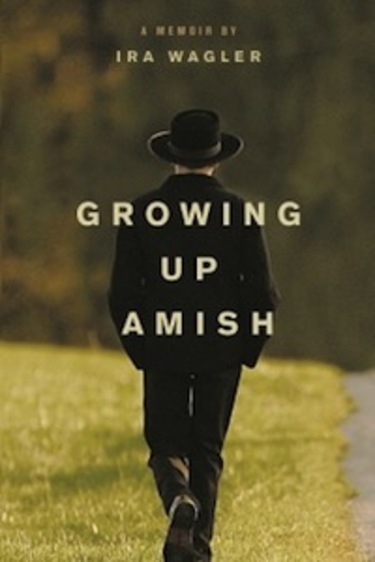
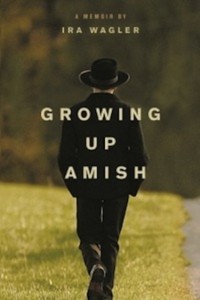
Growing Up Amish was written by Ira Wagler, who grew up in Old Amish orders in Canada and Iowa. He made his first attempt to leave the order when he was seventeen. Several tries later, he left for good when he was twenty-six. In his memoir, he describes the culture of his childhood and adolescence. He also articulates his growing doubts about his faith and the despair that plagued him.
I read the book for many reasons. First, my mother reads Amish fiction constantly, and I was hoping to gain some insight into why she’s attracted to the lifestyle it describes. That didn’t happen. Second, some of the book took place in Bloomfield, Iowa only a few hours from where we live. A few weeks ago, I drove through Bloomfield and saw several Amish homes so it was fun to read about an area recently visited. Third, a friend has often shared prayer requests about a young, former Amish man she and her family recently “adopted.” His struggle has been great, and Growing Up Amish did provide a glimpse into the anguish he’s experienced.
But, Growing Up Amish raised as many questions as it answered. How can the order survive when it constantly creates more rules that divide the faithful and drive the young away? How do mothers go on after losing their children to the world? Why does the author still live in close proximity to the Amish in Lancaster County, Pennsylvania? What is his life like now?
But the major insight gained from the book reinforced a lesson God has been teaching me for several years. Humans – not just the Amish – constantly try to put the God of the Bible into boxes constructed of their fears and limitations, and God constantly bursts out of them. He is simply too big, too powerful, too fearless, and too holy to be constrained by our lack of faith. Our faith grows only when we look to him and follow his rules rather than making our own.
God, keep me from limiting you to a box constructed of my fears and limitations. Grant me grace and faith to trust your power. Amen.
by jphilo | Nov 11, 2011 | Reviews
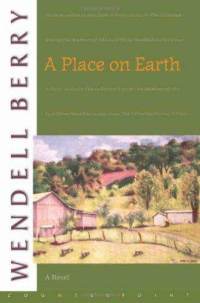
Not too long ago, I posted a review of Hannah Coulter by Wendell Berry. Since then, I’ve been slowly reading Berry’s entire Port William series. Each book has been a delight, the meeting of a new friend, the unfolding of a world both complex and simple.
Rather than write a review of A Place on Earth, the second book in the series – since it would be so similar to the Hannah Coulter review – here’s an excerpt from the book. The conversation is between Mat and Margaret, a long-married couple. Their only son and World War 2 soldier, Virgil, has been missing in action for several months. The war is now over, and the are coming to understand their son is not MIA, but dead.
“Mat, when we’ve lost it all, we’ve had what we’ve lost.”
“But to lose it. Isn’t there anything in you that rebels against that?”
She looks steadily at him, considering that – whether unsure of her answer or unwilling to answer too readily, he cannot tell. He is aware that Margaret is trying him, drawing deliberately at the bindings between them, as he has tried with her with his singleness.
“No,” she says.
“None at all?”
“Virgil,” she says as if to remind or acknowledge what they are talking about. “From the day he was born I knew he would die. That was how I loved him, partly. I’d brought him into the world that would give him things to love, and take them away. You too, Mat. You knew it. I knew so well that he would die that, when he did disappear from us the way he did, I was familiar with the pain. I’d had it in me all my life.”
A tone of weeping has come into her voice, though not openly, and Mat does not yet move toward her. The weeping seems on the circumstance of what she is saying, not the result – an old weeping, well known, bearable by an endurance both inborn and long practiced. The dusk is thickening so their eyes no longer clearly meet, though they still look toward each other.
“But I don’t believe that when his death is subtracted from his life it leaves nothing. Do you, Mat?”
“No,” he said, “I don’t.”
“What it leaves is his life. How could I turn away from it now any more than I could when he was a little child, and not love it and be glad of it, just because death is in it?”
Her words fall on him like water and like light…
…”And, Mat,” she says, “we belong to each other. After all these years. Doesn’t that mean something?”
It is a long time before he answers…”I don’t know what it means,” he says finally. “I know what it’s worth.”
Something shifted in me after reading that passage. And this is a book filled with such passages, interspersed with humor and homeyness to comfort the soul.
If you could use some humor and homeyness, check out Wendell Berry’s Port William series. Let them comfort your soul, too.
by jphilo | Sep 9, 2011 | Reviews
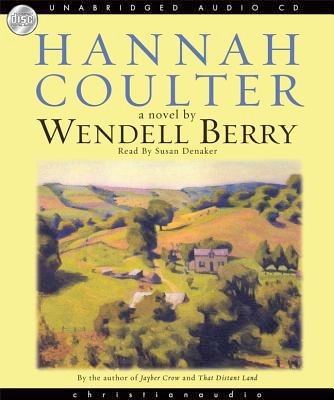
Once in a great while, I read a novel that sings. A novel like Hannah Coulter. Sentence by sentence, paragraph by paragraph, its music resonated until my heart beat with the cadence of its words. This is the seventh in Wendell Berry’s series of novels set in fictional Port William, Kentucky. The book overflows with everything that moves a novel from good to exceptional.
A setting so richly developed and unique, it is clearly and easily seen.
A family history beautifully woven in to the fabric of the real places around it.
A main character so true, flawed, and identifiable, she is a mirror of the reader’s soul.
A life so ordinary and exceptional, those who encounter it become part of it.
A Christian world view gently integrated into the foundation of the story.
The protagonist, Hannah Coulter, is a widowed woman, looking back upon her long life, telling her story. Seamlessly, Wendell Berry grows her from young farm girl to working woman, from war bride to widow and mother, from farm wife to mother again, from grandmother to widow once more. We share her joy and sorrow in passages lyrical and hope-filled, like her thoughts after the funeral of her second husband with whom she had shared life for many decades:
After she left, the house slowly filled up with silence. Nathan’s absence came into it and filled it. I suffered my hard joy, I gave my thanks, I cried my cry. And then I turned again to that other world I had taught myself to know, the world that is neither past nor to come, the present world where we are alive together and love keeps us.
Somehow this woman’s sweet story became part of me. By the end of the book I wondered why its protagonist, Hannah Coulter, and I had not become friends sooner. I was sad to say good-bye to her, but look forward to renewing our acquaintance in the other books in Wendell Berry’s Port William series: Nathan Coulter, A Place on Earth, The Memory of Old Jack, Remembering, A World Lost, Jayber Crow, That Distant Land, and Andy Catlett.
Many thanks to Wendell Berry for writing words to make heart sing. Someday, God willing, I hope to add to that eternal song.

by jphilo | Aug 4, 2011 | Reviews
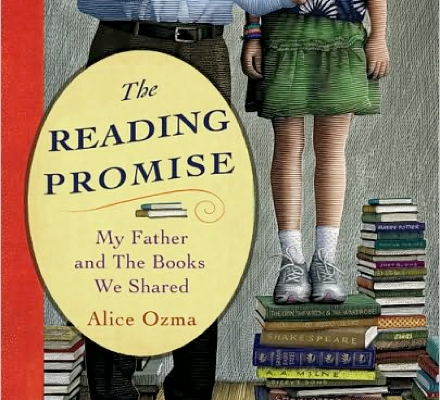
One Saturday in June, probably while cleaning bathrooms, I listened to an NPR interview with a young author. A young college grad had written a memoir about the 3,218 day reading streak she and her dad had racked up – an accomplishment that began when Alice was in fourth grade – and her dad promised to read to her for 15 minutes each night for 100 days in a row.
That’s a book I’d like to read some day, I thought.
Ozma’s book was on display at our library a few weeks ago, and I wasted no time in checking it out. The book was a delight to read. But then, how could a book about a dad and his daughter reading together every night from fourth grade to the night before her freshman year in college not be a delight? Ozma’s father went to great lengths to keep the streak going – like interrupting her play practice before midnight and squeezing in their read before her date picked her up for the senior prom.
But the book was much more than a recounting of how they made time to read or a list of what they read. The book is the story of how reading bound Alice and her father, a most remarkable elementary school librarian, together through good and bad times.
Through the end of her parents’ marriage.
Through the awkwardness of a single dad parenting his daughter during puberty.
Through separation from an older sister who went abroad for several months.
Through her father’s fight with the school board about the importance of reading to kids.
And so much more.
This book is not long or scholarly or deep. It is not hard to read. But, as our local librarian said as she checked it out on my card, it’s a book that will make you want to read to your children. Which means it is a very important book for parents and grandparents and teachers and book lovers everywhere. And Ozma has a website with book lists and suggestions about how to start a reading streak with the kids in your life.
But read the book before you visit the website. Just do it. You (and your kids) will be glad you did.