Julie Keon’s Advice for Parents, Part 1

Julie Keon’s Advice for Parents, Part 1

Julie Keon’s Advice for Parents, Part 1

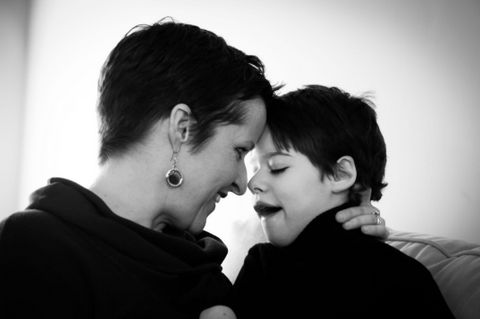
Julie Keon is the author of What I Would Tell You, an essay she wrote for parents new to the world of special needs. The essay went viral, so Julie created a blog, www.whatiwouldtellyou.com, to reach out those touched by her story. Today, she shares about her and her husband’s experience as parents of Meredith, age eight and a half. Tomorrow, she’ll be back with the story of how What I Would Tell You went viral.

Julie is one busy woman, as she’s a doula (birth and postpartum), prenatal educator, breastfeeding counselor, artist, newspaper columnist, blogger, and writer. She also creates and facilitates workshops and private sessions for women who have experienced a traumatic or difficult birth. Her husband Tim is a network specialist and works at an atomic energy plant.

Julie, would you share your special needs journey with DifferentDream.com readers?

Meredith was born on December 5, 2003, after a full-term pregnancy and a normal labor. Sadly, she aspirated at the time of birth resulting in an abrupt lack of oxygen and consequently a profound brain injury. We unexpectedly and suddenly became parents of a child with special needs and medical fragility. She is and will always be our only child.

How has parenting Meredith changed you and your husband?

Becoming parents of Meredith has enriched our lives and expanded our minds and spirits in ways that I am not sure we could have experienced otherwise. It has not been an easy journey, and dealing with the grief and joy and all of the trials and tribulations that have made up the last eight years has been the greatest experience of our lives. I have taken this as an opportunity to grow as a person as opposed to becoming bitter and burdened or crushed by life not going in the direction I had anticipated or planned.

How has your family been most encouraged and supported since Meredith’s birth?

We moved back to the small town where I was born and raised when Meredith was just nine months old. Being in this environment surrounded by people who know my extended family has been a blessing. Community support and, of course, the support we receive from local agencies and government funding has made it possible to continue to care for Meredith at home. We also learned (eventually!) how to ask for help and accept support from others.

What Would You Like to Tell Julie?

Well, that’s Julie’s story so far. As was mentioned before, she’ll be back tomorrow to tell about her original essay going viral and how that changed life for their family. Until then, you can read What I Would Tell You and leave a comment about how her advice resonates with you.

Julie Keon’s Advice for Parents, Part 2

Do you like what you see at DifferentDream.com? You can receive more great content by subscribing to the quarterly Different Dream newsletter and signing up for the daily RSS feed delivered to your email inbox. You can sign up for the first in the pop-up box and the second at the bottom of this page.

By

Jolene Philo is the author of several books for the caregiving community. She speaks at parenting and special needs conferences around the country. Sharing Love Abundantly with Special Needs Families: The 5 Love Languages® for Parents Raising Children with Disabilities, which she co-authored with Dr. Gary Chapman, was released in August of 2019 and is available at local bookstores, their bookstore website, and Amazon. See Jane Dance!, the third book in the West River cozy mystery series, which features characters affected by disability, was released in October of 2023.

Author Jolene Philo

To get posts delivered to your inbox, enter your email address:

Delivered by FeedBurner

Archives

Categories

Related Posts

Behavior Management Tips for Parents of Kids with Special Needs

Behavior Management Tips for Parents of Kids with Special Needs

Behavior Management Tips for Parents of Kids with Special Needs

Behavior management tips for kids with special needs. We can’t get enough of ’em. Because kids’ behaviors morph as their bodies and minds constantly grow and change. So I was really pleased to find a post full of behavior management tips at Raising Kvell, a Jewish parenting site that includes posts about parenting kids with special needs.

Meet Behavioral Expert Melissa Lander
Melissa Lander is a stay-at-home mother of 3. She is the founder of RaisingGems a community of parents sharing Gems about the trials and tribulations of raising kids. (Every day a parenting gem contributed by a reader is posted. Very encouraging and fun.) Her son Reuben is six years old and was diagnosed with autism three years ago. In those years, she’s learned a lot about managing the behavior of a child with special needs.

Melissa’s Four Behavior Management Tips
Melissa’s tips are in line with what I learned about managing behaviors of students with special needs. They are:

1. Be Positive
2. Give Your Child a Head’s Up
3. Beware: It Might Be You
4. Never, EVER Give In

Simple concepts, really, but they require backbone and follow through to be successful. To learn more about how to develop the backbone and follow through required, read the entire post where Melissa explains each behavior management tip at www.kveller.com.

What Behavior Management Tips Make Life Easier at Your House?
The behavioral tips in Melissa’s post are excellent, but raising kids—both those with special needs and those who are typical—requires a very big bag of tricks tips. If you’ve discovered some behavior management strategies over the years, please leave a comment about what works at your house. Or if you’re dealing with a particularly stubborn behavior right now, leave a question. Maybe another reader will have an idea that will help. But whatever you do, never EVER give in!

Do you like what you see at DifferentDream.com? You can receive more great content by subscribing to the quarterly Different Dream newsletter and signing up for the daily RSS feed delivered to your email inbox. You can sign up for the first in the pop-up box and the second at the bottom of this page.

By

Jolene Philo is the author of several books for the caregiving community. She speaks at parenting and special needs conferences around the country. Sharing Love Abundantly with Special Needs Families: The 5 Love Languages® for Parents Raising Children with Disabilities, which she co-authored with Dr. Gary Chapman, was released in August of 2019 and is available at local bookstores, their bookstore website, and Amazon. See Jane Dance!, the third book in the West River cozy mystery series, which features characters affected by disability, was released in October of 2023.

Author Jolene Philo

To get posts delivered to your inbox, enter your email address:

Delivered by FeedBurner

Archives

Categories

Related Posts

Support for Parents of Adults with Special Needs, Pt. 2

Support for Parents of Adults with Special Needs, Pt. 2

Support for Parents of Adults with Special Needs, Pt. 2

Parents of adults with special needs, like all parents, appreciate encouragement from friends and family. Yesterday, Kathy Guzzo, guest blogger and parent of an adult child who lives with lupus, shared her top ten list of practical ways to encourage and support parents of adult children with special needs. Today, she’s back with suggestions about how to use words to encourage parents, including what not to say.

Parents of Adults with Special Needs: What Not to Say

  • Everything’s going to be okay.
  • Cheer up.
  • Don’t worry so much.
  • You need to be strong.
  • I know how you feel.
  • You need to eat.
  • You look awful
  • You look exhausted.
  • Call if you need something—Chances are they never will.
  • You can only do so much—A parent feels she can never do enough and doesn’t need to be reminded.

Finally, don’t offer advice of any kind, unless someone asks for your thoughts or input.

Parents of Adults with Special Needs: What to Say

  • I care about you.
  • Tell me one specific area I can pray about.
  • It’s okay to cry, to feel sad or even angry.
  • I admire how you’re handling this.
  • You’re a great parent.
  • I have no idea how you feel, but I’m available to listen.
  • Can I get you something you’ve been hungry for, a special treat?
  • Whatever happens, I’m here for you.
  • You will get through this.

Most of the above items seem like common sense. But believe me, it’s not only kids that say the darndest things. Adults can be extremely thoughtless in what they say.

Parents of Adults with Special Needs Need Supportive Friends

Having an adult child who’s ill can be extremely lonely and emotional as a parent learns to adjust and accept the new role in a child’s life. When my heart is heavy as a result of my daughter’s health issues, what helps me most is a simple reminder from a friend that they are praying for me and they care. Through my experience I’ve learned that the most important thing anyone can do for a friend or family member is to be their friend. Try to put yourself in their place and then the follow the golden rule by doing for them what you’d like them to do for you if the situation was reversed. When that happens, everyone involved is blessed beyond measure.

Supportive Words for Parents

How do people use words to encourage you while you care for your child with special needs. Leave a comment with ideas of what to say and what not to say, whether your child with special needs is an adult or any age.

Support for Parents of Adults with Special Needs, Part 1

Do you like what you see at DifferentDream.com? You can receive more great content by subscribing to the quarterly Different Dream newsletter and signing up for the daily RSS feed delivered to your email inbox. You can sign up for the first in the pop-up box and the second at the bottom of this page.

By

Kathy Guzzo and her husband live in Northern Illinois and have 4 adult children. One of her daughters was diagnosed with lupus and Epstein Barr Replication as a young adult. Another began struggling with depression and OCD in her mid-twenties. She understands the need for her daughters to be able to make their own decisions regarding their health, but the nurturer in her sometimes has a hard time letting go. She desires to direct others to the peace and hope that God has abundantly available for them.

Author Jolene Philo

To get posts delivered to your inbox, enter your email address:

Delivered by FeedBurner

Archives

Categories

Related Posts

Support for Parents of Adults with Special Needs, Pt. 1

Support for Parents of Adults with Special Needs, Pt. 1

Support for Parents of Adults with Special Needs, Pt. 1

Parents of kids with special needs, even when those children become adults, need support from friends and family. Kathy Guzzo, guest blogger and parent of an adult child who lives with lupus, is here today and tomorrow with suggestions of ways to support parents and families. Read on and I think you’ll agree many of these suggestions apply to all special needs families, no matter what age their kids.

When a child is ill, regardless of their age, parents shift into caretaker mode. Nothing is more important at that time than doing what we can care for our child. The daily responsibilities and small tasks may cross our mind, and we wonder how they will get done, but if we want to keep our sanity, we know we must just let them go. This is where friends and family can be a huge help even if the child happens to be an adult. However, their needs are a little different. And if the adult child lives in another state and/or is married things become even more complicated.

Even though our adult daughter has been hospitalized and needed extended care at home several times, I never really thought about what others could do during those times. Then a friend’s son became seriously ill. Although he was married and not living at home, she needed to be with him as much as possible. I really wanted to help her, to support her, but I wasn’t sure what to do.  That’s when I looked back to my personal experience and asked myself what others could’ve done to lighten my load and brighten my day. In the past few months, I’ve written them down and even put some into practice. In each case I felt great knowing their lives were a little brighter and less stressful.

Top 10 Things To Do for A Friend Whose Adult Child Is Ill

  1. Think specifically about what will help, uplift, and be appreciated by your friend. For example, don’t offer to do their laundry if you know they are extremely particular about how it’s folded and/or ironed.
  2. Bring a home cooked meal. Don’t ask when to bring a meal. Tell them you’re bringing dinner. You could even take it a step further and organize freezer meals for others to prepare that you take all at once. That way they doesn’t feel they need to ‘entertain’ when a meal is dropped off.
  3. Think of small things they may not think of at the onset of a serious illness. At the emergency room I wanted to be available without intruding, so when I realized my friend had forgotten her own medications at home and their dog needed to be let out, I volunteered and continued to let her dog out when necessary. Other small things are checking the mail, putting the trash out or bringing in the cans, even checking the expiration date on milk.
  4. Clean the bathroom and kitchen. Many people are uncomfortable having a friend clean their entire house, however if you remind them how nice it would be to come home to a clean bathroom and kitchen, they may agree. Or give them a specific time that you will come over to help them clean, fold laundry, etc. Cleaning together also is a great time to have a real heart to heart with your friend in a relaxed setting.
  5. Flowers are always a nice surprise. Either already on the table when she returns home, dropped off as a surprise, or delivered to where she’s staying if she’s away.
  6. Send encouraging notes. Or send Bible verses or cards via text, email or mail. If you mail a card, consider including a gift card for restaurants.
  7. Respect the family’s privacy. Don’t feel you should visit either at home or in the hospital. Parents wants to spend as much time as possible with their children and many times visitors take more of an emotional toll than the illness itself. Respect their desire to be with family only. Also, offer to be the contact person for other friends by sending out updates via text or email.
  8. Create goodie bags. Occasionally put together bags of chocolate, pretzels, puzzle book, magazine, notepad, pen, fun Kleenex, small gift cards for coffee or sandwiches, etc. These can be dropped off at her home, the hospital, or even mailed.
  9. Be available to listen. Sometimes just talking helps them organize all that’s been happening.
  10. Pray for families and watch for opportunities to serve them.

What’s on Your Top Ten List?

Kathy’s list made me think of a few ways to support parents to add to the list. If you have more ideas, leave a comment. And come back tomorrow for Part 2, when Kathy talks about supporting parents by knowing what not to say.

Do you like what you see at DifferentDream.com? You can receive more great content by subscribing to the quarterly Different Dream newsletter and signing up for the daily RSS feed delivered to your email inbox. You can sign up for the first in the pop-up box and the second at the bottom of this page.

By

Kathy Guzzo and her husband live in Northern Illinois and have 4 adult children. One of her daughters was diagnosed with lupus and Epstein Barr Replication as a young adult. Another began struggling with depression and OCD in her mid-twenties. She understands the need for her daughters to be able to make their own decisions regarding their health, but the nurturer in her sometimes has a hard time letting go. She desires to direct others to the peace and hope that God has abundantly available for them.

Author Jolene Philo

To get posts delivered to your inbox, enter your email address:

Delivered by FeedBurner

Archives

Categories

Related Posts

Visual Impairment? What Cami Sees

Visual Impairment? What Cami Sees

Visual Impairment? What Cami Sees

Visual impairment is one of the special needs diagnoses Cami, daughter of guest bloggers Rudy and Rachel Corderio, lives with. Today, Rachel is back with a guest post about what her daughter sees beyond her visual impairment.

Beyond Visual Impairment: What Cami Sees


One question I have been asked numerous times is, “What can Cami see?”

Whether people asked out of curiosity, fear, concern, sympathy, or their own need to be reassured, I would try my best to answer clearly. Yet with each answer, I grew more dissatisfied with what I said, bothered by something I couldn’t explain.

I rambled on about lights, colors, shapes, contrasts, and curbs, but found it difficult to express the uncertain.  My answers were colored with illustrations and assumptions based on observations—with a hint of my own imagination.

Then, a thought hit me.  After eight years of trying to determine and convey what Cami  could or couldn’t see, I realized there was no need to guess.

Why?

Because I already knew.

She sees the wind when it blows through her hair, every strand caressing her face.
She sees the bird whose cheerful song greets her each morning while waiting for the school bus.
She sees the ice cream truck as its faint “Pop Goes the Weasel” music floats into the back yard where she plays.
She sees the tiny bumblebee whose loud buzzing causes her to run away in tears.

I now realize what had bothered me about my answer over the years—it wasn’t the truth. I had been so consumed with finding the right answer, I almost missed the obvious. In the midst of trying to decipher and define what my daughter could see, I was the one who couldn’t.

But now I do. And the next time I’m asked what Cami can see, I will answer confidently.

She sees everything. Just differently.

Who Is Visually Impaired?

This post makes me think about who is really visually impaired. Is it Cami? Or was it Rachel before she realized how much her daughter can see? Or is it those who ask about what she can see? Please share what you think in the comment box. I’d love to hear your perspective and Rachel would, too.

Do you like what you see at DifferentDream.com? You can receive more great content by subscribing to the quarterly Different Dream newsletter and signing up for the daily RSS feed delivered to your email inbox. You can sign up for the first in the pop-up box and the second at the bottom of this page.

By

Author Jolene Philo

To get posts delivered to your inbox, enter your email address:

Delivered by FeedBurner

Archives

Categories

Related Posts

My Un-birthday and How to Keep our Birthdays Fun

My Un-birthday and How to Keep our Birthdays Fun

My Un-birthday and How to Keep our Birthdays Fun

Un-birthday or birthday? That is the question for Laurie Wallin. Her recent birthday celebration wasn’t quite what she expected. So after the fact, she came up with seven tips to keep next year’s big day from becoming a big pain. Maybe you can use them, too.

My Un-birthday and How to Keep our Birthdays Fun

by Laurie Wallin

I don’t know why, but somehow I’ve got it in my mind that my birthday is supposed to be fun. The sun comes up, I awake, and my mind fills with images of breakfast in bed, shiny balloons, and not having to cook for 24 hours.

Un-birthday or Birthday?

Which isn’t what happened yesterday on my birthday. Not that my oldest daughter intentionally tried to make me miserable. It was just the unfortunate byproduct of marrying a “big family day” with her bipolar, anxiety, developmental disabilities (and let’s not forget the delightful tween hormones).

It looked a little like this:
“Mom, let’s have a special breakfast for your birthday!”
“Sounds great! What shall we do?”
“Ooo, let’s make eggs and pancakes. You love those!”
“I really do. Let’s do it!” I scoop up her younger sister, who just emerged from upstairs. This distraction unnerves my oldest because it’s a deviation from the plan.
“Mom, we NEED TO START COOKING.”
“Yep, let me just say hi to the other girls, then we’ll get started…”
“NO! IT’S TIME FOR BREAKFAST. THEY CAN WAIT!! IF WE DON’T MAKE IT NOW, EVERYONE WILL GET HUNGRIER AND GRUMPY AND THEN IT WON’T BE A GOOD BIRTHDAY FOR YOU!!!“

This happened for every meal. And when she ran out of tape while wrapping my present. And when we decided to go to my favorite park and then I changed my mind (which just wasn’t an option). Each time crumbled into a major tantrum, none of our usual interventions working, and her ending up in her room.

Well, at least I can’t say it was an unmemorable birthday! Then again, most “big days” for the family have that tendency. Perhaps you can relate?

How to Avoid an Un-birthday

I let my guard down that day (due to the above mentioned delusions), but on a better day, there are a few tools that help keep “big days” from becoming “big pains.”

  • Write out the schedule and post it on the fridge. Yes, this takes some of the spontaneity out of the day, but it takes some of the emotion and tantruming out, too.
  • Communicate what you need and expect to someone who can actually make it happen. For me, it meant asking my husband to have ice cream instead of cake (which I despise since I’ve had to make probably 1000 cupcakes for my combined 4 daughters’ birthdays over the years!)
  • Plan down time periodically throughout the day (for you). Walk the dog, take a power nap, read a favorite magazine or book… something that gives your mind and body (and stress hormones) time to relax and recharge.
  • Sprinkle parts of the celebration over a few days so it’s not ONE big day. There’s merit to the concept “too much of a good thing.” When it comes to children with mood, behavioral, and developmental disorders, “too much” is smaller than we might think.
  • Keep the usual behavior expectations in place and stay consistent with consequences. It was a bummer that I had to discipline my daughter so much on my birthday. But really, her growth is my priority and I can celebrate getting old any day of the year.
  • Don’t expect your kids to be excited about the day. If special days are consistently difficult for the family, set up a dinner out with your friends sans kids sometime near the big day. I end up doing this every year, and it’s becoming a fun tradition!
  • Laugh it off. The next day, my husband gave me the best gift ever—an hour of his time to vent, get dramatic, and blow off my post-special-day steam. (I love that man!) Whether it’s with your spouse, a good friend, your neighbor, God, your journal or your facebook page… laugh it off. A good laugh releases endorphins that heal and relax you. So use laughter liberally!

More than anything else, know that it’s okay to have and celebrate your special days. Like anything in our families, that may require a little more creativity and planning. However that looks, do what YOU need so your special days can still be fun and memorable. Your kids may not thank you for having birthdays, but they’ll certainly notice your happiness and sense of fulfillment!

~Laurie

Have You Had an Un-birthday?

This is your chance to try Laurie’s seventh tip and laugh off your unbirthday. Just leave a comment telling the story of your unbirthday disaster so we can laugh with you. So start typing and release those endorphins waiting to help you heal and relax.

Do you like what you see at DifferentDream.com? You can receive more great content by subscribing to the quarterly Different Dream newsletter and signing up for the daily RSS feed delivered to your email inbox. You can sign up for the first in the pop up box and the second at the bottom of this page.

By

Laurie is the mom of four daughters–two adopted with developmental delays, mood disorders, and ADHD. A former junior high teacher turned speaker and life coach, she loves to learn, laugh until their sides hurt, and help women be courageous in life.

Author Jolene Philo

To get posts delivered to your inbox, enter your email address:

Delivered by FeedBurner

Archives

Categories

Related Posts