
Redwood Love Notes at Summer Camp

Redwood Love Notes at Summer Camp

Redwood Love Notes at Summer Camp

Redwood, summer camp, and love notes don’t have anything in common. Unless you’re guest blogger and carpenter Scott Newport. Today, he shares the story of how he used salvaged redwood to stay close to his son Noah, who was at summer camp, and how he’s expanding the idea to help families dealing with hospitalized children or the death of a child.

Summer Camp

I guess Penni must have picked up on some wisdom from other camp moms when she announced her idea of hiding a little love note between Noah’s underwear and his new swim trunks. Noah was nine years old, and this would be his first, week-long camp experience. Not wanting to be out-parented, I also put an envelope in Noah’s suitcase. I just jammed my envelope toward the bottom.

The Envelope

All week I worried if Noah would be homesick and waited for the phone to ring. Friday was here before I knew it. Noah walked into the house, and you could tell he had a good time. Story after story broke from his lips and then I interrupted. “Did you open the envelope?”

“Yea dad,” he replied.

Wondering, I asked, “Well, what did you think?”

“I held it every night before I went to sleep.”

This past week Linda the social worker from Walk With Me called. She asked if I could stop by and see a family at our local hospital. You see, Walk With Me is a pediatric hospice and palliative program, and I am a graduate. Our son, Evan died a couple of years back; I now have a strong passion to help other families on their journey.

The Redwood

Before I went to see them, I wondered what I would say. While working in my wood shop, I remembered the story about Noah and the envelope. I soon found myself taking some old redwood I reclaimed from a deck on Lake Michigan and cutting it up into small pieces about the size of a harmonica. I then split each of those pieces in half, creating a mirror image of the other. In woodworking we call that “book matched,” a technique often used when making fine violins or the interiors of a Rolls Royce.

So when Noah opened his envelope, there was no note but a small piece of redwood with all of the names of the other members of our family engraved there: mom, dad, Chelsea, and Evan. On the mirrored piece I kept, I had the name Noah written on it.

You see, I hoped when Noah opened his note from me, he would be reminded of his family. My plan worked. While he was holding onto his each night, I was holding on to mine and then laying it on my bed stand while I slept.

Redwood Transformed

During my visit with the family, I told them about the wood and gave them a sample, asking if they had any ideas how this could help families, especially if a parent had to leave their child. While the dad and I talked, the mom was standing at the nurses’ work desk. Within about fifteen minutes, she had asked for ribbon, a pair of scissors, and some markers. Luckily I had come prepared.

When she was done, she showed me. When she put both pieces together like pages from a book her creation was an assembled heart. Each stick had its own inscription. One side said, “Love ties us together,” and the other “Even when we’re apart.”

I just loved what she had done. I told her to keep it and to send me a picture. I’m hoping this may be a new way to help families who are on the journey of having a child with a life-limiting disease.

Redwood Remembrance

And if you’re wondering, Evan had a piece of redwood too with all our family names on it. My half is still on my bed stand and Evan’s was buried, neatly nestled in his folded hands.

What Do You Think?

Scott’s story gives me goosebumps. I keep thinking of how his redwood idea could minister to so many parents of kids with special needs. How about you? What’s your reaction to his story? How would you like to see the idea used? Leave a comment.

Do you like what you see at DifferentDream.com? You can receive more great content by subscribing to the quarterly Different Dream newsletter and signing up for the daily RSS feed delivered to your email inbox. You can sign up for the first in the pop-up box and the second at the bottom of this page.
By

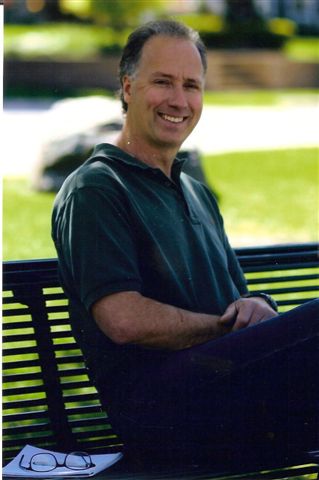
Scott Newport is a carpenter who has a vision for unwanted, damaged wood. His finds are treasures to his soul. Each discovery he makes unfolds into a beautiful piece of furniture for which he finds a home, usually with a child or caregiver of a child with special needs. He writes about the life lessons he learns from his 3 children, especially from Evan who died in November of 2009 after 7 years of joyful life. To access all of Scott’s guest posts, click on the magnifying glass at the top of the page and type “Scott Newport” in the search box.

Author Jolene Philo

To get posts delivered to your inbox, enter your email address:

Delivered by FeedBurner

Archives

Categories

Related Posts

Adopting Terminally Ill Children: One Family’s Story, Pt. 3

Adopting Terminally Ill Children: One Family’s Story, Pt. 3

Adopting Terminally Ill Children: One Family’s Story, Pt. 3

Adoption changes families in a myriad of ways. For the past two days, Sue Badeau has been sharing the story of how adopting 20 children. 3 of those children had terminal diagnoses, changed their family. In Part 1, you met Sue and her husband Hector and heard their adoption story. In Part 2, she focused on the experience of adopting children with special needs. Today, in Part 3, Sue shares lessons they learned as they grieved for their sons.

Adopting Terminally Ill Children: One Family’s Story, Pt. 3

Three Lessons Learned

  1. Everyone can heal and grow. Healing and growth may look different for each individual. We may never see the wholeness we are hoping for, but we can continue to work towards it. I learned this lesson at an early age from my grandfather as he showed me how he cared differently for the various plants in his vegetable garden so that each would have the best chance of growing and bearing fruit.  I have come to understand that this analogy also applies to children—they are not all easy to grow, like zucchini, but then, what a boring garden it would be if we grew nothing but zucchini!
  2. There is as much value in the journey as in the destination. I know, I know, it sounds like a worn cliché, but we have found it to be true.  Years ago, we went on a family hike and this message came home to me in a powerful way as I saw my small son Raj, who had been diagnosed with cerebral palsy and told that he would never walk, clambering along the hiking trail with his brothers and sisters.  Years later as we experienced everything from teen pregnancy to a son in prison, I have had to remind myself again and again of this important lesson.
  3. While God does not “fix” everything in the sense of removing all obstacles, curing all diseases, or unlocking all disabling conditions, He does, indeed, make all things new. I learned this after experiencing a car wreck—I still have some scars and there are things I cannot do, yet I was changed by the experience and “made new” in important ways.   And as I think about some my children viewed as most “damaged” by the world—whether physically or emotionally “damaged” by all kinds of brutal early life experiences, turning to drugs, early pregnancies or other outlets for their pain—I know that some people look at them and only see the wreck. But I like to look at them and see them as survivors.  And I am always amazed how, in spite of the “damage” they have sustained, they, through God’s grace and healing power, are able to find amazing new ways to do old things that many of us take for granted—communication, relationships, eating, moving, getting through the day.

Toolkit for Parents Caring for Terminally Ill Children

If I were to try to offer words of encouragement to parents caring for children with severe special needs and terminal illnesses, I would urge them to create a toolkit for themselves to help them make it through the dark times.  Into the toolkit would go at least the following tools:

  • Knowledge – Get as much information about your child’s condition, current state-of-the-art research, and treatment options as you can.
  • Self-care – When on an airplane, the safety instructions include these critical words, “When traveling with a child, put your own oxygen mask on first.”  While this initially seems counterintuitive to parents, it is essential.  You cannot care for anyone if you are out of oxygen yourself.  Feed your soul—make a personal self-care plan and follow it.
  • Intimacy and affection – Nurture your relationships with your spouse and other people in your life that are important to you.  They need you, you need them, and together you will create a strong team (the cord of 3 strands in Ecclesiastes 4:12) to meet the needs of your special child(ren).
  • Anger management techniques – Don’t deny anger when it comes—and it WILL come. Whether you become angry at the disease itself that plagues your child, the health care system, the schools, strangers on the street, yourself, or God, there will be times of anger.  Learning to manage it in ways that are safe and healthy is key to coping with both the life and the grief you will experience on this journey.
  • Play – I can’t say enough about the importance of laughter, silliness, and play with your children, the one who is dying as well as the others.  “Laughter is the best medicine” may sound trite, but it is the gem of a significant truth.
  • Pray – God the Father had to bury his only begotten son.  Surely, he understands and knows our grief.  Talk to him.  And listen to him.

Your Thoughts about Adopting Terminally Ill Children

Now that you’ve read the final installment in this series about adopting terminally ill children, what thoughts do you have? Leave your insights and comments below. To keep up with the Badeau’s future adventures, visit their website at www.badeaufamily.com.

Adopting Terminally Ill Children: One Family’s Story, Part 1
Adopting Terminally Ill Children: One Family’s Story, Part 2

Do you like what you see at DifferentDream.com? You can receive more great content by subscribing to the quarterly Different Dream newsletter and signing up for the daily RSS feed delivered to your email inbox. You can sign up for the first in the pop-up box and the second at the bottom of this page.

By

Author Jolene Philo

To get posts delivered to your inbox, enter your email address:

Delivered by FeedBurner

Archives

Categories

Related Posts

God Doesn’t Waste a Hurt

God Doesn’t Waste a Hurt

What does a mom learn while her child is hospitalized for several months? This mom learned that God doesn't waste a hurt.

Tara’s a little girl who spent months in the hospital after a very unusual birth. During those difficult months Tara’s mom, Kathie, learned several lesson, and one of them cemented her faith: God doesn’t waste a hurt.

God Doesn’t Waste a Hurt

Meet Tara

Tara’s story is amazing. If you want to know the whole story, go to www.carepages.com and type in “taracarlson.” For now, here are the highlights:

  • Tara, the Carlson’s fourth child, came so quickly she was born in the hospital bathroom. Kat’s husband was trying to help her collect a urine sample and caught a baby instead.
  • The baby was healthy, but a week after birth wasn’t eating well. Kat made an appointment with the lactation clinic. After  checking Tara’s vitals, she picked up the baby, ran out of the room and told the receptionist to tell the ER a blue baby would soon arrive. She ran across the street and into the ER. A team of doctors met her and within 15 minutes, Tara was bagged. Within 20 minutes, they knew she had spinal meningitis.
  • Tara spent the next three months in the hospital PICU with multiple viral infections. At one point, seven of her organs were failing. She was septic. She had to go through dialysis.
  • No one expected Tara to live, but she did. She’s now 2 1/2 years old and lives at home. She wears a heart monitor at night because of her congestive heart failure. She does quite well, but has to rest more than other children her age. And the smallest cold or infection results in another hospital stay. Since she came home a little more than two years ago, she’s been hospitalized nineteen times, the longest stay being two weeks.

Lesson 1: Babies Should Never Be Alone

The first night of Tara’s hospital stay, before the doctors knew how seriously ill the baby was, the PICU staff suggested Kat get some rest in the parents’ waiting area. Kat dozed four hours before being awakened to hear some terrible news. Tara had crashed shortly after Kat went to sleep, and the medical team had spent four hours reviving her. Things were so grim no one could take a break to alert Kat.

The news shook Kat to the core. “What if my baby had died?” she says. “She deserved so much more than a death with doctors shouting frantically and tubes being forced down her throat. She needed someone who loved her nearby, someone who could tell her how special she was, someone to pray over her and comfort her.”

In that moment, Kat vowed that her daughter would never again be without someone beside her during her hospitalization. Usually either Kat, her husband Jim or Kat’s mother were at Tara’s side. But as Tara’s hospital stay lengthened, Kat asked her church family to get involved. “People signed up for  2 or 4 hours shifts, and while they were there, we would get some sleep or have some family time,” Kat explains. “I told them that if anything happened, even the slightest sign of her condition going downhill, to call me. I would be right there.”

Lesson 2: Parents Should Never Be Alone

The experience also grew Kat’s compassion for parents of hospitalized kids. “They need more support,” she says. “They need to be met at the hospital entrance door by someone who’s been through what they’re about to go through. They need someone to tell them they are not alone.” Whenever Kat hears of a parent with a seriously ill child in the hospital, she takes them a comfy pillow, an inexpensive blanket at Ikea, and a coffee card. Since reading A Different Dream, she’s decided to give them a copy of the book, too.

“The parents are often forgotten,” she says. “Everyone is concentrating so hard on the child, there’s no one to comfort the parent.”

Lesson 3: God Doesn’t Waste a Hurt

“The biggest thing I’ve learned,” says Kat, “is that God doesn’t waste a hurt. God uses you in your pain and and in your strength. Your greatest ministry comes out of your greatest pain. That’s what I do now – not because I’m perfect, but because I’m willing. I still hurt, but it helps me to help others.”

What Lessons Have You Learned?

If God is using your hurt to help others, please leave a comment. Or share the valuable lessons you learned while your child was hospitalized so we can learn from you.

Do you like what you see at DifferentDream.com? You can receive more great content by subscribing to the quarterly Different Dream newsletter and signing up for the daily RSS feed delivered to your email inbox. You can sign up for the first in the pop up box and the second at the bottom of this page.

What does a mom learn while her child is hospitalized for several months? This mom learned that God doesn't waste a hurt.


4HisHeart-Snuggles from Sam, Part 2

4HisHeart-Snuggles from Sam, Part 2

4HisHeart Snuggles from Sam

The previous post in this series relayed the story of Baby Sam Owens’ short life and described the gift bag ministry his family started in his memory. It even gave you a sneak peak at the custom-made bags they’ve chosen to use.

What’s in Each Bag?

Each bag will contain the following:

Why Those Items?

Joy explained why each item is in the bag.

  • One day, Joy spied a Sleep Sheep at the main desk of the Cardiac ICU. Whey Joy discovered it played soothing “white noise” she asked if Sam could use it. From then on it was his constant companion, drowning out the harsh sounds of the intensive care unit.
  • Like most babies, Sam loved to be swaddled tightly in his SwaddleMe wrap. The wrap was so effective in calming Sam, the Owens want other parents to have the same tool available to them.
  • One day, Kurt and Joy found a fleece blanket in their mailbox at the Ronald McDonald House. Joy says it was smaller than most and fit perfectly in Sam’s isolette. And it wasn’t knotted like conventional fleece blankets, so it didn’t have hard bumps to irritate his tender skin. The members of the Cheerful Hearts in Christ’s Service (CHICS) group at Walnut Ridge Baptist Church in Waterloo, Iowa are making the blankets.
  • Gas Card – Most babies with serious heart defects are far from home and travel costs mount up quickly for parents.
  • A Different Dream for My Child – One of Joy’s friends gave her the book, and she said it was her constant companion and source of hope during Sam’s hospital stay. She wants to pass hope on to other families.
  • Lullaby CD – Another way to cut out hospital noise and soothe newborns.

How Much Do They Cost?

The Owens family has twenty bags filled and ready to deliver to the Mayo Clinic Cardiac ICU. Eventually, they would like to expand the ministry to other hospitals where newborns with heart issues are cared for in Cardiac ICUs instead of in neonatal intensive care units. But to do that, they will need donations since ach bag and its contents costs about $100.

Kurt and Joy are developing a 4HisHeart website which will tell about the ministry. As soon as it’s up and running, I’ll add a link to this post so you can get there. Until then, you can read about the ministry and contact Kurt and Joy at Sam’s CaringBridge website. Or you can leave a comment here, and I will pass it on to Sam’s mom and dad.

Thank you, Kurt and Joy for reaching out to parents while you are grieving over the loss of your son. May your tears and thoughtfulness bring comfort to many hurting families.

4HisHeart-Snuggles from Sam, Part 1

Do you like what you see at DifferentDream.com? You can receive more great content by subscribing to the quarterly Different Dream newsletter and signing up for the daily RSS feed delivered to your email inbox. You can sign up for the first in the pop up box and the second at the bottom of this page.

4HisHeart-Snuggles from Sam, Part 1

4HisHeart-Snuggles from Sam, Part 1

4HisHeart Snuggles for Sam

Now and then, the comments parents leave at www.DifferentDream.com remind me of the work of our redeeming God in the midst of our children’s struggles. The comments Joy Owens leaves are like that. Her messages led to emails and eventually a phone call where she shared the story of their precious baby boy.

Meet Baby Sam Owens

Little Sam was born on November 18, 2009. His parents, Kurt and Joy, knew he had one of the most severe congenital heart defects, Hypoplastic Left Heart Syndrome, before he was born. One of his older siblings has a heart condition also, which is treated at Mayo Clinic, so Sam was delivered there, too. Sam fought to live for 72 days, then fell asleep in the arms of his parents who say he then, “awoke in the safe embrace of his Heavenly Father Jan. 29,2010.” You can read more about Sam’s short life and see pictures of the beautiful little boy at his CaringBridge website.

Meet Sam’s Family

Sam’s parents and his three older siblings (Parker, Matthew and Emma)  are grieving deeply for their lost child and brother. But they are not isolating themselves as they mourn.In fact, they are using Baby Sam’s memorial money to launch a gift bag ministry to families of newborns with serious congenital heart defects. They’ve named the ministry 4HisHeart-Snuggles from Sam. For a peek at the gift bags and how their creator is participating in the ministry, go to this etsy link to view them.

Why Gift Bags?

The unique circumstances of Sam’s hospitalization led to the creation of the gift bag ministry. At Mayo hospitals, all newborns with serious health issues go to the neonatal intensive care unit (NICU). After surgery, all but those with heart problems return there. Those newborns are transferred to the Cardiac ICU which cares for all heart patients, newborn to ninety.

Joy explains, “The heart care they receive in Cardiac ICU is excellent, but the unit isn’t set up to meet the special needs of newborns like NICU is.” So during Sam’s stay, Kurt and Joy implemented some NICU techniques that soothed and calmed their little boy.

The Owens are filling the bags with things they found helpful during Sam’s hospitalization. To learn the what and why behind each item, come back in a few days for the second part of this series. Until then, keep the Owens family in your prayers. Ask God to wrap his arms around them and bring them peace along with healing tears.

4HisHeart-Snuggles from Sam, Part 2

Do you like what you see in the Dream Team link up? You can receive more great content by subscribing to the quarterly Different Dream newsletter and signing up for the daily RSS feed delivered to your email inbox. You can sign up for both in the upper right column on this page.

What Should I Say When a Child Dies?

What Should I Say When a Child Dies?

words of comfort in times of loss

When you hear that a child has died, what should you say? Just as important, what shouldn’t you say? Every word counts at such an emotionally charged time, and we would all do well to think and pray before speaking to grieving parents and families.

Words of Comfort for Times of Loss

You can find answers and guidance in a new book by Cec Murphey and Liz Allison, Words of Comfort in Times of Loss. The authors have experienced great loss and speak out of compassion and shared grief. Because this topic is so important, they have also created a free document to download, Practical Tips on Grief and Loss. If you know someone who has recently suffered the loss of a child, these tips will be an invaluable resource.

Thanks, Cec Murphey and Liz Allison

Thank you, Cec and Liz, for sharing your wisdom with us. After you read their list, leave a comment about what you learned. Or leave other suggestions or questions about what to say when a family loses a child.

Do you like what you see at DifferentDream.com? You can receive more great content by subscribing to the quarterly Different Dream newsletter and signing up for the daily RSS feed delivered to your email inbox. You can sign up for the first in the pop up box and the second at the bottom of this page.