The Weight of Silence as Parents of Kids with Invisible Disabilities

The Weight of Silence as Parents of Kids with Invisible Disabilities

The Weight of Silence as Parents of Kids with Invisible Disabilities

The weight of silence as parents of kids with disabilities is allĀ tooĀ familiar to guest blogger Lisa Pelissier. In this post she explains why she and other parents don’t talk about what’s going on with their kids and why they might want to rethink that decision.

The world of special needs parenting is broad and diverse. Some of us are thrust into a world where we’re forced to wear the special needs banner day in and day out.

However, those of us whose children have invisible disorders—high functioning autism, ADHD, mental health issues, and more—have a choice about broadcasting our special need status. Do we choose to stay silent, to blend into the crowd, or do we choose to align ourselves with the special needs population?

3 Reasons We Stay Silent

There can be stigma associated with invisible disorders, especially mental health issues.Ā Historically, people have regarded anxiety and depression as character flaws. They often are subject to comments like ‘If your child wasn’t weak, she wouldn’t be anxious.ā€ Or ā€œIf you trusted God more, you wouldn’t be depressed.ā€ There can be shunning that comes along with any invisible disorder. You’re different. You ā€œride the special busā€ā€”used as a pejorative. As parents, we also receive blame. People say things like, ā€œIf your child has anxiety, it’s because you’ve been an abusive parent, or at the very least, a bad one.ā€

Who needs that? It’s easier to keep our mouths shut.

We don’t want our kids to label and therefore limit themselves.Ā Autism doesn’t mean you can’t have friends. It doesn’t mean you can’t have empathy, we think. If my child wears his diagnosis like a name tag, he may use it as an excuse for why he doesn’t have to reach out to make friends, have to have compassion for others, or excel at his studies.

We want our kids to achieve their full potential. Why shout out diagnosis instead of ignoring it and hoping for the best?

A third reason we stay silent is because of our own denial of our children’s conditions.Ā He’s not autistic, he’s just quirky. She’s not depressed, she’s just hormonal. It’s not ADHD, he’s just disobedient. Accepting a diagnosis comes as a blow to our hopes and dreams for our child.

Like the title of this website states, we have to find a ā€œdifferent dreamā€ā€”something that can be difficult and painful to do.

2Ā Reasons We Shouldn’t Stay Silent

Invisible disorders are real.Ā While it’s true that kids can be quirky, hormonal, and disobedient, it’s also true that kids can have real diagnoses of autism, depression, and ADHD, and those conditions can and do affect thinking and behavior. We do our kids a disservice when we deny their reality. Helping them learn about their condition and how it affects their thoughts, feelings, and behavior will give them the power to understand, learn, and grow—and to manage their health rather than pretend there isn’t a problem.

We can help others understand why our kids are different so they can be more accepting.

Many choose silence—until someone else speaks up.Ā Being up front about depression, anxiety, OCD, ADHD, and other invisible disorders gives others permission to speak about their own difficulties. This can be especially true in the case of disorders we in the church may try fervently to hide because of shame and grief, such as in suicidal ideation. When you say, ā€œthis is my reality,ā€ you find that others in your circle of acquaintance have been there too, even if they’re not ready to go public with it.

Where you expected to find condemnation and rejection, you find understanding, solidarity, and friendship.

As special needs parents, our burdens are heavy. Keeping them to ourselves not only deprives us of support, of someone to help us bear those burdens, it deprives others of the chance to grow in their own knowledge, understanding, and compassion.

You are not alone if your child is crippled by anxiety.
You are not alone if your child has attempted suicide.
You are not alone if your adult child who can ā€œpassā€ for neurotypical can’t get their life together.
You are not alone if your child is too depressed to get out of bed in the morning.

But if you keep your troubles hidden, you’ll never know what kind of love and support you’re missing. You’ll never know if by speaking the truth, by freeing yourself from the weight of silence as parents of kids with invisible disabilities, you may give someone else a boost out of their own pit of silent despair.

Do you like what you see at DifferentDream.com? You can receive more great content by subscribing to the monthly Different Dream newsletter and signing up for the daily RSS feed delivered to your email.

Photo byĀ Kristina FlourĀ onĀ Unsplash

By

Lisa Pelissier lives in Oregon where she is a homeschool mom and author ofĀ five middle-grade fiction novels, the second-grade Monsters series, and aĀ YA fantasy novel. Lisa ownsĀ SneakerBlossom Books, offering Christian, classical homeschool Study Guides and curriculum. She blogs atĀ Eleventh Willow, offering encouragement for Christians parenting the mentally ill. She also works as a freelance copy editor, copy writer, an artist, and a marketing editor. In her spare time Lisa enjoys playing the piano and fretting about things over which she has no control.Ā 

Author Jolene Philo

Archives

Categories

Subscribe for Updates from Jolene

Related Posts

The Power of an Open Window

The Power of an Open Window

The Power of an Open Window

“Hi, Mom!”

At the sound of my voice, her gaze moved from the open window to me. A smile lit her face when she caught sight of the bouquet of irises in my hands. “They’re beautiful! Where did you find them?”

“They’re the first blooms from the bed at our house.”

“They’re so pretty.”

I arranged them in a vase where she could see them, and then we played Uno. When it was time for me to go she noticed them again.

“Oh, those are beautiful!” Her voice held the delight I used to hear when she called to tell me that her iris bed was blooming. “Where did you find them?”

This conversation confirmed two changes my siblings and I have witnessed in Mom lately. First, her dementia is becoming more noticeable. Second, her joy is also more noticeable. We’ve been expecting the first change ever since her diagnosis in 2008.

We attribute the second change to the power of an open window.

For years she insisted on having her window shades shut. But when my brother and I stayed with her during a recent hospital stay, we insisted on opening the shades. Mainly because we couldn’t stand sitting in the dark all day long. Soon she became more alert during the day and slept better at night. When she returned to her residential facility, we asked her team to add an item to her care plan.

Window shades are to remain open during the day.

The improvement in Mom’s mood has been phenomenal.

To read the rest of The Power of an Open Window visit the Key Ministry blog.

Image by agata822 from Pixabay

Do you like what you see at DifferentDream.com? You can receive more great content by subscribing to the monthly Different Dream newsletter and signing up for the daily RSS feed delivered to your email.

By

Jolene Philo is the author of theĀ Different DreamĀ series for parents of kids with special needs. She speaks at parenting and special needs conferences around the country. She’s also the creator and host of theĀ Different Dream website.Ā Sharing Love Abundantly with Special Needs Families: The 5 Love LanguagesĀ® for Parents RaisingĀ Children with Disabilities, which she co-authored with Dr. Gary Chapman, was released in August of 2019 and is available at local bookstores, their bookstore website, andĀ at Amazon. The first book in her cozy mystery series, See Jane Run!, features people with disabilities.

Author Jolene Philo

Archives

Categories

Subscribe for Updates from Jolene

Related Posts

Learning to Embrace a Special Life

Learning to Embrace a Special Life

Learning to Embrace a Special Life

Learning to embrace a special life as the parent of a child with a disability is a journey. New guest blogger, Kristin Faith Evans, describes the spiritual crisis that brought her to acceptance and shares 4 practices that bring her joy and peace.

Beginning My Unexpected Journey

As long as I could remember, I had believed in God and trusted Him. Nothing could shake my faith—or so I believed. We thought we had it all. My husband, Todd, was in his third year of serving as the Director of Youth Ministries, our son’s health and developmental progress were stabilizing with his extremely rare genetic disorder, and we had just discovered that I was pregnant with our second child. We felt so blessed by God. Then, I would begin a journey that took me through a nightmare pregnancy and delivery; learning that our daughter, Bethany Grace, had sporadically developed a more-severe genetic disorder called Cri du Chat Syndrome; three months in the NICU; the continual battle to save both of our children’s lives; then my dark crisis of faith and long war with severe depression and anxiety.

Obsessing with Finding Answers

Shortly after Bethany Grace’s homecoming from the NICU, I become overwhelmed by the stress, anxiety, grief, and guilt. I spiraled into a deep pit of depression and began to walk through a dark, terrifying wilderness of spiritual anguish. Doubt. Anger. Disillusionment. My life-long faith that I had naively believed was unshakable had easily shattered. I was desperate to understand and find answers that made sense to me. How could God be sovereign and benevolent, and at the same time allow my daughter and son to suffer like this? Why is he letting all this happen to our family?

The more I questioned, the further I distanced myself from God, and the more powerful the grip of depression grew. ā€œBut IĀ trust in you, OĀ Lord; I say, ā€˜You are my Godā€™ā€ (Psalms 31:14, ESV). I could no longer bring myself to utter this prayer. I found myself not even wanting to go to church anymore.

Discovering What Faith Is to Me

Sitting on my therapist’s couch, her questions helped me realize that I had a choice to make. I could continue to fight reality and be angry with God, trudging on through each day miserable; or I could release the need to find answers or understand. Two days later, I found myself hiking through the woods where I came upon a shimmering lake. The colors reflecting off the boulders created a magnificent scene. How could God create something so good and beautiful but allow darkness and pain? Then it hit me—Is this what faith is? I don’t understand how God could be good and have allowed our family to endure all of this suffering, but I let go of the need to know. I embrace the mystery of faith. ā€œI trust you, God.ā€ I finally began to understand and discover deep meaning and purpose in my life. I began Learning to embrace a special life, to be free to sing a new and joyful song throughout my days. Now, I am not saying that when I grew in my trust in God that my depression resolved on its own. I still had to work very hard in therapy. But letting go of the need for answers freed my soul and lightened my heart which helped me in my recovery from depression. I also began to depend on God on my journey to wholeness and healing.

So, how does learning to embrace a special life cultivate joy each day?

I have found that sometimes experiencing joy takes making a choice, despite how difficult and painful my circumstances are that day. These four practices have helped me live in a more joyful mood throughout most days:

  1. Living in gratitude for each new day (even if I can only find one thing to be thankful for)
  2. Trusting God’s good promises to me in Scripture
  3. Remembering all the times that God has helped my family and blessed us
  4. Fully enjoying the little moments

I hope that you, too, are learning to embrace a special life in deeper ways and find joy on your unique journey.

Do you like what you see at DifferentDream.com? You can receive more great content by subscribing to the monthly Different Dream newsletter and signing up for the daily RSS feed delivered to your email inbox. You can sign up for the first in the pop up box and the second at the bottom of this page.

By

Kristin lives with her husband, Todd, and their two children in the Nashville, TN area. As an author and mental health therapist, her greatest passion is walking with others on their journey to deeper emotional, psychological, and spiritual wholeness. As both her children have rare genetic disorders, Kristin especially loves supporting other parents of children with special needs. She hopes that you may find encouragement and support through her two websites and blogs, www.KristinFaithEvans.com and www.SpecialNeedsMomsBlog.com.

Author Jolene Philo

Archives

Categories

Related Posts

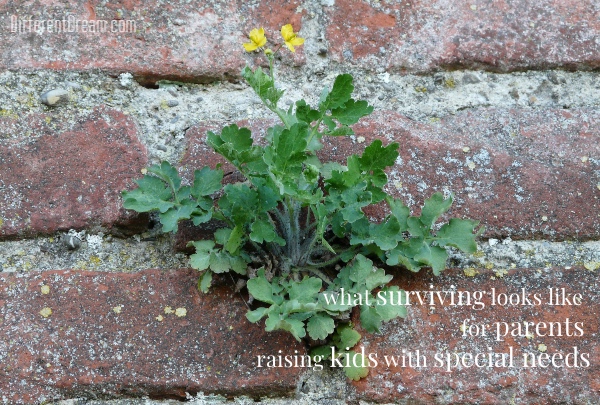
What Does It Mean to Survive as a Special Needs Parent?

What Does It Mean to Survive as a Special Needs Parent?

What Does It Mean to Survive as a Special Needs Parent?

What does it mean to survive as a special needs parent? That can be a tricky question to answer as every family’s special needs and disability story is unique. Even so, our families have much in common. With that in mind guest blogger Trish Shaeffer describes what survival often means for many of us.

What does it mean to survive as a special needs parent? You may have learned your child had special needs even before he was born through prenatal diagnosis. You may have learned it abruptly and traumatically at birth or in stages as your child grew and developed. That’s why surviving is different for everyone.

Surviving is coping. Coping is doing what you have to do one problem at a time. Sometimes you may feel like you’re are trying to empty a flooding boat with one bucket at. You make decisions without feeling very informed or confident. You deal with specialist in fields you’ve never even heard of. Coping is dealing with problems and getting by. Coping always feels like you are just keeping up with what you have to do, with little energy for getting ahead of your problems.

Surviving is reacting. Reacting drains your energy and diminishes your feeling of control. You have no sense of direction of the events in your life. You are always trying to figure out what’s going on and what to do next. Your reactions may range from confusion to fear to incompetence. They may be accompanied by feelings of grief, anger, guilt, and helplessness. You may find that the services your child needs are not readily available, that family members or friends may not initially support you, or that you child’s problems are more extensive then you anticipated.

The reactions of surviving are normal and often necessary. They are not bad, wrong, or weak. They are how many people feel upon hearing sad or frightening news. You may have experienced all, some, or none of the following reactions.

  • Shock. Surviving begins with a state of shock, numbness, disbelief, or disorientation. If you are in shock, everything seems unreal. This is a normal reaction.
  • Fatigue. You may feel tired from lack of sleep, restless sleep, or the worries you carry around inside. You go through the motions and try to keep going. The only thing you look forward to is sleep.
  • Physical symptoms. You may experience headaches, lightheadedness, stomach aches, chest pains, or loss of appetite. Stress can cause these physical problems or make them worse. They must be taken seriously, so talk to your doctor.
  • Feelings of weakness, fragility, and vulnerability. Unpredictable emotions and behaviors can make you feel weak or vulnerable. You may cope well some days and then burst into tears in the grocery line.
  • Grief. You may be grieving the loss of the dreams you had for your child, yourself, your spouse, and your family. Your expectations about your child’s future are replaced by fear and confusion. You grieve for your child who deserves the same chances in life as anyone.
  • Sense of helplessness and loneliness. Surviving is an intensely personal journey. You may not be sure what to say to people, and you don’t know what they expect from you. Sometimes it’s hard to know when and how to turn to others for support.
  • Sadness. Sadness is a normal emotional reaction to events, thoughts, stories, or memories that remind you of loss.
  • Fear. You may experience fear for your child’s health, for your child’s development, and for how her condition will affect your family. Fears may race through your mind about whether you can afford this, what insurance will cover, or how you will find the right services for your child.
  • Worry. You may worry about the future, about what to do next, about doing the wrong thing, or failing to do the right thing. You worry about your partner, your other children, and you worry about money. And you worry that you worry too much, but you cannot shut off your brain.
  • Guilt. Feeling responsible for your child’s problem is one way of trying to understand what went wrong. It’s taking the blame because someone needs to be blamed.
  • Anger. Anger can take many forms. You may feel a general sense of ā€œWhy me?ā€ Or you may feel resentment and envy, especially toward those who have typical children.
  • To ease the survival process, you may need to weep, yell, and feel very sorry for your child and yourself for a while. Knowing that these feelings are normal part of the process can help you reach out to other parents in similar situations. Remember everyone is different. Some parents adapt easily and some do not.

What does it mean to survive as a special needs parent? It means being there for each other, and remembering that life does go on. It means reminding yourself that the process of surviving is normal and necessary and that you will pass through it.


Do you like what you see at DifferentDream.com? You can receive more great content by subscribing to the monthly Different Dream newsletter and signing up for the daily RSS feed delivered to your email inbox. You can sign up for the first in the pop up box and the second at the bottom of this page.

By

Trish Shaeffer is the mom of 3 active boysĀ withĀ special needs. She’s a peer supporter for Parent to Parent and volunteers with the United Cerebral Palsy Network, Special Olympics, and the United Way. She’s also an equine volunteer at Leg Up Farm. She’s married to her best friend and biggest supporter, Chris Schaeffer.

Author Jolene Philo

Archives

Categories

Subscribe for Updates from Jolene

Related Posts

When a Teen Is in Crisis: 4 Godly Ways to Respond, Part 2

When a Teen Is in Crisis: 4 Godly Ways to Respond, Part 2

When a Teen Is in Crisis: 4 Godly Ways to Respond, Part 2

When a teen is in crisis, parents need to be ready to respond to their children in wise and godly ways. In this two part series, guest blogger Catherine Boyle offers four strategies she learned the hard way. Because of the rapid changes experienced through the teen years, what she has to say is of value to parents raising children with special needs, disabilities, mental health issues, and their typical siblings. Yesterday in Part 1, Catherine shares the first two tips. Today she shares two more.

#3: Prepare ahead of time.

This may sound like a ridiculous concept, but for Christ-followers, it’s not. Being in God’s Word regularly, praying regularly, seeking His will and direction for your life fills your spiritual tank. SuchĀ activity may seem like wasted time, but when Ā a crisis comes, you’ll find that God has made you ready in some important way.

I’m not sugar-coating how hard a crisis can be. No one can be prepared for everything. Years ago, I spent a season in prayer for my extended family. I was impressed to pray for several months that we would all be ready.

Ready for what? I had no idea.

The day that my father had a seizure and doctors discovered he had glioblastoma brain cancer, I got my answer. My dad lived seven months to the day from diagnosis until he died, and it wasn’tĀ an easy season in any way. But in my spirit, I knew God had prepared me.Ā 

In the same way, I had been praying certain prayers the spring and summer before the crisis with our teen. Make no mistake, that was a hard season as a parent. The first time my husband and I ventured out of the house,Ā leaving our teen at home, I had a full-blown panic attack. Struggling to contain my tears––and my fears––we returned home early before I was a total blubbering mess. Had my spiritual tank been empty, I would have been in even worse shape.

#4: Protect you child—and yourself—from those who are not helpful.

Maybe it’s the friend who loves to share juicy tidbits of gossip with the world, maybe it’s a family member who drainsĀ the life out of you. Your mission in such a time is to work with God and those He puts in your life to help your teen repair and rebuild his or her heart, and create a new direction.Ā 

You won’t be able to be diligent in this way if you lose focus from the mission of the moment. Your teen’s actual life may depend on you not giving way to anger, despair, fear or losing faith in God. If there are people in your lifeĀ who contribute to these negative emotions, gently but firmly tell them that you will not be able to talk with them until things are sorted out. During this season and in others, I chose to update certain family and friends by email,Ā rather than attempt to talk to them.

Just like you would do all that is necessary to protect yourself from infection when you or your child has a physical wound, protection during the healing of spiritual wounds is also necessary.

No one can prepare for everything that happens as you raise your children. But if you live in Florida, you prepare as best you can for hurricanes. If you live in Oklahoma, you prepare for the day when a tornado is coming. If you live with teens, you prepare for a teen crisis. Staying prayed up, connected to your teens and to God will gird you for the unexpected day.

Part 1

Do you like what you see at DifferentDream.com? You can receive more great content by subscribing to the monthly Different Dream newsletter and signing up for the daily RSS feed delivered to your email inbox. You can sign up at the bottom of this page.

By

Catherine Boyle is Mental Health Ministry Director, Blog Editor and Social Media Manager for Key Ministry. Catherine has been impacted by mental health issues her entire life, including her own struggles with anorexia, bulimia, anxiety and depression. Prior to joining Key Ministry in 2018, Catherine authored Hungry Souls: What the Bible Says About Eating Disorder, and helped launch a ministry homeĀ for women with eating disorders. In 2015, Catherine founded Outside In Ministries, focusing on how the church can minister to and with people with mental health issues. Follow Catherine’s work here and at www.catherineboyle.com, Facebook, Twitter, Instagram, PinterestĀ and Patreon.

Author Jolene Philo

Archives

Categories

Subscribe for Updates from Jolene

Related Posts